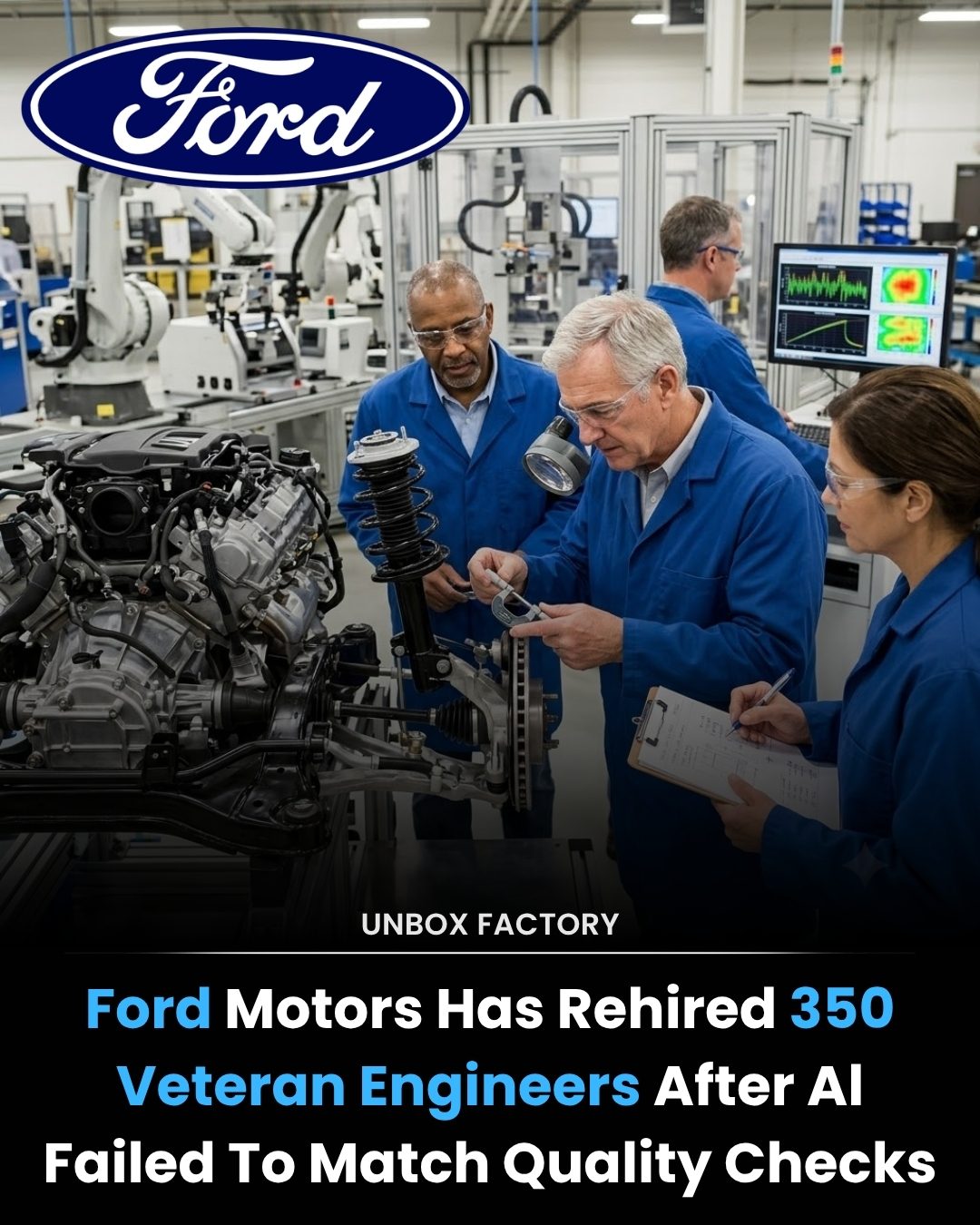
Ford's Rehiring of Veteran Engineers
Ford Motors has brought back over 350 veteran engineers, a significant move that underscores the enduring value of human expertise in the automotive manufacturing process. This decision comes after AI-assisted quality control systems faced challenges in consistently detecting manufacturing defects and production inconsistencies on assembly lines.
Why This Matters
The integration of AI in manufacturing has long been touted as a way to enhance efficiency and accuracy. However, Ford's experience highlights that while AI is invaluable for automating repetitive tasks and analyzing vast amounts of data, it often falls short in identifying subtle issues that directly impact vehicle quality. These nuances—such as fit, finish, and reliability—remain best detected by skilled human engineers.
The Role of AI in Manufacturing
Artificial intelligence has revolutionized many aspects of manufacturing, particularly in quality control. AI systems can process and analyze data at speeds far beyond human capabilities, making them ideal for tasks like:
-
Automating Repetitive Inspections: AI can handle repetitive tasks efficiently, freeing up human engineers to focus on more complex issues.
-
Analyzing Massive Data Sets: AI excels at sifting through large volumes of data to identify patterns and trends that might go unnoticed by human inspectors.
However, these capabilities come with limitations. AI systems often struggle with the nuances of quality control, particularly in detecting subtle defects that can significantly affect the performance and safety of a vehicle.
The Importance of Human Expertise
Ford's decision to rehire veteran engineers highlights the critical role that human expertise continues to play in manufacturing. These engineers bring years of experience and a nuanced understanding of the intricacies involved in automotive production. Their skills are particularly valuable in:
-
Identifying Subtle Defects: Experienced engineers can detect issues that AI systems might miss. These include minor flaws in fit, finish, and reliability that can substantially impact vehicle quality.
-
Adapting to New Challenges: Human engineers can adapt to new challenges and find innovative solutions that might not be programmed into AI systems.
-
Ensuring Consistency: The human touch ensures a level of consistency and reliability in quality control that AI systems have yet to achieve.
The Future of Manufacturing: Combining AI and Human Expertise
Ford's move underscores the growing realization that the future of manufacturing lies in combining AI with human expertise, rather than replacing skilled workers entirely. This hybrid approach leverages the strengths of both:
-
AI for Efficiency: AI can handle routine tasks, freeing up human engineers to focus on more complex issues.
-
Humans for Nuance: Human engineers can provide the nuanced quality control that AI systems currently lack.
Practical Tips for Integrating AI and Human Expertise
For manufacturers looking to integrate AI and human expertise, here are some practical tips:
-
Assess Your Needs: Identify the areas where AI can be most effective and where human expertise is essential. This will help you create a balanced approach that leverages the strengths of both.
-
Invest in Training: Ensure that your engineers are well-trained in using AI tools and that AI systems are continuously updated with the latest data and algorithms.
-
Create a Flexible System: Develop a system that allows for seamless integration of AI and human expertise, enabling engineers to easily switch between tasks as needed.
-
Foster Collaboration: Encourage collaboration between AI systems and human engineers, creating a team approach to quality control.
Important Takeaways
-
AI's Role in Manufacturing: AI is invaluable for automating repetitive tasks and analyzing data, but it has limitations in detecting subtle defects.
-
Human Expertise: Experienced engineers bring a level of nuance and adaptability that AI systems lack, making them essential for quality control.
-
Hybrid Approach: The future of manufacturing lies in combining AI and human expertise, rather than replacing skilled workers entirely.
Conclusion
Ford's decision to rehire veteran engineers highlights the enduring value of human expertise in automotive manufacturing. While AI is a powerful tool, it is not a replacement for skilled engineers. The future of manufacturing lies in creating a balanced approach that leverages the strengths of both AI and human expertise, ensuring the highest standards of quality and reliability.
Watch the Reel
Questions readers ask
Why did Ford decide to rehire veteran engineers for quality control?
Ford's decision to rehire veteran engineers was driven by the need to improve the detection of subtle manufacturing defects. While AI systems excel at automating tasks and processing data, they often overlook nuanced issues that experienced engineers can identify.
How many veteran engineers did Ford bring back?
Ford reinstated over 350 veteran engineers to enhance the quality control process. This significant number reflects the company's commitment to maintaining high vehicle quality through human expertise.
What role do veteran engineers play in Ford's quality assurance team?
Veteran engineers play a crucial role in Ford's quality assurance. They have a deep understanding of the manufacturing process and can spot defects that AI systems might miss, ensuring that Ford's vehicles meet the highest standards of quality and reliability.
How does Ford integrate AI and human expertise in its manufacturing process?
Ford combines AI systems and human expertise by using AI for automating repetitive tasks and analyzing data, while relying on veteran engineers to perform detailed checks on the production line. This collaboration is key to maintaining the overall quality of Ford's vehicles.
What kinds of manufacturing defects are veteran engineers better at detecting than AI?
Veteran engineers are particularly skilled at detecting subtle defects related to fit, finish, and overall reliability. These issues often require a human touch and years of experience to identify, ensuring that the final product meets Ford's quality standards.
How does Ford's quality control team benefit from having experienced engineers?
Ford's quality control team benefits greatly from the experience and expertise of veteran engineers, who bring a deep understanding of the manufacturing process, allowing them to perform thorough quality checks and identify areas for improvement on the production line.
What impact has the rehiring of veteran engineers had on Ford's production line quality?
The rehiring of veteran engineers has significantly enhanced Ford's production line quality. By combining the strengths of AI and human expertise, Ford has been able to better detect and address manufacturing defects, leading to more reliable and consistent vehicle production.
Related deep dives
Similar reads based on topic and creator.



Recent articles
Fresh deep dives from the latest Reels we unpacked.




Comments
Be the first to comment.