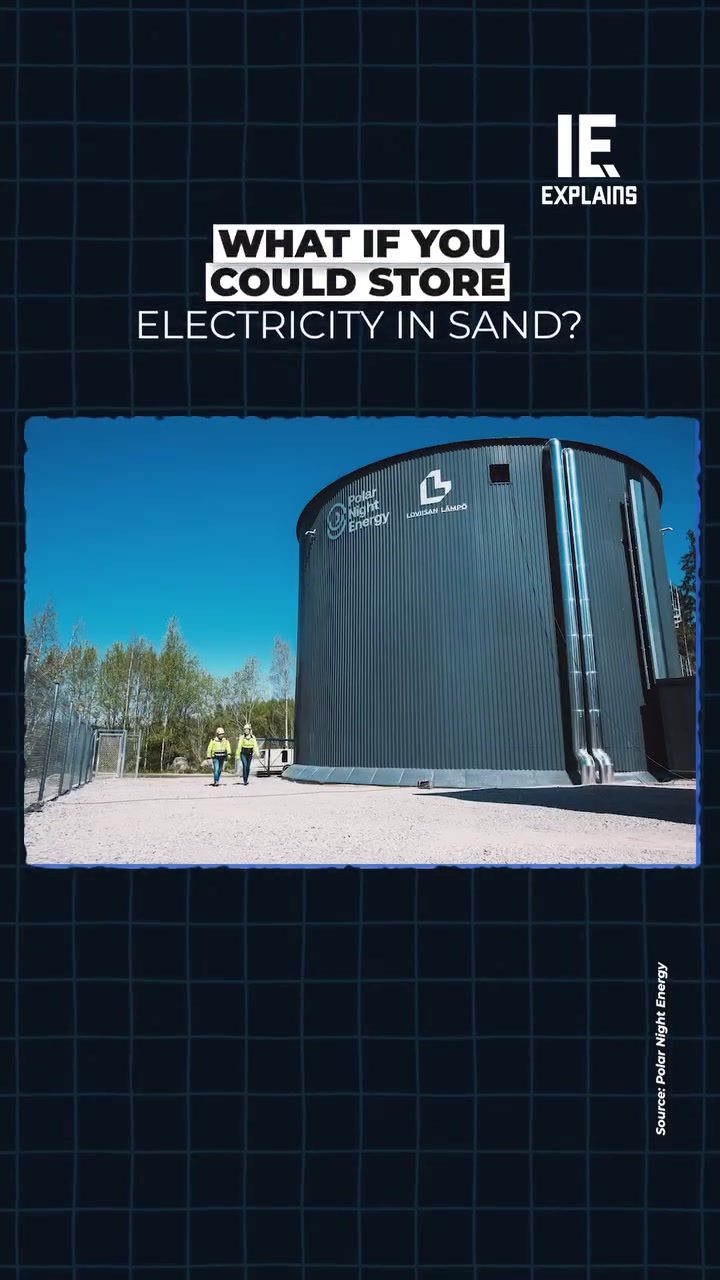
Sand Battery Technology: Storing Energy in Sand
Sand battery technology, developed by Finnish startup Polar Night Energy, offers an innovative solution for storing renewable energy and heating entire towns. This technology has gained significant attention, particularly after the world's largest sand battery successfully endured one of Finland's harshest winters. Let's delve into how this technology works and its potential benefits.
Context: Why Sand Batteries Matter
Renewable energy sources like wind and solar power are intermittent, meaning they generate electricity only when the wind blows or the sun shines. This variability poses a challenge for grid stability and consistent power supply. Traditional energy storage solutions, such as lithium-ion batteries, have limitations in terms of scale and environmental impact. Sand battery technology addresses these issues by providing a scalable, eco-friendly method for storing thermal energy.
How Sand Batteries Work
The Technology Behind Sand Batteries
Sand batteries operate as large-scale, high-temperature thermal energy storage systems. They use sand or sand-like materials as the storage medium. Here's a breakdown of the process:
- Energy Storage: The system stores excess wind and solar energy as heat in the sand.
- Grid Balancing: The battery can participate in grid balancing markets, providing power when demand is high and supply is low.
- Heat and Power Production: The stored heat can be used to generate power without burning fossil fuels, making it a clean energy source.
The Role of Sand
Sand is an ideal storage medium because it can be heated to high temperatures without undergoing phase changes, unlike water, which boils at 100 degrees Celsius at atmospheric pressure. This property allows sand to reach temperatures up to 600 degrees Celsius without degrading. The patented closed-loop system charges the battery when power is abundant and cheap, storing heat that can be released on demand.
Key Components
- Sand or Sand-Like Materials: The primary storage medium that can reach high temperatures without degrading.
- Crushed Soapstone: Inside the silo, 2,000 tons of crushed soapstone, a by-product from Finnish fireplace manufacturing, helps retain heat efficiently.
- Closed-Loop System: A patented system that charges the battery during off-peak hours and releases heat when demand is high.
The Operational Details
The sand battery in Pornainen, Finland, has a power capacity of 1 megawatt (MW) for both charging and discharging, with an energy capacity of 100 megawatt hours (MWh). This capacity is sufficient to power an entire town's district heating system, as demonstrated during Finland's harsh winter. The system achieved a round-trip efficiency of 80 to 90 percent, making it highly efficient for energy storage.
Environmental and Economic Impact
Environmental Benefits
The sand battery in Pornainen has significantly reduced the town's reliance on fossil fuels. It delivered a 100% reduction in oil usage for the local heating network and cut carbon dioxide emissions by 70%. Additionally, it reduced wood chip combustion by 60%, showcasing its potential to lower greenhouse gas emissions and promote sustainable energy use.
Economic Benefits
The installation of the sand battery has not only improved the environment but also provided economic benefits. By reducing the need for oil and wood chips, the town has saved on heating costs. Moreover, the technology has created new opportunities for renewable energy projects, contributing to economic growth in the region.
Practical Tips for Implementing Sand Battery Technology
Assessing Feasibility
Before implementing sand battery technology, it's important to assess the feasibility of the project. This includes evaluating the availability of renewable energy sources, the potential demand for stored energy, and the environmental impact of the project. Conducting a thorough feasibility study can help identify potential challenges and opportunities.
Scaling Up
Scaling up sand battery technology requires significant investment and infrastructure development. However, the benefits in terms of energy security, environmental sustainability, and economic growth make it a worthwhile endeavor. Governments and private entities can collaborate to fund and implement large-scale sand battery projects.
Community Engagement
Community engagement is crucial for the successful implementation of sand battery technology. Engaging local communities in the planning and implementation process can help ensure that their needs and concerns are addressed. Building public support for the project can also facilitate its successful implementation.
Important Takeaways
Sand battery technology offers a promising solution for storing renewable energy and reducing reliance on fossil fuels. By using sand as a storage medium, this technology provides a scalable, eco-friendly method for storing thermal energy. The success of the sand battery in Pornainen, Finland, demonstrates its potential to power entire towns and reduce greenhouse gas emissions. The implementation of sand battery technology requires careful planning, significant investment, and community engagement. However, the environmental and economic benefits make it a worthwhile investment for a sustainable future.
Conclusion
Sand battery technology represents a groundbreaking advancement in energy storage, offering a sustainable and efficient solution for storing renewable energy. With the successful implementation in Pornainen, Finland, this technology has proven its potential to transform the energy landscape. As we continue to explore innovative solutions for a sustainable future, sand battery technology stands out as a promising avenue for storing and utilizing renewable energy efficiently.
Watch the Reel
Questions readers ask
How does a sand battery store energy?
A sand battery stores energy by using electricity to heat up sand to high temperatures, around 500–600 degrees Celsius, within an insulated container. The sand retains this heat for extended periods, allowing it to be used for heating purposes or to generate electricity when needed.
What makes sand batteries suitable for Finland's climate?
Sand batteries are well-suited for Finland's harsh winters because they can store heat for long durations. The insulated design of the battery minimizes heat loss, ensuring that the stored thermal energy remains available even in extreme cold conditions.
How does the sand battery technology support renewable energy sources?
Sand batteries help balance the intermittent nature of renewable energy sources like wind and solar power. By storing excess energy generated during peak production times, these batteries ensure a steady supply of energy, enhancing grid stability and reliability.
What are the environmental benefits of using sand battery technology?
Sand batteries provide an eco-friendly method for storing energy. They do not require hazardous materials and have a long lifespan. This reduces the environmental impact associated with energy storage, contributing to sustainable efforts.
Can sand battery technology be scaled for larger communities?
Yes, sand battery technology is highly scalable. The world's largest sand battery in Finland has already demonstrated its ability to power entire towns. This scalability makes it a viable option for larger communities looking to transition to more sustainable heating and energy solutions.
Related deep dives
Similar reads based on topic and creator.


Recent articles
Fresh deep dives from the latest Reels we unpacked.




Comments
Be the first to comment.