AI Disclaimers in Film and TV Credits
The entertainment industry is witnessing a new trend: disclaimers in film and TV credits stating that no generative AI was used in the production process. This movement is gaining traction across independent projects, major studios, and streaming platforms. The push for these disclaimers comes from various stakeholders, including creators, unions, and industry professionals who are positioning human-made content as a premium product in a world increasingly dominated by AI-generated material. Let's dive deeper into this trend and understand its implications.
Why This Matters
As AI tools become more common, the boundaries between human-created and AI-generated content are blurring. This trend is significant for several reasons. Firstly, it highlights the growing concern among creators about the impact of AI on creative industries. Secondly, it reflects a strategic move to differentiate human-creativity. Additionally, it signals a potential shift in how audiences perceive and value content, positioning human work as something premium.
The Rise of "No AI" Disclaimers
The Emergence of Disclaimers
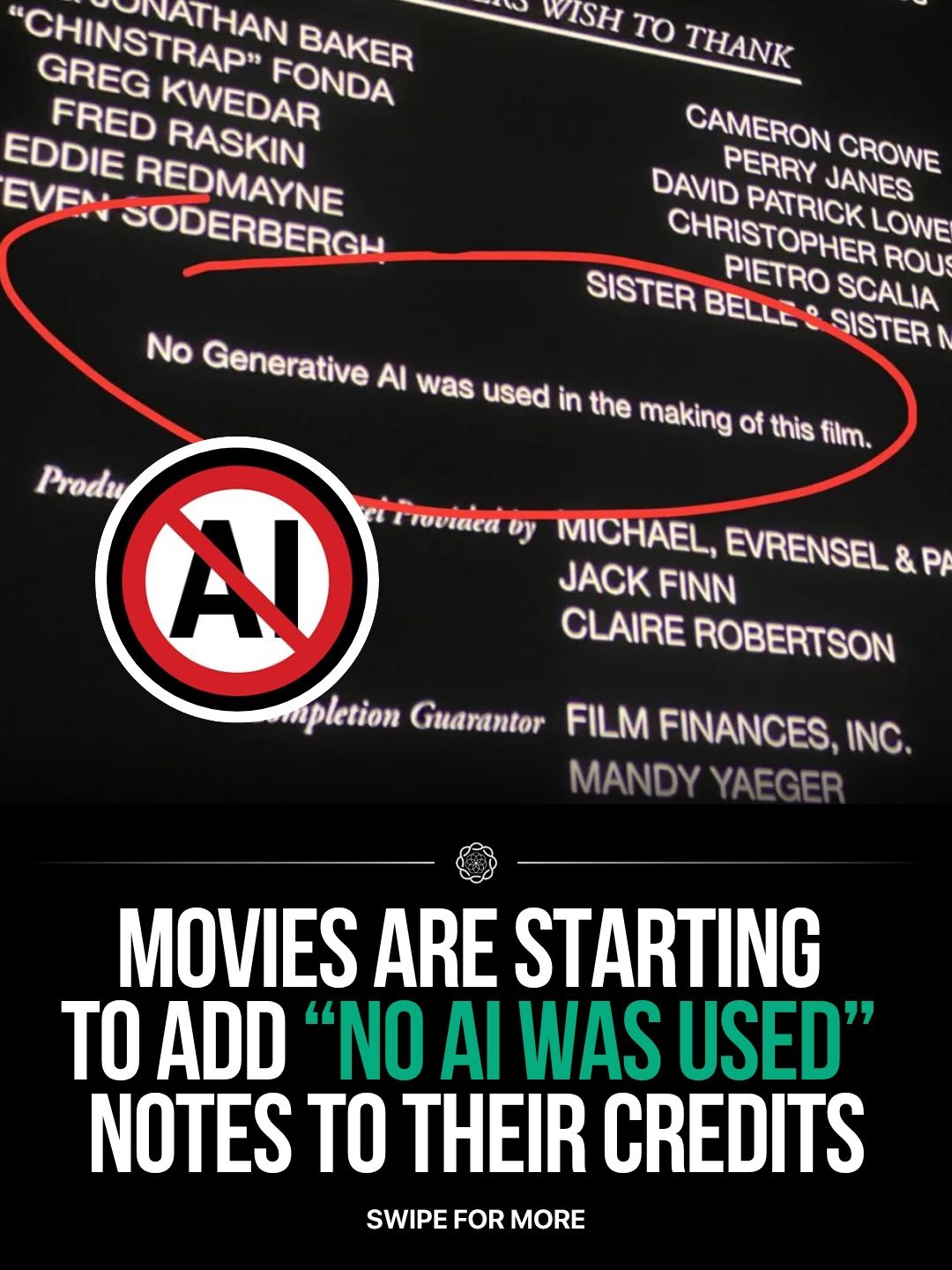
The trend of adding "no AI" disclaimers to film and TV credits is not yet a formal industry rule, but it is rapidly gaining momentum. For instance, films like "Heretic" and shows like "Pluribus" feature clear disclaimers stating that no generative AI was used in their production. This move is a clear statement about the creative stance of the producers, emphasizing the human touch in their work.
These disclaimers are found in the credits of various productions, from independent projects to major releases. They often appear as straightforward statements like, "No Generative AI was used in the making of this film." or "This show was made by humans."
The Creative Stance
The disclaimers are part of a broader creative stance that positions human work as something unique and valuable. In a world where AI can generate content, human creativity is being marketed as a premium asset. This trend is particularly evident in how projects are marketed, even when AI isn’t used in the production process. The mere presence of such disclaimers can influence how audiences perceive the content, implying a higher level of authenticity and artistic value.
The Role of Creators and Unions
Creators' Concerns
Creators are at the forefront of this movement, driven by a need to stand out in an increasingly AI-dominated landscape. The use of AI in content creation raises questions about originality, authenticity, and job security. By asserting that their work is entirely human-created, these creators are claiming ownership over the creative process and assuring their audience of the work's authenticity.
Union Influence
Unions also play a significant role in this trend. They are advocating for clear distinctions between human-created and AI-generated content, ensuring that the work of their members is recognized and valued. This push for transparency is crucial for maintaining the integrity of creative professions and protecting the livelihoods of those involved.
The Impact on Content Marketing
Marketing Strategies
Even when AI isn't used in the production of a film or TV show, it is influencing how content is marketed. The presence of "no AI" disclaimers can be a powerful marketing tool, positioning a production as more authentic and valuable. This strategy is particularly relevant in an era where AI-generated content is becoming more prevalent. By explicitly stating that AI was not involved, creators and producers can attract audiences who value human creativity.
Audience Perception
For audiences, these disclaimers serve as a reassurance of the content's authenticity. In a world where it's becoming harder to distinguish between human-created and AI-generated material, clear disclaimers can provide a sense of security. They indicate that the content has been crafted with human touch, making it more relatable and emotionally resonant.
Practical Tips for Creators
Incorporating Disclaimers
If you're a creator looking to incorporate similar disclaimers in your projects, here are some practical tips:
- Be Clear and Concise: Ensure your disclaimer is easy to read and understand. It should be prominently placed in the credits.
- Highlight Human Touch: Emphasize the human involvement in your creative process. This can be done through short statements like, "Made by humans" or "No Generative AI was used."
- Use Visual Elements: Consider using visual elements, such as logos or symbols, to make your disclaimer stand out.
- Marketing Strategy: Integrate the disclaimer into your marketing strategy. Highlight it in promotional materials and social media to attract audiences who value human creativity.
Protecting Your Content
If you want to prevent your content from being used to train AI models, here are some steps you can take:
- Content Licensing: Specify in your licensing agreements that your content cannot be used to train AI models.
- Digital Rights Management (DRM): Use DRM techniques to control access to your content and ensure it is not misused.
- Legal Measures: Consult with legal experts to draft agreements that protect your content from unauthorized use.
Important Takeaways
A Growing Trend
The trend of adding "no AI" disclaimers to film and TV credits is growing rapidly. It reflects a broader creative stance that positions human creativity as a premium asset in an AI-dominated world.
A Strategic Move
These disclaimers are a strategic move to differentiate human-created content from AI-generated material. They serve as a reassurance to audiences about the authenticity and value of the content.
The Role of Stakeholders
Creators and unions are driving this trend, advocating for clear distinctions between human-created and AI-generated content. This push for transparency is crucial for maintaining the integrity of creative professions.
Conclusion
The addition of "no AI" disclaimers in film and TV credits is a significant trend in the entertainment industry. It reflects a growing concern about the impact of AI on creative industries and a strategic move to differentiate human-created content. This trend is likely to continue as AI tools become more common, shaping how projects are marketed and perceived by audiences. As a creator, understanding and incorporating this trend can help you stand out in an increasingly competitive landscape.
Watch the Reel
Questions readers ask
What does a 'no AI' credit in a film or TV show signify?
A 'no AI' credit indicates that the production was created without the use of generative AI. This signals to audiences that the content is entirely human-made, from conception to completion, emphasizing the value of human creativity.
Why are film and TV industries adding 'no AI' credits to their productions?
The inclusion of 'no AI' credits is a strategic response to the growing role of AI in content creation. By highlighting human-made content, creators and industry professionals aim to differentiate their work and underscore the unique value of human creativity in comparison to AI-generated material.
Who is driving the trend of 'no AI' credits in film and TV?
This trend is being driven by a variety of stakeholders, including filmmakers, directors, writers, actors, unions, and other industry professionals. They see the importance of clearly communicating to the audience that their content is human-made, particularly in an era where AI-generated content is becoming more prevalent.
How do 'no AI' credits impact the way audiences perceive content?
'No AI' credits can enhance audience appreciation for the content by assuring viewers that the work is a result of human creativity and effort. This can make human-made films and TV shows more appealing to viewers who value authenticity and the personal touch that only human creators can provide.
Are 'no AI' credits only found in independent productions, or are major studios also adopting this trend?
The trend of including 'no AI' credits is not limited to independent projects; major studios and streaming platforms are also adopting this practice. This widespread adoption reflects a broader industry movement to prioritize and promote human-made content across all levels of production.
What role do unions play in the push for 'no AI' credits?
Unions representing industry professionals play a crucial role in advocating for 'no AI' credits. They help ensure that the contributions of human creators are acknowledged and valued, and they work to protect the jobs and livelihoods of their members in an industry increasingly influenced by AI technology.
How does the inclusion of 'no AI' credits affect the film and TV production process?
The inclusion of 'no AI' credits can influence the production process by encouraging filmmakers and creatives to lean more heavily on human skills and traditional methods. It also ensures that all involved in the production are aware of and committed to maintaining the integrity of human-made content throughout the entire process.
Related deep dives
Similar reads based on topic and creator.


Recent articles
Fresh deep dives from the latest Reels we unpacked.




Comments
Be the first to comment.