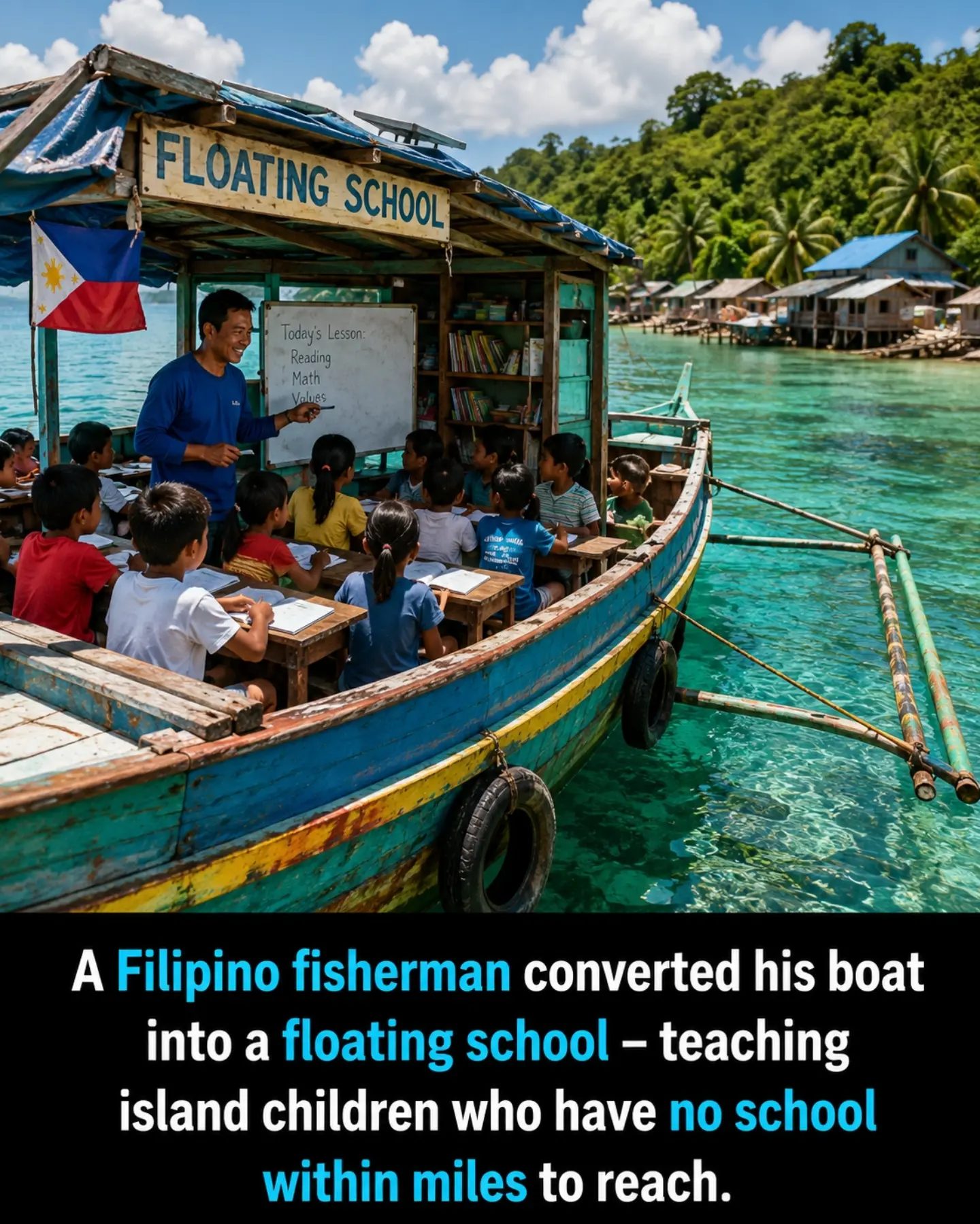
Floating School in the Philippines
The floating school in the Philippines is a remarkable example of community ingenuity, offering education to children on a remote island where traditional schools are scarce. This initiative, led by a Filipino fisherman, exemplifies how local innovation can bridge gaps in access to education.
Context / Why This Matters
In many remote areas, access to education is a significant challenge. Traditional facilities can be far away, and transportation infrastructure is often inadequate. This is where creative solutions, like the floating school in the Philippines, become essential. By converting his boat into a schoolhouse, the fisherman has made education accessible to children who would otherwise be deprived of it.
Main Discussion
The Inception
The idea of a floating school was born out of necessity and a deep sense of community responsibility. The fisherman, seeing the lack of educational opportunities for the island children, decided to turn his boat into a makeshift classroom. This innovative approach not only utilizes available resources but also ensures that children receive essential education despite their isolated location.
The Curriculum
The curriculum at the floating school covers fundamental subjects such as reading, math, and values. These subjects are crucial for building a solid educational foundation. Reading and math are essential for cognitive development, while values education helps shape the children's character and moral compass. The curriculum is designed to be comprehensive yet flexible, adapting to the unique needs and circumstances of the students.
The Learning Environment
The floating school provides a unique learning environment. Imagine sitting on a boat, surrounded by the vastness of the sea, and learning from a dedicated teacher. This setting offers a practical lesson in resilience and adaptability. The children learn not just from textbooks but also from their surroundings, giving them a well-rounded educational experience.
One of the key benefits of this environment is the sense of community it fosters. The children learn together, support each other, and develop a strong bond. This community aspect is invaluable, as it teaches them the importance of collaboration and mutual support, skills that are essential in any setting.
Challenges and Solutions
Running a school on a boat presents its own set of challenges. Weather conditions, for instance, can disrupt classes. However, the community has developed strategies to mitigate these issues. For example, classes may be rescheduled or held in nearby shelters during extreme weather conditions.
Another challenge is the absence of traditional classroom resources. To address this, the school relies on donated materials and community support. This not only ensures that the children have the necessary tools for learning but also underscores the importance of community involvement in education.
Practical Tips
For those inspired by this initiative, here are some practical tips on how to start a similar project:
Community Engagement
Engage with the local community to understand their needs and garner support. Community involvement is crucial for the success of any educational initiative. Regular meetings, workshops, and discussions can help build a strong support base.
Resource Management
Efficient resource management is essential. Utilize available resources creatively and seek donations from supporters. This ensures that the school has the necessary materials without being a burden on the community.
Adaptable Curriculum
Design a flexible and adaptable curriculum that caters to the unique needs of the students. This might involve incorporating local culture, traditions, and environmental lessons into the teaching materials.
Weather Preparedness
Have a plan for adverse weather conditions. This might involve arranging alternative spaces for classes or developing a flexible schedule.
Important Takeaways
The floating school in the Philippines serves as a powerful example of how community-driven initiatives can make a significant impact. It highlights the importance of adaptability, resourcefulness, and community support in overcoming educational challenges.
Creativity and Innovation
Creativity and innovation are key to addressing unique challenges. The fisherman’s initiative demonstrates that unconventional solutions can often be the most effective.
Community Support
Community support is vital for the success of any educational initiative. Engaging the community ensures that resources and effort are maximized, leading to better outcomes.
Adaptability
Adaptability is crucial, especially in challenging environments. By being flexible and responsive to changing conditions, the floating school can continue to provide education to the children despite the obstacles.
Conclusion
The floating school in the Philippines is a testament to the power of community-driven initiatives. It illustrates how simple acts of ingenuity and community spirit can bridge gaps in education, providing opportunities for children in remote areas to learn and grow. By embracing creativity, adaptability, and community support, similar initiatives can be replicated in other parts of the world, ensuring that no child is left behind due to their location.
Watch the Reel
Questions readers ask
Who initiated the floating school in the Philippines?
A Filipino fisherman started this unique project. Seeing the need for accessible learning opportunities in his community, he converted his boat into a floating classroom to reach children on remote islands.
How does the floating school address the challenges of remote island education?
The floating school brings the classroom directly to the children, eliminating the need for them to travel long distances. This innovative approach ensures that children in isolated communities have regular access to learning resources.
What kind of boat was used for the floating school?
The specific type of boat used for the floating school is not mentioned in the article. However, it is clear that the fisherman repurposed his existing boat, turning it into a functional classroom to accommodate the needs of the children.
How does the floating school project benefit the community?
The floating school project benefits the community by providing a consistent and accessible learning environment for children. It also serves as an inspiration for other local communities facing similar challenges, demonstrating the impact of grassroots initiatives.
What are some of the primary challenges faced by remote island children in accessing education?
Remote island children often face significant barriers to education, including the lack of nearby schools and inadequate transportation infrastructure. These challenges can make it difficult for children to receive a consistent learning experience.
Can other communities replicate the floating school model?
Yes, the floating school model can be replicated in other communities facing similar access issues. The key is adapting the concept to local resources and needs, such as using available boats and engaging local community members.
What other innovative solutions can help provide learning opportunities in remote areas?
Other innovative solutions include mobile libraries, teleconferencing for virtual classrooms, and community-driven initiatives that bring learning resources directly to remote areas. These methods leverage both physical and digital resources to overcome geographical barriers.
Related deep dives
Similar reads based on topic and creator.


Recent articles
Fresh deep dives from the latest Reels we unpacked.




Comments
Be the first to comment.