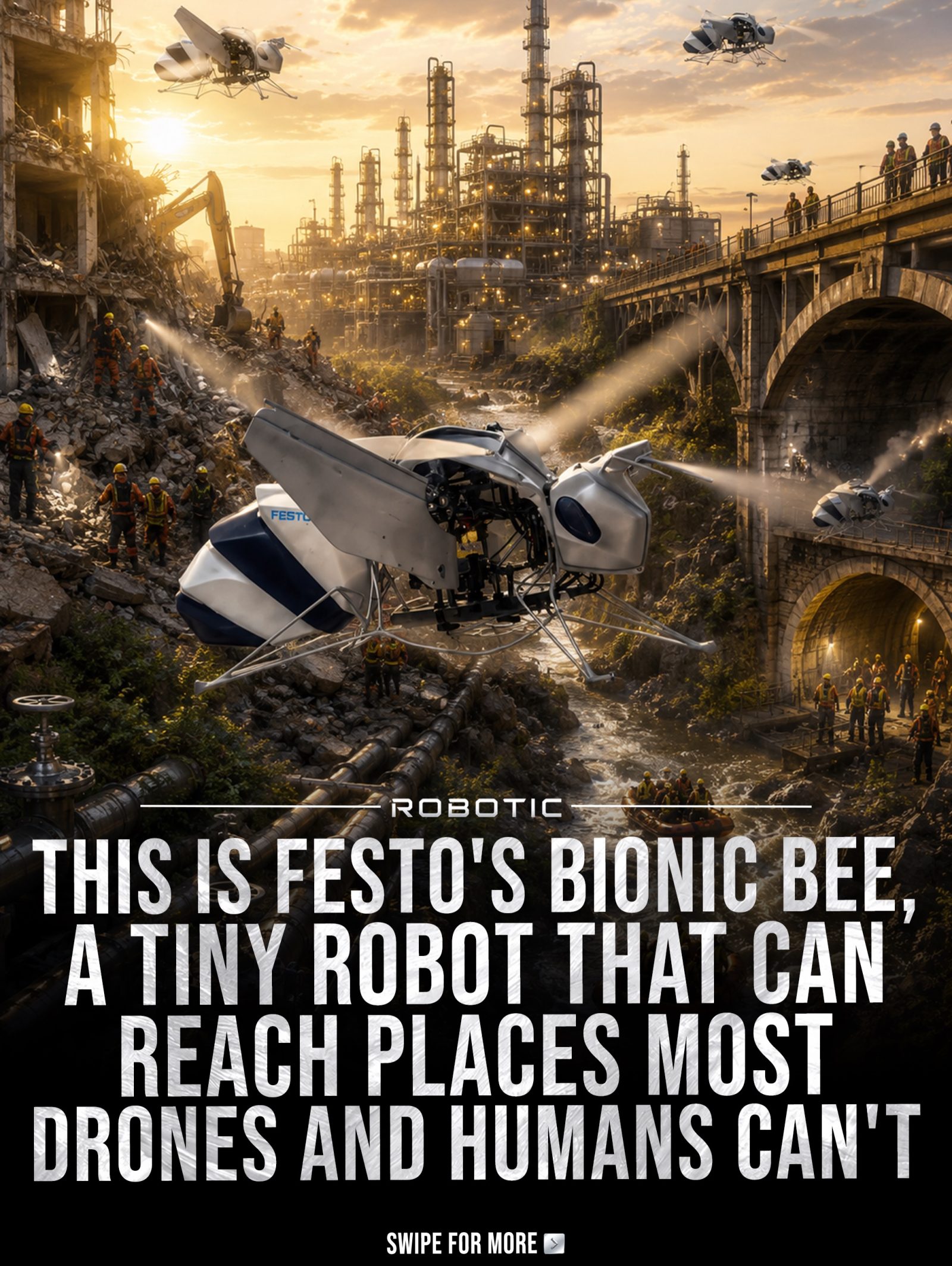
Festo's Bionic Bee: The Tiny Autonomous Drone
Festo’s BionicBee is a remarkable example of bio-inspired robotics, designed to navigate environments that are inaccessible to most drones and humans. This tiny, autonomous drone weighs just 34 grams and is modeled after real honeybees. Its unique design and advanced capabilities make it an invaluable tool for various applications, from industrial inspections to search and rescue missions.
Why This Matters
The BionicBee represents a significant advancement in drone technology. Its ability to navigate confined and hazardous spaces autonomously opens up new possibilities for applications where larger drones or human intervention would be impractical or impossible. By demonstrating how bio-inspired robotics can enhance future missions, the BionicBee paves the way for innovative solutions in various fields.
Main Discussion
Autonomous Flight and Swarm Intelligence
One of the standout features of the BionicBee is its autonomous flight capability. Each drone can calculate its own flight path, make independent decisions, and avoid obstacles in real time. This is achieved through a combination of swarm intelligence and autonomous flight, which allows multiple BionicBees to coordinate their movements without the need for a central controller. This decentralized approach makes the drones highly adaptable and resilient in complex environments.
Navigation in Challenging Environments
The BionicBee’s small size is a significant advantage in confined and hazardous environments. It can operate safely in spaces where larger drones struggle to fly, such as within pipes or in industrial settings like oil refineries. This makes it an ideal tool for industrial inspections, where access to tight spaces is crucial. The drone's ability to navigate these environments autonomously reduces the risk to human workers and increases the efficiency of inspections.
Applications in Search and Rescue
The BionicBee’s capabilities extend beyond industrial use. In search and rescue missions, its small size and autonomous flight make it an invaluable tool for locating survivors in disaster zones. The drone can quickly and efficiently navigate through debris and rubble, providing real-time data that can guide rescue efforts. Its ability to coordinate with other BionicBees ensures that multiple areas can be covered simultaneously, increasing the chances of finding survivors.
Disaster Response and Reconnaissance
In disaster response scenarios, the BionicBee can be deployed to assess damage and gather critical information. Its ability to navigate through hazardous environments makes it ideal for tasks such as assessing structural integrity after earthquakes or monitoring the spread of wildfires. The drone’s real-time data collection capabilities can provide emergency responders with the information they need to make informed decisions quickly.
Practical Tips
When considering the BionicBee for practical applications, it’s essential to understand its key features and how they can be utilized effectively:
- Pre-Mission Planning: Before deploying the BionicBees, plan the mission thoroughly. Identify the specific areas that need to be inspected or surveyed, and ensure that the drones are equipped with the necessary sensors and tools for the task.
- Coordination and Communication: Utilize the drone’s swarm intelligence capabilities to coordinate multiple BionicBees for complex missions. This ensures that all areas are covered efficiently and that data is collected accurately.
- Safety Measures: Always consider the safety of the drone and the environment it will be operating in. Ensure that the drones are programmed to avoid hazardous conditions and that they have enough battery life to complete the mission.
Important Takeaways
- Versatility: The BionicBee’s small size and autonomous flight capabilities make it versatile for a wide range of applications, from industrial inspections to disaster response.
- Swarm Intelligence: The drone’s ability to coordinate with other BionicBees without a central controller enhances its adaptability and resilience in complex environments.
- Safety and Efficiency: By reducing the need for human intervention in hazardous environments, the BionicBee increases safety and efficiency in various missions.
Conclusion
The Festo BionicBee is a groundbreaking advancement in robotics, showcasing the potential of bio-inspired design and autonomous flight. Its ability to navigate challenging environments and coordinate with other drones makes it a valuable tool for industries ranging from industrial inspections to search and rescue. As technology continues to evolve, the BionicBee represents a significant step forward in how we approach complex and hazardous missions.
Watch the Reel
Questions readers ask
What are the key features of the Festo BionicBee drone?
The Festo BionicBee is a miniature, autonomous drone inspired by honeybees. Its key features include a compact size of just 34 grams, advanced navigation skills, and autonomous flight capabilities. These features make it suitable for confined and hazardous spaces.
How does the BionicBee's swarm intelligence work?
The BionicBee is equipped with swarm intelligence, allowing multiple drones to coordinate their movements and tasks autonomously. This capability enables them to work together efficiently, making it easier to complete complex missions in challenging environments.
What kinds of tasks can the BionicBee perform?
The BionicBee is designed for tasks in tough spaces, such as industrial inspections, searches and rescues. Its small size and autonomous navigation make it ideal for areas that are inaccessible or dangerous for larger drones or humans.
How does the BionicBee's size benefit industrial inspections?
The BionicBee's compact size allows it to access small, narrow spaces that larger drones or humans cannot reach. This makes it an effective tool for inspecting machinery, structures, and other industrial environments, ensuring thorough checks without the need for human intervention.
What advantages does the BionicBee offer for search and rescue missions?
The BionicBee's ability to navigate through confined and dangerous spaces autonomously makes it a valuable asset for search and rescue missions. Its tiny size and advanced flight autonomy allow it to reach areas where larger drones or human rescuers cannot, increasing the chances of finding and assisting those in need.
Can the BionicBee operate in environments where humans are at risk?
Yes, the BionicBee is specifically designed to operate in hazardous environments. Its small size and autonomous capabilities allow it to navigate through tough spaces without endangering human personnel, making it an ideal tool for tasks that would otherwise be too risky.
How does the BionicBee demonstrate autonomy in flight?
The BionicBee demonstrates autonomy in flight through its advanced navigation skills and the ability to operate independently. This means it can plan and execute its own flight paths, making decisions based on real-time data and environmental conditions without requiring constant human control.
Related deep dives
Similar reads based on topic and creator.



Recent articles
Fresh deep dives from the latest Reels we unpacked.




Comments
Be the first to comment.