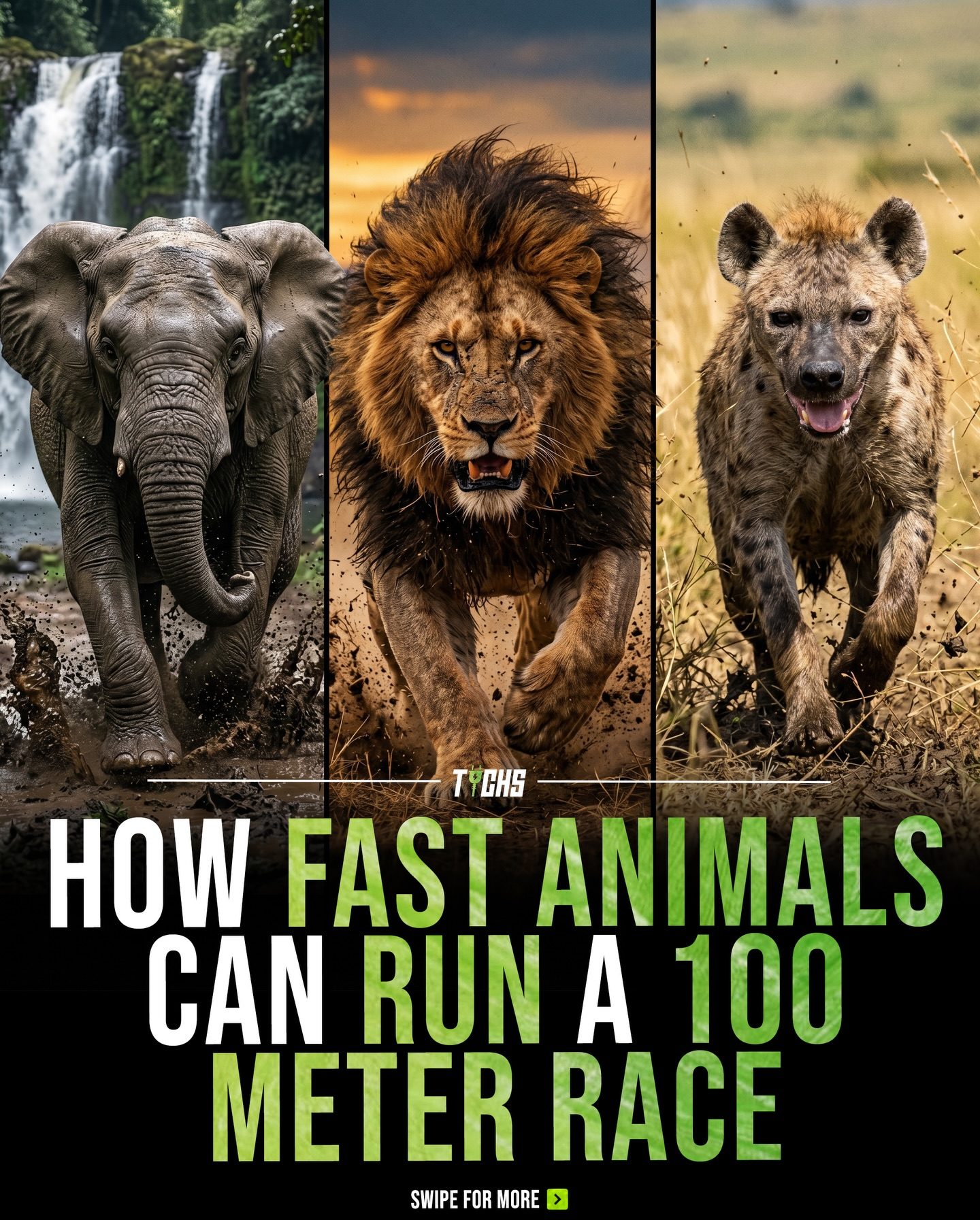
Speed in the Animal Kingdom: A 100-Meter Race
Speed is a critical factor in the animal kingdom, where every creature has unique adaptations to survive and thrive. From the slowest to the fastest, each species demonstrates evolution's astonishing ability to optimize for different environments. The 100-meter race, a staple in human athletics, serves as a fascinating benchmark for comparing the extraordinary speeds of various animals.
Context / Why this matters
The 100-meter race is a universal test of speed, which reveals the spectacular capabilities of animals. These animals have adapted to run with amazing agility, speed, and endurance to navigate and survive in different environments. In this race, the animals show an astonishing range of performances, from below average speeds to outright dominance. The differences in speed highlight how vital quickness is for survival.
Main discussion
Evolution and Speed
Evolution has finely tuned animals for various survival strategies, with speed being a prime candidate. Animals like the elephant and the lion, for instance, demonstrate stark differences in their race times, reflecting their distinct ecological roles.
The elephant, with its lumbering gait, takes over fourteen seconds to complete a 100-meter race. This pace might seem slow, but for an elephant, it’s efficient. Elephants rely on their size and strength rather than speed. They are built for power and endurance, not for sprinting.
Conversely, the lion can finish the same distance in just 4.5 seconds, making it one of the speediest large cats on the planet. Lions, known for their explosive acceleration and short-distance dominance, have evolved to hunt fast-moving prey, making speed a critical survival trait.
The Brown Bear: A Surprising Contender
The brown bear is a formidable contender in the 100-meter race. It completes 100 meters in 6.43 seconds, with a maximum speed of 56 km/h (34.7 mph). This remarkable speed showcases the bear’s adaptability and versatility. Brown bears are opportunistic omnivores, and their speed allows them to catch a variety of prey, from fish to small mammals.
The Lion: The Apex Predator
Lions are at the top of the food chain, and their speed is a testament to their role as apex predators. They can complete a 100-meter race in 4.5 seconds, with a maximum speed of 80 km/h (49.7 mph). This incredible speed, combined with their strong jaws and sharp claws, makes them formidable hunters. The lion's speed is not just about movement; it's about survival, where faster animals gain advantages in hunting or escaping.
Practical tips
Understanding the speed capabilities of different animals can provide valuable insights. Here are a few practical tips:
- Evolutionary Insights: Observing the differences in speed among animals can offer insights into how different evolutionary pressures shape physical traits and behaviors. For example, the lion’s speed is adapted for its role as an apex predator, while the elephant’s slower pace is optimized for strength and endurance.
- Wildlife Tracking: Knowing the speed and hunting strategies of various animals can help in wildlife tracking and conservation. Understanding an animal’s preferred hunting grounds and its speed can help researchers and conservationists create targeted strategies to protect habitats and wildlife.
- Behavioral Studies: The speed differences also highlight how vital speed is for survival. Faster animals gain advantages in hunting or escaping, proving nature has engineered performance levels far beyond human physical limits.
Important takeaways
- The 100-meter race is a revealing benchmark for comparing the extraordinary speeds of various animals.
- Evolution has finely tuned animals for distinct roles, with speed being a critical factor in survival.
- The brown bear and lion showcase remarkable speed, with the lion being one of the fastest large cats in the world.
- Speed is vital for hunting, escaping, and navigating environments.
Conclusion
The 100-meter race highlights the incredible range of speeds in the animal kingdom, from the elephant’s lumbering gait to the lion’s explosive acceleration. Understanding these speed differences offers valuable insights into how evolution shapes the natural world and the unique adaptations that allow animals to thrive in their respective environments. Whether it’s the brown bear's versatility or the lion’s dominance, each species demonstrates nature’s engineering prowess in creating a balanced ecosystem.
Watch the Reel
Questions readers ask
Which animal wins the 100-meter dash among bears, lions, and elephants?
In this hypothetical race, bears outpace both lions and elephants. Bears, particularly polar bears, are remarkably agile and swift, with top speeds of 35-40 km/h for short distances, which translates to a faster 100-meter time compared to lions and elephants. Lions, while powerful, have a top speed of about 80 km/h but can only maintain this speed for short bursts. Elephants, despite their size, are surprisingly fast but cannot compete with the speed of bears in a 100-meter dash.
How does a bear's speed compare to a human sprinter in a 100-meter dash?
A bear, particularly a polar bear, can run at speeds of up to 35-40 km/h in short bursts. The world's fastest human sprinters can reach speeds of around 45 km/h. However, the bear's speed is over short distances, while humans maintain high speeds over longer distances. Thus, a bear might be faster in the first 20 meters, but a human sprinter would likely win a 100-meter race.
What are the key factors that determine an animal's speed in a 100-meter race?
Several factors influence an animal's speed in a 100-meter race, including physique, muscle composition, stride length, and agility. For instance, bears have long legs and powerful muscles, enabling them to cover ground quickly. In contrast, elephants have a slower stride and heavier build, which limits their speed.
How does evolution influence the speed of animals in a 100-meter race?
Evolution has adapted animals for speed based on their survival needs. For example, predators like bears and lions need high speeds to hunt, while herbivores like elephants prioritize endurance over speed. These adaptations are evident in a 100-meter race, where each animal's unique capabilities shine through.
Can a lion outrun a bear in a 100-meter dash?
While lions can reach top speeds of 80 km/h, they can only maintain this speed for short bursts. This means that in a 100-meter dash, a bear (which can run 35-40 km/h) could potentially outrun a lion, especially if the lion does not reach its top speed quickly enough. The bear’s agility and initial acceleration might give it an edge in a short, straight sprint.
Which animal can run the fastest in the 100-meter dash?
Among the animals discussed, bears, particularly polar bears, are the fastest in a 100-meter dash. Their ability to reach speeds of 35-40 km/h and their agility make them well-suited for this sprint. Lions and elephants, despite their impressive top speeds, do not match the bear's performance in a short, straight race.
Related deep dives
Similar reads based on topic and creator.




Recent articles
Fresh deep dives from the latest Reels we unpacked.




Comments
Be the first to comment.