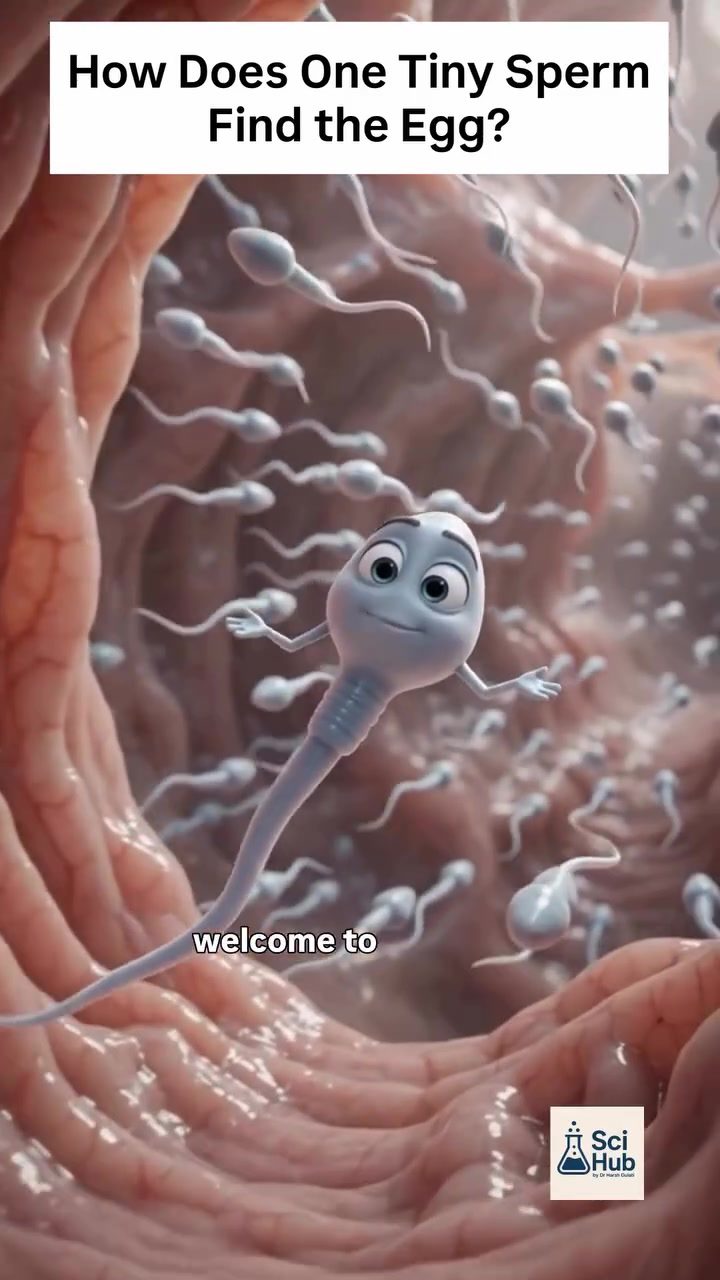
The Incredible Journey of a Sperm Cell
The journey of a sperm cell to reach the egg is one of the most extraordinary processes in human biology. This intricate voyage involves navigating through various challenges within the female reproductive system. Let's dive into the details of this microscopic adventure.
Why This Journey Matters
Understanding how a sperm cell reaches the egg is fundamental to comprehending human reproduction. This process is not only a crucial part of embryology but also plays a significant role in reproductive health and fertility. By examining the journey of a sperm cell, we gain insights into the mechanisms of fertilization and the beginning of pregnancy.
The Journey of a Sperm Cell
The Beginning of the Adventure
The journey begins when millions of sperm cells are released into the female reproductive tract. These tiny cells embark on an incredible adventure, swimming through the cervix, uterus, and fallopian tubes. Initially, the path seems straightforward, but it quickly becomes apparent that the journey is far more complex than it appears.
Navigating the Cervix and Uterus
The cervix is the first major obstacle. From a distance, it looks like a small, manageable gateway, but up close, it's much larger and more challenging. The sperm cells must navigate through the maze-like structure of the cervix, choosing the right paths to continue their journey. Some sperm cells get lost or slowed down, while others press on.
Reaching the Fallopian Tubes
Once through the cervix, the sperm cells enter the uterus, a vast and open space. Here, the journey becomes even more daunting. The sperm cells must swim through the uterine cavity, which is filled with fluid and lined with a mucosal layer that can trap or slow them down. Despite these challenges, the sperm cells continue their journey, guided by chemical signals that direct them towards the fallopian tubes.
The fallopian tubes are the final stretch before reaching the egg. These narrow, winding tunnels present another set of obstacles. The sperm cells must swim through the Fallopian tubes, which are lined with cilia that help propel them forward. The journey is arduous, and only a handful of sperm cells make it this far.
The Final Destination
After navigating the fallopian tubes, the sperm cells reach the ovum, or egg. The journey is far from over, as the sperm cells must now compete to fertilize the egg. Only one sperm cell will ultimately succeed, penetrating the egg's protective layers and fusing with it to form a zygote. This marks the beginning of a new life.
Practical Tips for Understanding Reproductive Biology
To better understand the journey of a sperm cell, consider the following tips:
Learn the Anatomy
Familiarize yourself with the female reproductive system. Understanding the structure and function of the cervix, uterus, and fallopian tubes can help you appreciate the challenges faced by sperm cells.
Study the Chemical Signals
Chemical signals play a crucial role in guiding sperm cells towards the egg. Learning about these signals and their mechanisms can provide deeper insights into the fertilization process.
Explore Embryology
Embryology is the study of the development of an embryo from fertilization to birth. Exploring this field can help you understand the significance of the sperm cell's journey and its role in human reproduction.
Use Visual Aids
Visual aids, such as 3D animations and diagrams, can make complex biological processes easier to understand. These tools can help you visualize the journey of a sperm cell and the various challenges it faces.
Engage with Scientific Literature
Reading scientific literature on reproductive biology can provide detailed and accurate information. Look for peer-reviewed articles, textbooks, and other reliable sources to deepen your knowledge.
Important Takeaways
The journey of a sperm cell to reach the egg is a remarkable feat of biology. It involves navigating through various obstacles in the female reproductive system, guided by chemical signals and propelled by the sperm cells' own motility. Understanding this process can provide valuable insights into human reproduction, embryology, and reproductive health.
Conclusion
The journey of a sperm cell to reach the egg is a fascinating and intricate process. By exploring the various challenges and obstacles faced by sperm cells, we can gain a deeper understanding of human reproduction and the beginning of life. Whether you're a student, a healthcare professional, or simply curious about biology, this journey offers a wealth of knowledge and inspiration.
Watch the Reel
Questions readers ask
How does a sperm cell navigate through the cervix?
A sperm cell must swim through the thick mucus of the cervix, which changes consistency during ovulation to facilitate passage. The sperm uses its tail to propel itself forward, navigating the complex environment of the cervix to reach the uterus.
What challenges does a sperm cell face in the fallopian tubes?
Once inside the fallopian tubes, sperm cells encounter a variety of obstacles, including the need to swim upstream against the flow of fluids and the immune responses of the female body. The fallopian tubes also have cilia, tiny hair-like structures that help move the sperm along, but also present a challenge to their progress.
How long does it typically take for a sperm cell to reach the fallopian tubes?
The journey from the vagina to the fallopian tubes can take several hours to several days. The fastest sperm cells can reach the fallopian tubes within 30 minutes, but the average time is around 5-6 hours. The survival of sperm cells in the female reproductive tract is limited, so timing is crucial.
What happens when the sperm cell meets the egg?
Upon reaching the egg, the sperm cell must penetrate the zona pellucida, an outer layer surrounding the egg. Once a sperm cell successfully binds to the egg, it triggers a series of chemical reactions that prevent other sperm from entering, ensuring that only one sperm can fertilize the egg.
Can sperm swim directly to the egg, or do they follow specific pathways?
Sperm cells do not swim in a straight line to the egg. They follow a convoluted pathway through the female reproductive system, guided by chemical signals and the structure of the reproductive organs. This journey involves navigating through the cervix, uterus, and fallopian tubes before reaching the egg.
What role do the fallopian tubes play in the fertilization process?
The fallopian tubes serve as the primary site for fertilization. They provide the environment and necessary conditions for the sperm cell to meet the egg. The tubes also facilitate the movement of the fertilized egg towards the uterus, where it will implant and develop into an embryo. The fallopian tubes are crucial for sperm cell to egg interaction.
How does the female body support or hinder the sperm cell's journey?
The female reproductive system provides both support and challenges for the sperm cell. Hormonal changes, such as those occurring during ovulation, create a more hospitable environment in the cervix. However, the immune system also works to eliminate sperm, creating a delicate balance that either aids or impedes the sperm's progress.
Related deep dives
Similar reads based on topic and creator.




Recent articles
Fresh deep dives from the latest Reels we unpacked.




Comments
Be the first to comment.