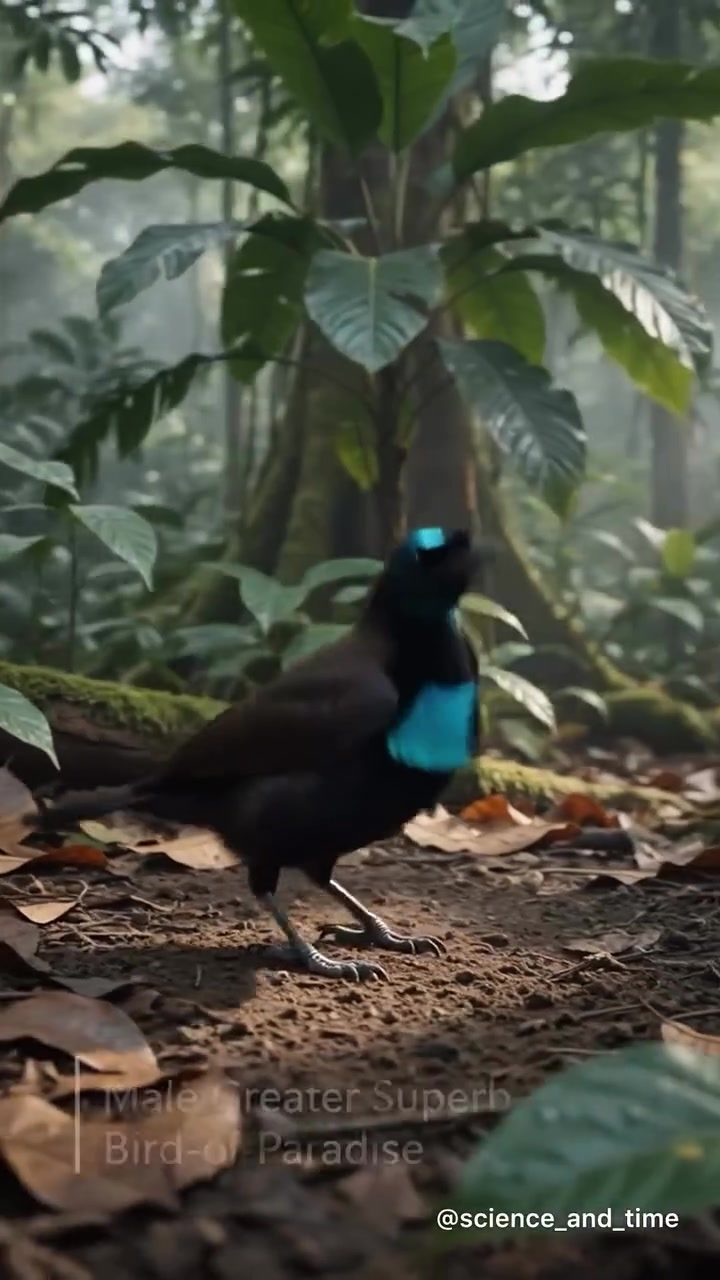
Bird-of-Paradise Display
In the lush rainforests of New Guinea, a male bird captivates with its elaborate courtship dance. This performance is not just a display of beauty; it’s a critical part of mating rituals and replication. Here’s a closer look at the Greater Superb Bird-of-Paradise and its extraordinary courtship.
Why this Matters
The Bird-of-Paradise’s courtship dance is one of the most intricate and visually stunning examples of animal behavior. Understanding this ritual offers deeper insights into mating strategies, environmental adaptations, and the dynamics of animal communication. As a species found in the densely forested regions of New Guinea, the Bird-of-Paradise provides a fascinating case study of how animals use their environment to enhance their mating success.
The Ritual of the Bird-of-Paradise
The Stage
The intricate dance begins with the male bird selecting the perfect stage. He searches for a small, sunlit clearing where his movements will be clearly visible. This meticulous preparation ensures that his display is unobstructed and that every movement can be seen by potential mates.
In the dense rainforest, finding such a spot is crucial. The male Bird-of-Paradise carefully clears every leaf and twig from the chosen area. This meticulous cleaning is not just about aesthetics; it’s about ensuring that the female can see every detail of his performance. The clean stage helps the female see every movement of his extraordinary dance, making it easier for her to assess his fitness and health.
The Performance
When the female arrives, the male’s performance begins. Every step, every flutter of his feathers, and every movement is a carefully choreographed display designed to prove he is the healthiest and strongest mate. The dance is a test of his agility, strength, and overall fitness, all of which are crucial traits for a potential mate.
The male's vibrant plumage, particularly his blue and black feathers, plays a significant role in this display. The flamboyant colors and intricate patterns are designed to catch the female’s eye and hold her attention. The dance itself is a visual and physical spectacle, with the male sometimes performing aerial maneuvers and intricate footwork.
The Female's Choice
Once the performance is complete, the female makes her decision. She chooses her mate based on the quality of his dance, as well as the health and vitality he demonstrates. Once a mate is chosen, the female takes on the sole responsibility of raising the chicks. This includes building the nest, incubating the eggs, and providing for the young until they are independent.
The Biological Significance
The courtship display of the Bird-of-Paradise is not just about attracting a mate; it’s about ensuring the survival and health of the offspring. By selecting a male who demonstrates exceptional fitness and health, the female increases the chances that her offspring will inherit these traits. This selective mating process helps maintain the species’ overall health and ensures that only the fittest individuals reproduce.
Practical Tips
For those interested in observing this extraordinary behavior, here are some practical tips:
Best Time to Visit
The courtship displays of the Bird-of-Paradise typically occur during the mating season, which varies slightly depending on the region but generally falls between September and November. During this time, males are more likely to be actively preparing their stages and performing their dances.
Essential Equipment
To capture the best views of these performances, consider bringing a high-quality camera or binoculars. A telephoto lens can help you get close-up shots of the bird’s movements and vibrant plumage. Additionally, a stable tripod can help you keep the camera steady, allowing for clearer images and videos.
Choosing the Right Location
New Guinea’s rainforests offer a variety of suitable habitats for spotting the Bird-of-Paradise. Popular locations include the Arfak Mountains and the bird sanctuaries in areas like the Crater Lakes. Guided tours are also available, providing insider knowledge and increasing your chances of witnessing the dance.
Ethical Considerations
Always remember to maintain a respectful distance and avoid disturbing the birds. The well-being of these animals should always be a priority. By adhering to ethical guidelines, you can enjoy the spectacle while ensuring that the birds’ natural behaviors are not disrupted.
Important Takeaways
The Bird-of-Paradise is a fascinating example of how nature utilizes intricate behaviors to ensure the survival and health of its species. By carefully selecting mates based on elaborate displays of fitness and strength, the species ensures that only the healthiest individuals contribute to the gene pool.
These behaviors also reflect the importance of environmental cues and adaptations. The rainforest setting, with its dense foliage and limited sunlight, provides the perfect backdrop for these displays. The male Bird-of-Paradise’s ability to find and prepare the ideal stage highlights the importance of environmental understanding in animal behavior.
Conclusion
The courtship dance of the Greater Superb Bird-of-Paradise is a captivating example of nature’s intricate mating rituals. From selecting the perfect stage to performing an elaborate dance, every step in this process serves a crucial biological purpose. Understanding these behaviors offers a deeper appreciation for the complexity and beauty of the natural world. Whether you’re a wildlife enthusiast, a researcher, or simply someone who appreciates the wonders of nature, the Bird-of-Paradise provides a fascinating glimpse into the intricate dance of life in the rainforests of New Guinea.
Watch the Reel
Questions readers ask
What makes the Bird of Paradise dance so unique?
The Bird of Paradise dance is unique due to its intricate movements, vibrant plumage, and the male's ability to transform its rainforest environment into a stage for the performance. This display showcases the male's agility, fitness, and creativity, making it a standout example of animal courtship rituals.
How does the Bird of Paradise use its environment during courtship?
The male Bird of Paradise clears a stage for its dance, using natural features of the rainforest to enhance the visual impact of its performance. This behavior highlights how the bird has adapted to its environment to maximize its mating success.
What can we learn from the mating strategies of the Bird of Paradise?
The mating strategies of the Bird of Paradise offer insights into how animals communicate and compete for mates. The elaborate dance demonstrates the importance of display, creativity, and environmental manipulation in attracting female birds.
Where can one observe the Bird of Paradise courtship dance?
The Bird of Paradise is native to the dense rainforests of New Guinea. Observing the dance in the wild can be challenging, but there are numerous videos and documentaries that capture the cinematic beauty of the bird's display.
What role does the male Bird of Paradise play in the courtship ritual?
The male Bird of Paradise plays a crucial role in the courtship ritual. It is responsible for creating and performing the elaborate dance, which serves to demonstrate its fitness, agility, and overall attractiveness to potential mates.
Why does the Bird of Paradise dance play in mating success?
The dance plays a significant role in the mating success of the Bird of Paradise because it allows the male to showcase its physical prowess, creativity, and adaptability. This display helps females assess the male's suitability as a mate and potential parent.
Are there different types of Bird of Paradise with unique dances?
Yes, there are 42 known species of Birds of Paradise, each with unique and varied courtship dances. These dances can range from elaborate and energetic to more subtle and rhythmic, with differences in plumage and movements that set each species apart.
Related deep dives
Similar reads based on topic and creator.




Recent articles
Fresh deep dives from the latest Reels we unpacked.




Comments
Be the first to comment.