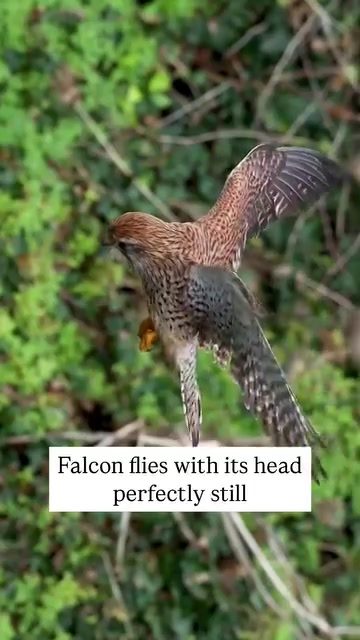
Falcon in Flight: The Wonders of Avian Agility
The falcon is a master of the skies, renowned for its speed, precision, and incredible maneuverability. But one of the most fascinating aspects of a falcon's flight is its ability to keep its head perfectly still while in motion. This seemingly effortless feat is a testament to the bird's remarkable physiology and adaptability.
Context: Why This Matters
Understanding how a falcon can fly with its head perfectly still is more than just a curiosity; it offers insights into the bird's hunting strategies, adaptations, and overall biology. This unique ability is crucial for the falcon's survival and predatory success, making it a subject of great interest for both bird enthusiasts and scientists alike.
The Mechanics of Flight
Wing Structure and Aerodynamics
Falcons possess a specialized wing structure that allows for exceptional agility and control. Their long, pointed wings are perfectly adapted for high-speed flight and rapid changes in direction. The primary feathers at the tips of the wings are particularly important, providing the necessary lift and stability for precise maneuvers.
Head Stabilization
One of the most striking features of a falcon in flight is its ability to keep its head perfectly still. This is achieved through a combination of physical adaptations and neurological control. The falcon's eyes are highly specialized, providing exceptional vision that is crucial for spotting prey from great distances. To maintain this clarity, the falcon must keep its head stable, even during rapid flight.
The falcon's head is supported by a unique bone structure and muscular system that allows it to remain steady while the body makes sharp turns and dives. This stability is further enhanced by the bird's keen sense of balance, which helps it navigate through complex aerial environments.
Hunting Strategies
Falcons are renowned for their hunting prowess, often swooping down on prey from great heights. During these high-speed dives, known as stoops, the falcon's head remains perfectly still, allowing it to maintain a clear line of sight on its target. This ability is essential for accurate strikes and successful hunts.
The falcon's hunting strategy often involves soaring high above its prey and then diving down at extremely high speeds. During this dive, the bird's body may twist and turn, but its head remains perfectly aligned with the target, ensuring a precise strike every time.
The Role of Vision
Falcons have some of the sharpest eyesight in the animal kingdom. Their eyes are large and provide them with exceptional clarity and detail, even from long distances. This acuity is crucial for spotting potential prey and for maintaining a stable visual field during flight.
Keen Eyesight
The falcon's eyes are designed to maximize visual acuity. The bird's eyes are fixed in their sockets, allowing for a wide field of view without the need to move the head. This means the falcon can scan the horizon for prey without compromising its stability.
Visual Adaptations
Falcons have several visual adaptations that enhance their hunting abilities. These include:
- Telescopic Vision: Falcons can see objects in the distance with remarkable clarity, making it easier to spot prey from high altitudes.
- Color Vision: The falcon's eyes are also sensitive to a wide range of colors, which can help in distinguishing between different types of prey and their surroundings.
- High Light Sensitivity: The falcon's eyes adapt well to varying light conditions, allowing it to hunt effectively in different environments, from bright daylight to low-light conditions.
Practical Tips for Observing Falcons
Best Times to See Them
Observing falcons in the wild can be a rewarding experience. The best times to see them are typically during the early morning or late afternoon, when they are most active. During these times, falcons are often seen soaring high above the landscape, scanning for prey.
Ideal Locations
Falcons prefer open spaces where they can easily spot prey and have ample room to maneuver. Ideal locations for spotting falcons include:
- Grasslands and Prairies: These open spaces provide ample hunting grounds for falcons.
- Mountainous Regions: Falcons often nest in high cliffs and soar above mountainous landscapes in search of prey.
- Coastal Areas: Some species of falcons are known to hunt along coastlines, diving into the water to catch fish and other marine creatures.
Equipment for Birdwatching
For the best viewing experience, consider using a pair of binoculars or a spotting scope. These tools can help you get a closer look at the falcon's flight patterns and behaviors, allowing you to appreciate its agility and precision more fully.
- Binoculars: A good pair of binoculars with at least 8x magnification is ideal for spotting falcons.
- Spotting Scope: For even closer observation, a spotting scope can be a valuable tool, providing a detailed view of the falcon's movements and behaviors.
- Camera with Telephoto Lens: If you're interested in capturing images or videos of falcons, a camera with a telephoto lens can help you get clear, high-quality shots.
Important Takeaways
The falcon's ability to fly with its head perfectly still is a testament to its incredible adaptability and physiological prowess. This unique skill is essential for its hunting strategies and overall survival. By understanding the mechanics behind this fascinating behavior, we gain a deeper appreciation for these remarkable birds and the wonders of the natural world.
Conclusion
Watching a falcon in flight is a breathtaking experience. The bird's agility, precision, and ability to keep its head perfectly still while in motion are just a few of the many reasons why falcons are revered as some of the most impressive avian hunters. Whether you're an avid birdwatcher or simply curious about the natural world, observing a falcon in action is an unforgettable experience.
Watch the Reel
Questions readers ask
How does a falcon maintain head stability during high-speed flights?
A falcon achieves head stability through a combination of physiological adaptations, including a unique bone structure and a sophisticated balance system. This allows the falcon to keep its head perfectly still, even during high-speed flights and sharp maneuvers, ensuring precise hunting.
What role does a falcon's bone structure play in keeping its head still?
The falcon's bone structure is specifically designed to support its agile flight and head stability. The unique shape and strength of its bones, along with specialized joints, enable the falcon to maintain a steady head position while its body performs complex maneuvers.
How does a falcon's balance system contribute to its aerial hunting?
A falcon's keen sense of balance is crucial for its aerial hunting. This system helps the bird to make precise adjustments in flight, allowing it to keep its head still and focus on its prey, even during rapid changes in direction and speed.
What adaptations does a falcon have for precise hunting while in flight?
Falcons have several adaptations for precise hunting, including exceptional vision, a streamlined body shape, and a unique ability to stabilize their head in mid-flight. These features allow the falcon to track and capture prey with remarkable accuracy and efficiency.
Why is head stability important for a falcon's survival?
Head stability is vital for a falcon's survival as it enables the bird to maintain a clear and steady view of its surroundings, especially its prey. This stability allows the falcon to make quick decisions and precise movements, enhancing its hunting success and overall fitness.
What are falcon flight secrets that enhance its hunting prowess?
Falcons have mastered various flight secrets, including agile movements, high-speed maneuvers, and the ability to stabilize their head mid-flight. These secrets, combined with specialized physiology, enable the falcon to outmaneuver prey and capture it efficiently.
Related deep dives
Similar reads based on topic and creator.




Recent articles
Fresh deep dives from the latest Reels we unpacked.




Comments
Be the first to comment.