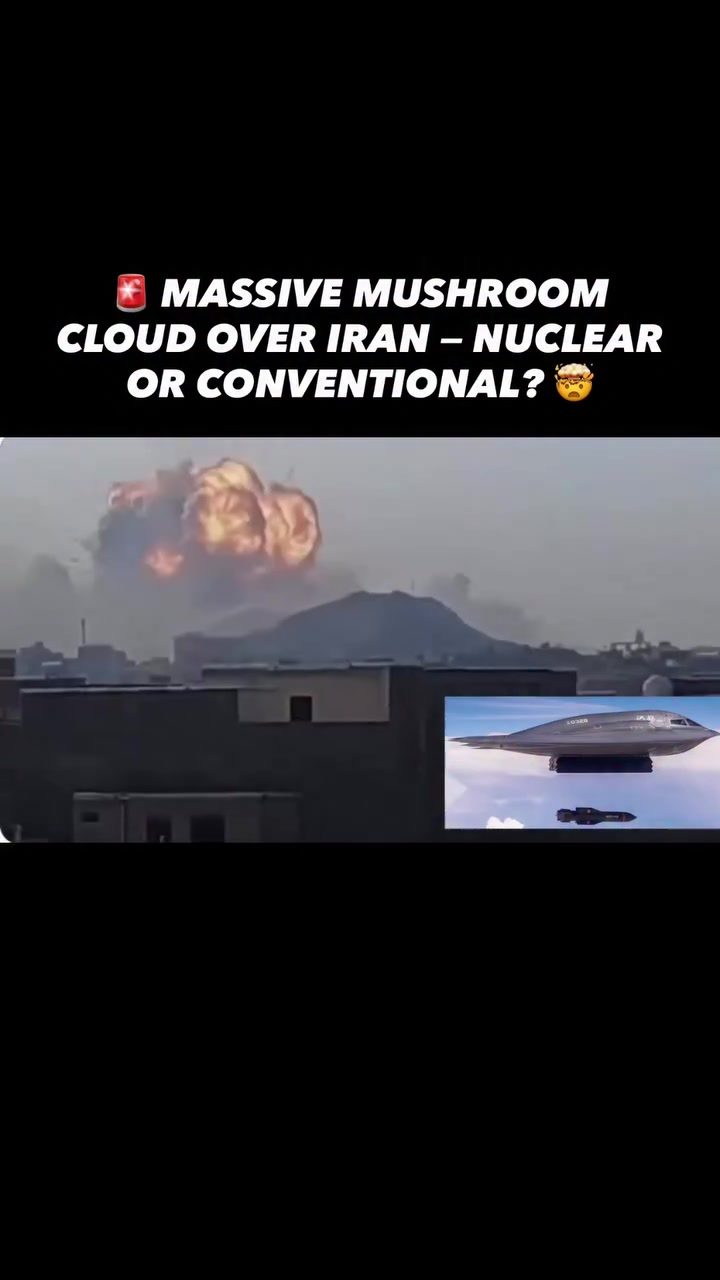
Large Explosion in Iran Creates Massive Mushroom Cloud
The recent explosion in Iran that resulted in a massive mushroom-shaped cloud has garnered significant attention. The footage of this event has spread rapidly, sparking intense debate and speculation about its origins and implications. Understanding the nature of this explosion and the context surrounding it is crucial for a thorough analysis.
Context
The debate surrounding the explosion is centered around the question of whether it was caused by a nuclear detonation or a large conventional explosion. The visual similarity between mushroom clouds from nuclear explosions and those from large conventional explosions, such as fuel-air or ammonium nitrate explosions, has led to uncertainty and speculation. This uncertainty underscores the need for independent seismic data, radiation readings, and official confirmation from multiple governments to determine the exact nature of the event.
Why This Matters
Explosions of this magnitude are significant for several reasons. They can have severe consequences for the environment, public health, and geopolitical stability. Understanding whether the explosion was nuclear or conventional is essential for assessing its potential impact and responding appropriately.
Understanding Mushroom Clouds
Mushroom clouds are a well-known visual signature of nuclear explosions, but they can also result from large conventional explosions. The formation of a mushroom cloud is influenced by several factors, including the type and amount of explosive material, the environment, and atmospheric conditions.
A mushroom cloud typically forms when a large amount of energy is released in a short period, creating a powerful upward draft. This draft pushes the hot, expanding gases and debris upward, forming the characteristic mushroom shape.
Nuclear vs. Conventional Explosions
Distinguishing between a nuclear and a conventional explosion involves looking at several key indicators:
- Seismic Waves: Nuclear explosions produce distinct seismic waves that can be detected by seismographs. Large conventional explosions also produce seismic waves, but the patterns and magnitudes differ.
- Radiation Levels: Nuclear explosions release significant levels of radiation, which can be detected by radiation monitoring equipment. Conventional explosions do not produce this type of radiation.
- Explosion Characteristics: Nuclear explosions can result in a bright flash of light, followed by a large fireball and the formation of a mushroom cloud. Conventional explosions, while they can also produce a mushroom cloud, typically do not have the same visual characteristics, such as the initial flash of light.
Visible Signs of the Explosion
The footage of the explosion in Iran shows a massive mushroom-shaped cloud, which has led to speculation about its nature. Several key points are visible in the footage:
- Military Aircraft: A military aircraft, possibly a B-2 bomber, is visible in the background. Its presence raises questions about the involvement of military activities in the region.
- Explosion Characteristics: The formation of the mushroom cloud, the scale of the explosion, and the visible debris suggest a powerful detonation.
- Geographical Context: The explosion occurred over a region in Iran, which adds to the geopolitical significance of the event.
The Role of Official Confirmation
Official confirmation from multiple governments and independent data are crucial for verifying the nature of the explosion. This involves:
- Seismic Data: Independent seismic data can provide insights into the type and magnitude of the explosion.
- Radiation Readings: Radiation readings can confirm the presence or absence of nuclear radiation, helping to determine whether the explosion was nuclear.
- Government Statements: Official statements from governments involved can provide valuable context and confirmation.
Practical Tips
For those following the developments, it is essential to remain informed by reliable sources. Here are some practical tips:
- Rely on Trusted News Outlets: Major news outlets often have the resources to verify information and provide reliable updates.
- Monitor Official Statements: Official statements from governments and international organizations can offer crucial insights.
- Stay Updated on Scientific Data: Seismic and radiation data can provide independent verification of the explosion's nature.
Important Takeaways
The debate surrounding the explosion in Iran highlights the need for careful analysis and verification. Understanding the visual and scientific indicators of different types of explosions is crucial for making informed judgments. As more information becomes available, it will be essential to rely on independent data and official confirmation to accurately assess the event.
Conclusion
The large explosion in Iran that created a massive mushroom cloud has sparked intense debate and speculation. While the visual characteristics of the explosion have led to questions about its nuclear or conventional nature, independent data and official confirmation are essential for a definitive answer. As the situation develops, staying informed by reliable sources and monitoring official statements will provide clarity and context.
Watch the Reel
Questions readers ask
What are the key differences between a nuclear explosion and a conventional explosion?
Nuclear explosions produce a distinctive mushroom cloud due to the massive energy release and heat, while conventional explosions, like those from ammonium nitrate or fuel-air bombs, can also create mushroom clouds but through different mechanisms. Nuclear explosions also typically leave behind radioactive fallout, which is not a feature of conventional explosions.
Why has the explosion in Iran been a subject of media coverage and societal impact?
The explosion in Iran has captured significant media attention and societal interest due to the dramatic footage of the mushroom cloud, the uncertainty about its cause, and the potential geopolitical implications. The widespread circulation of the explosion footage has fueled speculation and debate among viewers worldwide.
How do nuclear and conventional explosions generate mushroom clouds?
In a nuclear explosion, the mushroom cloud forms from the intense heat and pressure that lifts the fireball and creates a updraft of hot air and debris. In a conventional explosion, the mushroom cloud can result from the rapid expansion of gases and the subsequent mixing with cooler air, leading to a similar visual effect.
What kind of conventional explosives could produce a mushroom cloud similar to a nuclear explosion?
Large conventional explosions involving substances like ammonium nitrate or fuel-air mixtures can generate mushroom clouds. These explosions release a tremendous amount of energy in a short period, creating a fireball and subsequent cloud that can resemble the visual effects of a nuclear detonation.
What is the significance of the recent explosion in Iran being compared to a nuclear explosion?
The comparison of the recent explosion in Iran to a nuclear explosion is significant because it highlights the potential for misinterpretation and overreaction. It underscores the importance of accurate analysis and the need for reliable information to avoid escalating tensions and panic.
What are the latest updates on the Iran explosion?
As of the latest reports, authorities in Iran have not confirmed the exact cause of the explosion. Speculation continues, with some suggesting it was a conventional explosion while others point to the possibility of a nuclear incident. For the most current information, refer to reliable news sources and official statements.
Recent articles
Fresh deep dives from the latest Reels we unpacked.




Comments
Be the first to comment.