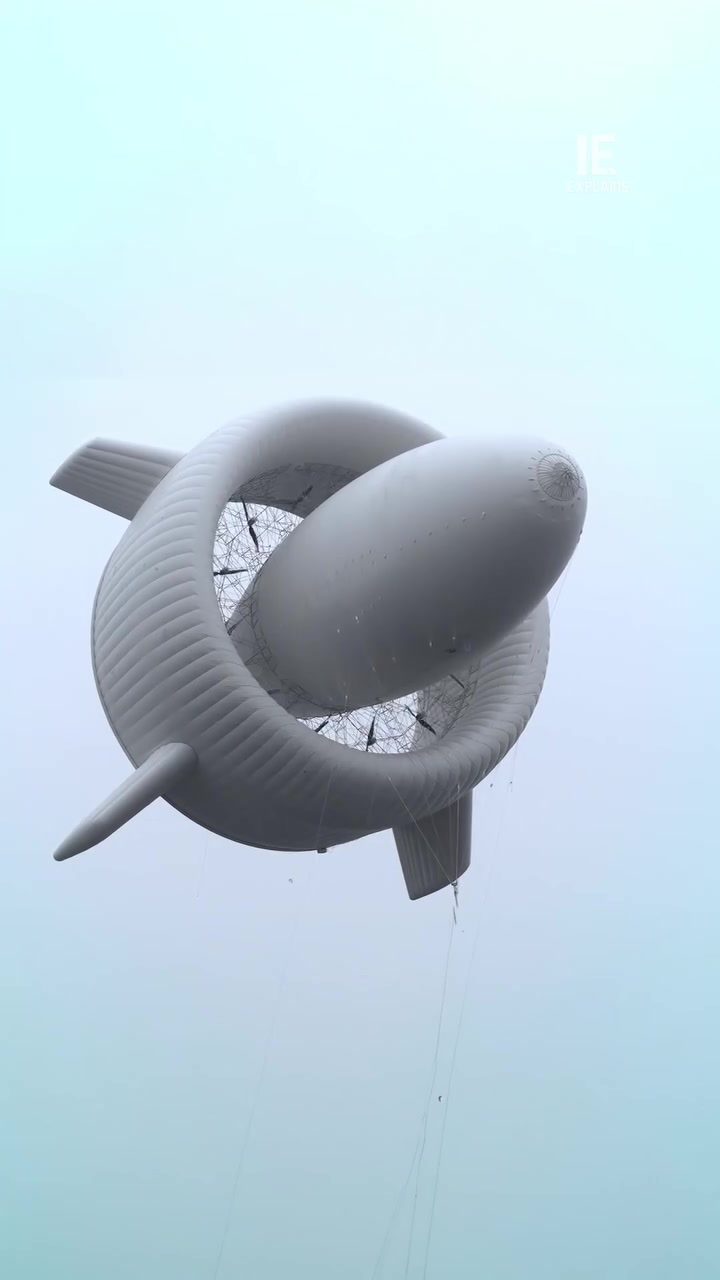
Airship Wind Turbines
The S2000 SAWES (Stratospheric Airship Wind Energy System) represents a groundbreaking advancement in wind energy technology. This helium-lifted airborne wind turbine is designed to harness the stronger, more consistent winds found at high altitudes, specifically around 2,000 meters. Developed in China, the S2000 is a 60-meter-long, ducted airship platform equipped with 12 internal turbines, capable of generating up to 3 megawatts of power.
The innovative design of the S2000 SAWES sets it apart from traditional wind turbines in several key ways. Unlike conventional turbines that are anchored to the ground by massive concrete towers, the S2000 floats freely in the sky at an altitude of approximately 6,560 feet above sea level. This altitude is chosen for a reason: winds at this height are not only faster but also far more consistent than those near the surface.
Context: Why Airship Wind Turbines Matter
The quest for renewable energy sources has led to significant advancements in wind power technology. Traditional wind turbines have been the go-to solution for harnessing wind energy, but they come with their own set of challenges. These include dependency on wind conditions near the ground, which can be unpredictable, and the need for significant land use and infrastructure. The S2000 SAWES aims to address these issues by taking wind energy generation to new heights, both literally and figuratively.
The airship design of the S2000 allows it to float at high altitudes where wind speeds are generally higher and more consistent. This is a critical advantage because wind power generation is highly dependent on wind speed. The S2000's operating altitude means it can generate power more efficiently and consistently, making it a more reliable source of energy.
Main Discussion
The Design and Functionality
The S2000 is a massive airship with a volume of about 20,000 cubic meters. It features an inflatable helium-filled aerostat wrapped around 12 turbines. The lightweight design of the system means it requires no additional energy to get airborne; it rises and floats freely without the need for propulsion. The airship is controlled via a tethered cable that also provides stability, keeping the system positioned exactly where it needs to be.
The aerostat is wrapped around 12 turbines, which are the heart of the power generation system. The design ensures that even a modest increase in wind speed results in a significant increase in power generation. This is due to a fundamental law of physics known as the cube law, which states that the power available in wind increases with the cube of the wind speed.
The Cube Law and Power Generation
The cube law is a critical concept in understanding the efficiency of wind power. It states that the power available in wind increases with the cube of the wind speed. This means that even a small increase in wind speed can result in a significant increase in power generation. For example, a wind speed of 10 meters per second (m/s) can generate 1,000 times more power than a wind speed of 1 m/s.
The S2000 operates at an altitude where the wind speed is significantly higher than at ground level. At an elevation of 10,000 feet, the power density jumps to approximately 20,084 watts per square meter, compared to 304 watts per square meter at 1,000 feet. This substantial increase in power density makes the S2000 a highly efficient power generator, capable of producing up to 3 megawatts of power.
Operational Advantages
One of the key advantages of the S2000 is its ability to harness consistent winds at high altitudes. Traditional wind turbines are often unable to generate power efficiently during periods of low wind speed or high turbulence. The S2000, on the other hand, operates in a more stable and consistent wind environment, ensuring reliable power generation.
The airship design also means that the S2000 can be deployed in areas where traditional wind turbines are not feasible. This includes urban areas, remote sites, and offshore locations. The ability to float freely in the sky makes it a versatile solution for powering a wide range of applications, from urban power grids to remote communities and offshore installations.
Practical Tips
Deploying an airship wind turbine like the S2000 requires careful planning and consideration of various factors. Here are some practical tips for those looking to implement this technology:
- Site Selection: Choose a location with minimal air traffic and low risk of collisions. The airspace should be clear of obstacles and have consistent wind patterns at the desired altitude.
- Regulatory Compliance: Ensure that all necessary permits and approvals are obtained. This includes compliance with aviation regulations and environmental impact assessments.
- Maintenance Plan: Develop a comprehensive maintenance plan to ensure the longevity and reliability of the system. Regular inspections and maintenance are crucial for keeping the airship in optimal condition.
- Power Grid Integration: Plan for the integration of the generated power into the existing grid. This may involve upgrades to the grid infrastructure and coordination with local utility providers.
Important Takeaways
The S2000 SAWES represents a significant leap forward in wind energy technology. Its ability to harness stronger, more consistent winds at high altitudes makes it a more reliable and efficient power generator compared to traditional wind turbines. The innovative design and operational advantages of the S2000 make it a viable solution for a wide range of applications, from urban power grids to remote communities and offshore installations.
Conclusion
The S2000 SAWES is a pioneering development in the field of wind energy, offering a unique and efficient way to harness the power of the wind. By floating freely at high altitudes, this helium-lifted airborne wind turbine can generate more power more consistently than traditional ground-based turbines. As the world continues to seek sustainable and reliable energy sources, innovations like the S2000 SAWES will play a crucial role in shaping the future of renewable energy.
Watch the Reel
Questions readers ask
What makes the S2000 wind turbine different from traditional wind turbines?
The S2000 SAWES is different because it floats at high altitudes using an airship design, whereas traditional turbines are anchored to the ground. The S2000 harnesses winds at approximately 6,560 feet, which are stronger and more consistent than those at lower altitudes.
How does the S2000 SAWES generate power?
The S2000 is equipped with 12 internal turbines within a 60-meter-long, helium-lifted airship. These turbines capture the strong winds at high altitudes, converting them into up to 3 megawatts of power.
What are the benefits of using high altitude wind power?
High altitude winds are more consistent and stronger, providing a reliable source of power. This consistency results in more efficient energy generation throughout the day and year, unlike turbines closer to the ground.
How does the S2000 stay airborne?
The S2000 uses a helium-filled airship design, which provides the necessary lift to stay airborne at an altitude of around 6,560 feet. This design eliminates the need for a massive concrete tower and allows it to float freely in the sky.
What is the potential impact of the S2000 on renewable energy?
The S2000 represents a significant advancement in renewable energy innovations by providing a more consistent and efficient power source. Its ability to harness strong, high-altitude winds can contribute to a more stable and reliable renewable energy grid.
Why was the altitude of 6,560 feet chosen for the S2000?
This altitude was chosen because it offers a balance between strong, consistent winds and feasible operational conditions. Winds at this height are less turbulent and more reliable than those at even higher altitudes.
What role does the airship design play in the S2000's functionality?
The airship design allows the S2000 to float freely at high altitudes, positioning the turbines in the optimal wind zone. This design also eliminates the need for heavy and expensive infrastructure typically required by traditional wind turbines, improving operational efficiency and reducing costs.
Related deep dives
Similar reads based on topic and creator.


Recent articles
Fresh deep dives from the latest Reels we unpacked.




Comments
Be the first to comment.