Quantum Immortality: Where Quantum Physics Meets Consciousness
Quantum immortality is a captivating concept that has sparked countless debates and discussions. Originating from the many-worlds interpretation of quantum mechanics, this idea suggests that every quantum event can produce multiple possible outcomes. Some people have extended this interpretation to propose that your conscious experience would always continue in a branch where you survive. This thought experiment, however, is not an accepted scientific fact and should be understood as a philosophical implication rather than a tested theory about human consciousness.
Context: Why This Matters
Quantum immortality delves into the intersection of quantum physics, philosophy, consciousness, and cosmology. It challenges our understanding of reality and pushes the boundaries of what we think is possible. While it is an intriguing thought experiment, it is important to separate science from speculation. Understanding the implications of this concept can provide insights into the nature of reality and our place in the universe.
The Many-Worlds Interpretation
The many-worlds interpretation of quantum mechanics posits that all possible outcomes of quantum measurements are physically realized in some "branch" of the universe. This interpretation suggests that every quantum event results in a split, creating a multitude of parallel universes, each representing a different outcome. While this is a fascinating concept, the challenges of verifying or testing it with real-world experiments remain daunting.
Quantum Immortality and Consciousness
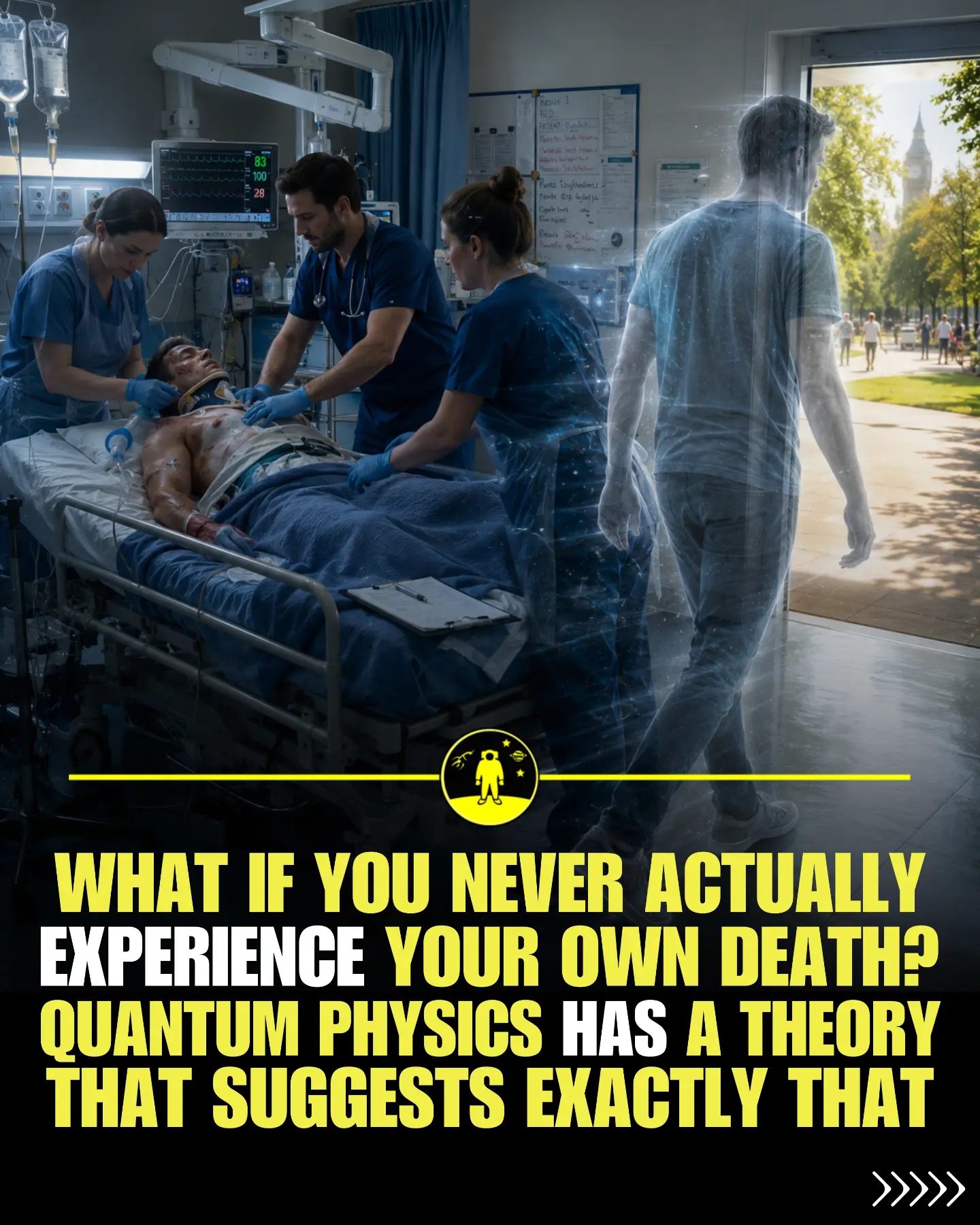
The idea of quantum immortality extends this interpretation to consciousness. According to this notion, death still happens, but your awareness would continue in a timeline where you survive. This concept suggests that consciousness is only ever present in the reality where the subject is still alive, essentially making death a non-experience. This is where the unsettling part of the theory comes in—you would never actually experience your own death.
Visualizing the Concept
The visual metaphors used to illustrate this concept are quite compelling. A hospital scene, for example, can represent the fragile nature of life and the moments where survival or death is a critical factor. Similarly, an eye reflecting a cityscape can symbolize the continuation of awareness and experience, even if it is in a different reality.
Another powerful visual is the image of an astronaut on a planet, suggesting the vastness of the universe and the multitude of realities that exist. This metaphor highlights the idea that consciousness could be perpetually experiencing life in some form, even if it is not in the reality we are currently familiar with.
Near Death Experiences and Quantum Immortality
Many people have tried to connect quantum immortality to near-death experiences, the Mandela Effect, or feelings that reality has changed after surviving an accident. These experiences can feel very real and have led some to wonder if they are glimpses into other realities. However, there is currently no scientific evidence linking these phenomena to parallel universes or quantum immortality. Psychology, memory, and neuroscience offer more evidence-based explanations for these experiences, emphasizing the importance of distinguishing between scientific facts and speculative theories.
Practical Tips
While quantum immortality is a fascinating thought experiment, it is crucial to approach it with a critical mindset. Here are some practical tips for understanding and exploring this concept:
-
Understand the Basics of Quantum Mechanics: Familiarize yourself with the principles of quantum mechanics, particularly the many-worlds interpretation. This will provide a solid foundation for understanding quantum immortality.
-
Distinguish Between Science and Speculation: Recognize that quantum immortality is a philosophical implication and not a tested scientific theory. There is no experimental evidence to support the idea that consciousness moves between timelines.
-
Explore Other Interpretations: The many-worlds interpretation is just one of several interpretations of quantum mechanics. Explore other interpretations, such as the Copenhagen interpretation or the pilot-wave theory, to gain a more comprehensive understanding of quantum physics.
-
Engage with the Community: Join forums, read articles, and engage with others who are interested in quantum physics and consciousness. Sharing ideas and perspectives can deepen your understanding and appreciation of this complex topic.
-
Stay Curious, but Skeptical: Allow yourself to be intrigued by the possibilities, but maintain a skeptical perspective. This balance will help you navigate the fascinating world of quantum physics without losing sight of the distinction between fact and speculation.
Important Takeaways
Quantum immortality is a thought-provoking concept that invites us to ponder the nature of reality, consciousness, and our place in the universe. While it is grounded in the many-worlds interpretation of quantum mechanics, it is important to remember that it remains a philosophical implication rather than a proven scientific theory.
Key points to remember:
- Quantum immortality suggests that consciousness only exists in realities where one is still alive, but this is not an accepted scientific fact.
- Death may still occur, but your awareness would continue in a timeline where you survive.
- There is no experimental evidence linking near-death experiences or the Mandela Effect to quantum immortality.
- Psychology, memory, and neuroscience provide more evidence-based explanations for these phenomena.
Conclusion
The universe is already strange enough without exaggeration. Whether quantum immortality is impossible, plausible, or simply untestable remains unanswered by science. The idea of continuing consciousness in a different reality is a fascinating one, but it should be approached with a critical and analytical mindset. Engaging with this concept can deepen our understanding of quantum physics, philosophy, and consciousness, even if it remains a speculative idea.
Watch the Reel
Questions readers ask
What is the many-worlds interpretation, and how does it relate to quantum immortality?
The many-worlds interpretation is a theory in quantum physics that suggests every quantum event spawns multiple universes, each corresponding to a different outcome. Quantum immortality extends this idea to consciousness, proposing that a person's experience of life continues indefinitely across these parallel universes, as there is always a branch where the person survives.
Is quantum immortality a proven scientific theory, or is it more of a philosophical idea?
Quantum immortality is primarily a philosophical idea rather than a proven scientific theory. It is a thought experiment that challenges our understanding of reality and life's end. While it stems from the many-worlds interpretation, it has not been scientifically validated.
How does quantum immortality challenge our understanding of death in quantum physics?
Quantum immortality suggests that consciousness transcends the physical limitations of the body, implying that death as we understand it may not be the end. By proposing that consciousness continues in parallel universes, it challenges the finality of death and opens up new philosophical questions about the nature of life and existence.
Are there any empirical or experimental evidence for quantum immortality?
As of now, there is no empirical or experimental evidence for quantum immortality. The concept is purely theoretical and philosophical, arising from interpretations of quantum mechanics rather than direct observations or experiments. It remains a speculative idea rather than a established fact.
How does quantum immortality connect to our understanding of reality in quantum physics?
Quantum immortality pushes the boundaries of our understanding of reality by suggesting that consciousness can experience an endless series of lives across parallel universes. It raises profound questions about the nature of existence, identity, and the fundamental fabric of reality as described by quantum physics.
Related deep dives
Similar reads based on topic and creator.




Recent articles
Fresh deep dives from the latest Reels we unpacked.




Comments
Be the first to comment.