Electric Semi-Trucks
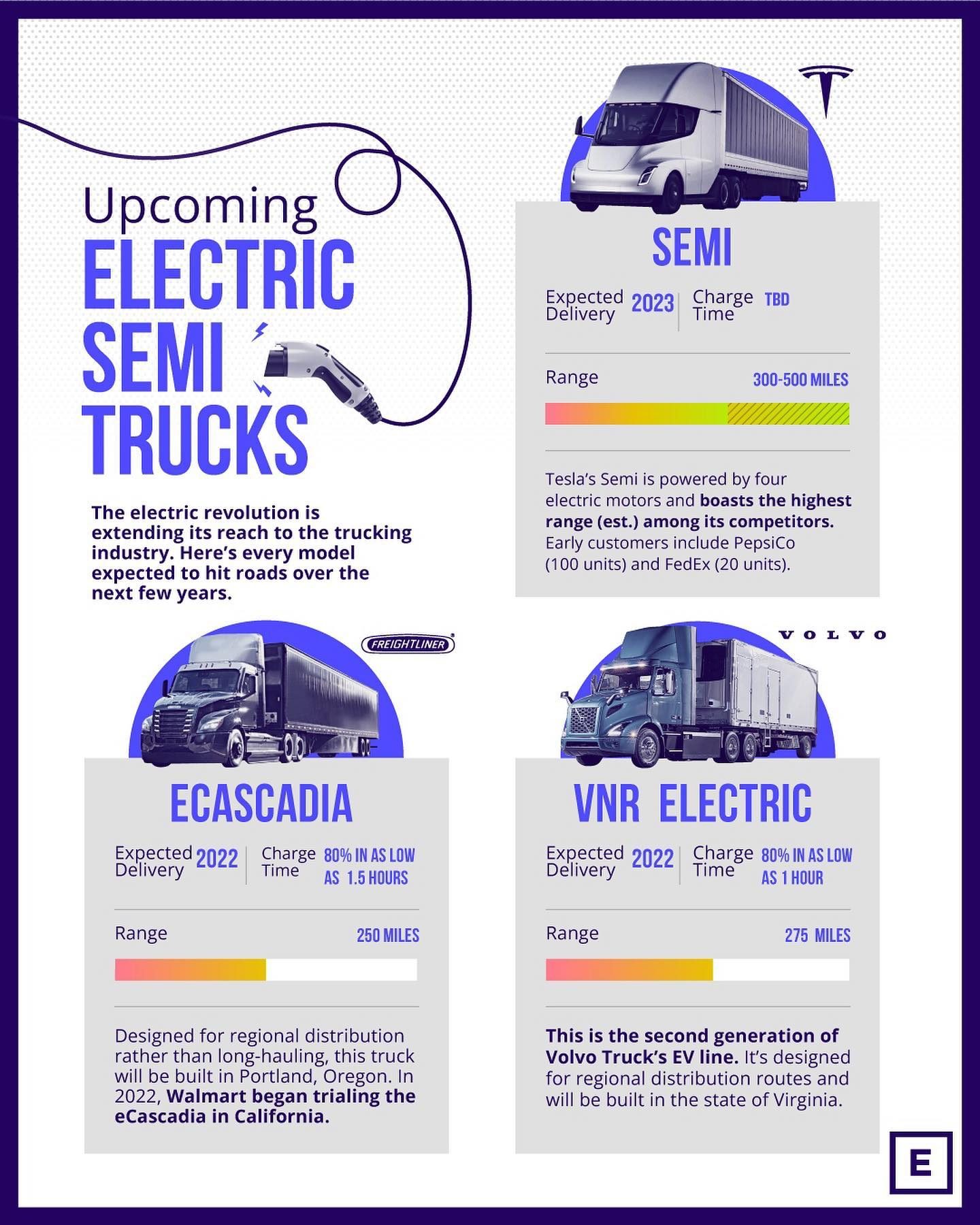
Electric semi-trucks are poised to revolutionize the shipping and logistics industry by significantly reducing carbon emissions. However, one of the main challenges they face is range limitation. This is particularly evident in long-haul transportation, where diesel-powered semis can travel up to 2,000 miles before needing to refuel. In contrast, the electric Tesla Semi, which offers the longest estimated range among current models, promises up to 500 miles on a single charge. But it's important to note that the Tesla Semi is still in development, and its capabilities have not been fully proven yet.
Why This Matters
The transition to electric semi-trucks is crucial for decarbonizing the logistics sector. Traditional diesel-powered semis contribute significantly to greenhouse gas emissions, making the industry a prime target for electrification efforts. By adopting electric semi-trucks, companies can reduce their carbon footprint, achieve sustainability goals, and potentially lower operational costs in the long run.
Electric Semi-Trucks: The Current Landscape
Several manufacturers are in the process of developing and deploying electric semi-trucks, each with varying specifications and planned release dates. Here’s a look at some of the key players and their offerings:
Freightliner eCascadia
Freightliner is a prominent name in the electric semi-truck market. The Freightliner eCascadia is expected to hit the market in 2022, with an estimated range of 250 miles. This model is designed for shorter hauls and urban delivery routes, where the need for extended range is less critical.
Volvo VNR Electric
Volvo’s VNR Electric is another significant contender, slated for delivery in 2022. This model offers a range of 275 miles, making it suitable for medium to short-haul operations. Volvo is known for its robust engineering and reliability, which bodes well for the performance of the VNR Electric.
Peterbilt 579EV
Peterbilt’s 579EV is expected to be available sometime in 2022, though the exact delivery date is yet to be confirmed. This model offers a range of 150 miles, making it ideal for urban and regional delivery routes. Peterbilt’s focus on durability and efficiency makes the 579EV a strong candidate for fleet owners looking to reduce their emissions.
BYD 8TT
The BYD 8TT is already in operation and offers a range of 167 miles. BYD is known for its innovative approach to electric vehicles and has a strong presence in the electric bus and commercial vehicle market. The 8TT is designed to handle various applications, from urban deliveries to regional hauls.
Nikola Tre BEV
Nikola’s Tre BEV stands out with its hydrogen fuel cell technology, which provides a longer range than most electric semi-trucks. Nikola claims that its hydrogen models can travel over 500 miles before needing to refuel, making them suitable for longer hauls. Nikola’s Tre BEV is set for delivery in 2023, positioning it as a potential game-changer in the industry.
Charging Infrastructure
One of the biggest hurdles for electric semi-trucks is the availability of charging infrastructure. Long-haul trucking requires robust and strategically placed charging stations to ensure that trucks can travel efficiently. Current charge times range from 1.5 hours to 3.3 hours, depending on the model and charging technology. This means that drivers will need to plan routes carefully to account for downtime, which can impact overall efficiency and delivery schedules.
Charge Times
The charge times for electric semi-trucks vary significantly:
- Freightliner eCascadia: Approximately 2.5 hours
- Volvo VNR Electric: Around 1 hour
- Peterbilt 579EV: Estimated at 2.5 hours
- BYD 8TT: Around 1.5 hours
- Nikola Tre BEV: About 3.3 hours
Charging Standards
Most electric semi-trucks use standard charging connectors, but the specifics can vary by manufacturer. It’s essential for fleet owners to ensure that their charging infrastructure is compatible with the trucks they plan to purchase.
Practical Tips for Fleet Owners
Transitioning to electric semi-trucks requires careful planning and preparation. Here are some practical tips for fleet owners considering the switch:
Assess Your Needs
Evaluate your fleet’s current operations and determine which routes and applications are best suited for electric semi-trucks. Start with shorter hauls or routes with access to reliable charging infrastructure.
Plan for Charging
Identify charging locations along your most frequent routes and work with charging providers to install necessary infrastructure. Consider setting up dedicated charging stations at your terminals and depots.
Train Your Drivers
Electric semi-trucks have different handling and maintenance requirements compared to their diesel counterparts. Provide comprehensive training to ensure that your drivers are familiar with the new technology and charging procedures.
Monitor Performance
Keep a close eye on the performance of your electric semi-trucks, including range, charging times, and potential maintenance issues. Regular monitoring will help you optimize operations and plan for future upgrades.
Consider Battery Upgrades
As battery technology advances, newer and more efficient battery packs may become available. Stay informed about the latest developments and consider upgrading your fleet to take advantage of improved range and performance.
Important Takeaways
Electric semi-trucks offer a promising solution for reducing carbon emissions in the logistics industry. While range limitations and charging infrastructure remain significant challenges, the growing number of models and manufacturers entering the market signals a bright future for electric trucking.
Range and Charging
Electric semi-trucks have a range of 150 to 500 miles on a single charge, making them suitable for short to medium-haul operations. Charging times vary from 1 to 3.3 hours, necessitating carefully planned routes and charging infrastructure.
Commercial Use Cases
Electric semi-trucks are well-suited for urban and regional deliveries, where the need for extended range is less critical. As battery technology improves, these trucks will become more viable for longer hauls.
Government and Industry Support
The transition to electric semi-trucks is supported by various government incentives and industry initiatives aimed at reducing carbon emissions and promoting sustainable logistics practices. Fleet owners should explore available grants, tax incentives, and other financial benefits to support their transition to electric vehicles.
Future Trends
The future of electric semi-trucks looks promising, with ongoing advancements in battery technology, charging infrastructure, and vehicle design. As more models enter the market and gain acceptance, we can expect to see a broader range of options and improved performance.
Conclusion
Electric semi-trucks are set to play a pivotal role in decarbonizing the shipping and logistics industry. While challenges like range limitations and charging infrastructure remain, the benefits of reduced emissions and potential cost savings make them an attractive option for fleet owners. By carefully planning and staying informed about the latest developments, companies can successfully transition to electric semi-trucks and contribute to a more sustainable future.
Watch the Reel
Questions readers ask
What are the current limitations of electric semi-trucks for long-haul transportation?
The primary limitation is range. While diesel semis can travel up to 2,000 miles on a single tank, the electric Tesla Semi, with the longest estimated range among current models, offers up to 500 miles on a single charge. This discrepancy poses significant challenges for long-haul trips.
How do electric semi-trucks compare to diesel trucks in terms of environmental impact?
Electric semi-trucks produce zero tailpipe emissions, unlike diesel trucks. This makes them a more environmentally friendly option, as they can significantly reduce the carbon footprint of the logistics industry.
What are some of the best electric semi-truck options available in 2023?
Several manufacturers are developing models. Some of the notable ones include the Tesla Semi, which offers up to 500 miles on a single charge, the Volvo VNR Electric, and the Freightliner eCascadia, both of which are suitable for regional haul operations.
How long does it typically take to charge an electric semi-truck?
Charging times vary depending on the battery size and charging infrastructure. For example, a Tesla Semi, when using a high-speed charger, can be charged to 80% in about 30 minutes, while a full charge can take up to 1 hour and 30 minutes.
What are the main challenges in developing an electric truck charging infrastructure?
Key challenges include the need for high-power charging stations, strategic placement of charging points along long-haul routes, and ensuring the reliability and speed of charging to minimize downtime for trucks. Additionally, the cost of infrastructure development and maintenance is a significant consideration.
How do electric semi-trucks impact the cost of freight delivery?
While the upfront cost of electric semi-trucks is often higher, they can reduce long-term operational costs through lower fuel and maintenance expenses. This can result in cost savings for logistics companies, but the overall impact on freight delivery costs depends on various factors, including charging infrastructure and battery lifecycle.
Which manufacturers are leading the development of electric semi-trucks?
Several major manufacturers are at the forefront, including Tesla, Volvo, and Daimler (with their Freightliner eCascadia model). These companies are investing in research and development to create models that cater to different logistics needs and reduce the industry's environmental impact.
Related deep dives
Similar reads based on topic and creator.


Recent articles
Fresh deep dives from the latest Reels we unpacked.




Comments
Be the first to comment.