Earth from Space
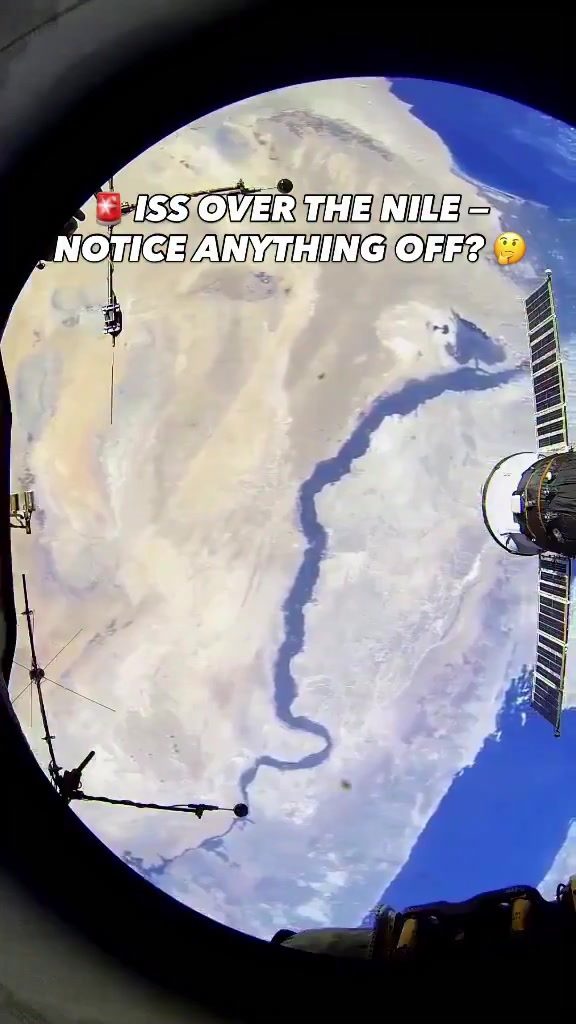
From the vast expanse of the cosmos, the International Space Station (ISS) offers a unique perspective on our planet. Among the many wonders visible from this vantage point, the Nile River stands out as a remarkable feature, weaving through the desert landscape. This view not only showcases the natural beauty of Earth but also highlights the technological marvel of the ISS and its components, which are visible in the frame. The overlaid text on the screen asks the viewer to notice any unusual aspects, making it a fascinating point of observation.
Context / Why this matters
Observing Earth from space provides invaluable insights into the planet's geography, climate, and environmental changes. The ISS, orbiting at an altitude of approximately 400 kilometers, offers a distinct vantage point for scientists, astronauts, and enthusiasts alike. This perspective allows for a deeper understanding of Earth's dynamics and the intricate patterns formed by natural and man-made features.
Main discussion
The Nile River from Space
The Nile River, the longest river in the world, is a lifeline for millions of people and a critical ecosystem. From space, the Nile appears as a thin blue line snaking through the desert, highlighting the stark contrast between the arid landscape and the fertile lands along the riverbanks. This view not only showcases the river's meandering path but also underscores its significance as a source of life and sustenance.
The International Space Station (ISS)
The ISS is a collaborative effort involving multiple space agencies, including NASA, Roscosmos, JAXA, ESA, and CSA. This orbital laboratory serves as a microgravity research facility, enabling scientific experiments that are not possible on Earth. The ISS orbits Earth 16 times a day, providing astronauts with a unique view of the planet and its changing landscapes.
The ISS is equipped with advanced equipment, including solar panels, robotic arms, and scientific instruments. These components are visible in the frame and play a crucial role in the station's operations. The solar panels, for instance, provide the ISS with the necessary power to function, while the robotic arms facilitate spacewalks and other external activities.
Viewing Earth from Space
Viewing Earth from space offers a unique perspective on the planet's geography, climate, and environmental changes. Astronauts aboard the ISS often share their observations, providing valuable insights into the planet's dynamics. These observations help scientists monitor changes in the environment, track weather patterns, and study the effects of natural disasters.
Anomalies and Unusual Observations
The text overlay on the screen asks the viewer to notice any unusual aspects in the view of Earth from the ISS. This could refer to various phenomena, such as unusual cloud formations, natural disasters, or even man-made structures. Observing anomalies from space can provide valuable information about the planet's health and the impact of human activities.
Practical tips
Using Satellite Imagery
Satellite imagery, such as that provided by the ISS, can be a powerful tool for various applications, including environmental monitoring, disaster management, and urban planning. Here are some practical tips for using satellite imagery:
-
Choose the Right Imagery: Different types of satellite images serve different purposes. For instance, optical images are useful for monitoring vegetation, while radar images can penetrate clouds and provide information about the Earth's surface.
-
Use Geospatial Software: Geospatial software, such as GIS (Geographic Information Systems), can help analyze and interpret satellite imagery. These tools allow users to overlay different data layers, perform spatial analysis, and create maps.
Observing Earth from the ISS
For those interested in observing Earth from the ISS, here are some tips:
-
Follow ISS Passes: The ISS orbits Earth 16 times a day, and there are times when it is visible from the ground. Websites and apps can help you track the ISS and predict when it will pass over your location.
-
Join Online Communities: There are many online communities dedicated to space exploration and Earth observation. Joining these communities can provide you with valuable insights, tips, and resources for observing Earth from space.
Important takeaways
- Observing Earth from the ISS provides a unique perspective on the planet's geography, climate, and environmental changes.
- The Nile River, as visible from space, highlights the stark contrast between the arid landscape and the fertile riverbanks.
- The ISS is a technological marvel, equipped with advanced components that facilitate its operations.
- Observing anomalies from space can provide valuable information about the planet's health and the impact of human activities.
Conclusion
Observing Earth from the ISS offers a unique and captivating view of our planet. The Nile River, visible from space, showcases the intricate patterns formed by natural and man-made features. The ISS, with its advanced equipment, provides invaluable insights into Earth's dynamics and environmental changes. Whether you are a scientist, an astronaut, or an enthusiast, observing Earth from space can be a fascinating and rewarding experience.
Watch the Reel
Questions readers ask
Why is the Nile River so prominent when viewed from the ISS?
The Nile River is particularly prominent from the ISS due to the stark contrast between the desert landscape and the fertile riverbanks. This contrast makes the river stand out against the arid surroundings, creating a visually striking scene.
What altitude does the ISS orbit at?
The ISS orbits Earth at an altitude of approximately 400 kilometers. This height allows for a unique perspective on both natural and man-made features of the planet.
How do ISS views aid in understanding Earth's geography?
Views from the ISS provide a comprehensive look at Earth’s topography, allowing scientists to study geographical features, monitor climate changes, and observe environmental shifts over time. This high-altitude perspective is invaluable for tracking both natural and human-induced changes on the planet.
What makes the ISS a unique platform for Earth observation?
The ISS’s orbit and altitude offer a continuous, uninterrupted view of Earth, allowing for both real-time observations and long-term monitoring. The space station’s ability to capture high-resolution images and data contributes to a deeper understanding of Earth’s landscape and dynamics.
What other notable Earth features can be observed from the ISS?
From the ISS, astronauts can observe a variety of Earth features, including other major rivers like the Amazon and Mississippi, vast mountain ranges, dense forests, and urban landscapes. These observations help researchers study various aspects of Earth’s geography and environmental conditions.
How does the ISS capture images of Earth from space?
The ISS is equipped with advanced cameras and imaging systems that allow astronauts to capture high-quality images of Earth. These images are then used for various scientific and environmental studies, providing detailed insights into the planet’s surface and atmospheric conditions.
What are some unique Earth features visible from the ISS in addition to the Nile River at night?
At night, the ISS offers views of city lights, which illuminate urban areas, and the auroras, which create brilliant displays in the sky. These nighttime views provide a different perspective on Earth’s geography and atmospheric phenomena, showcasing the dynamic nature of our planet.
Related deep dives
Similar reads based on topic and creator.



Recent articles
Fresh deep dives from the latest Reels we unpacked.




Comments
Be the first to comment.