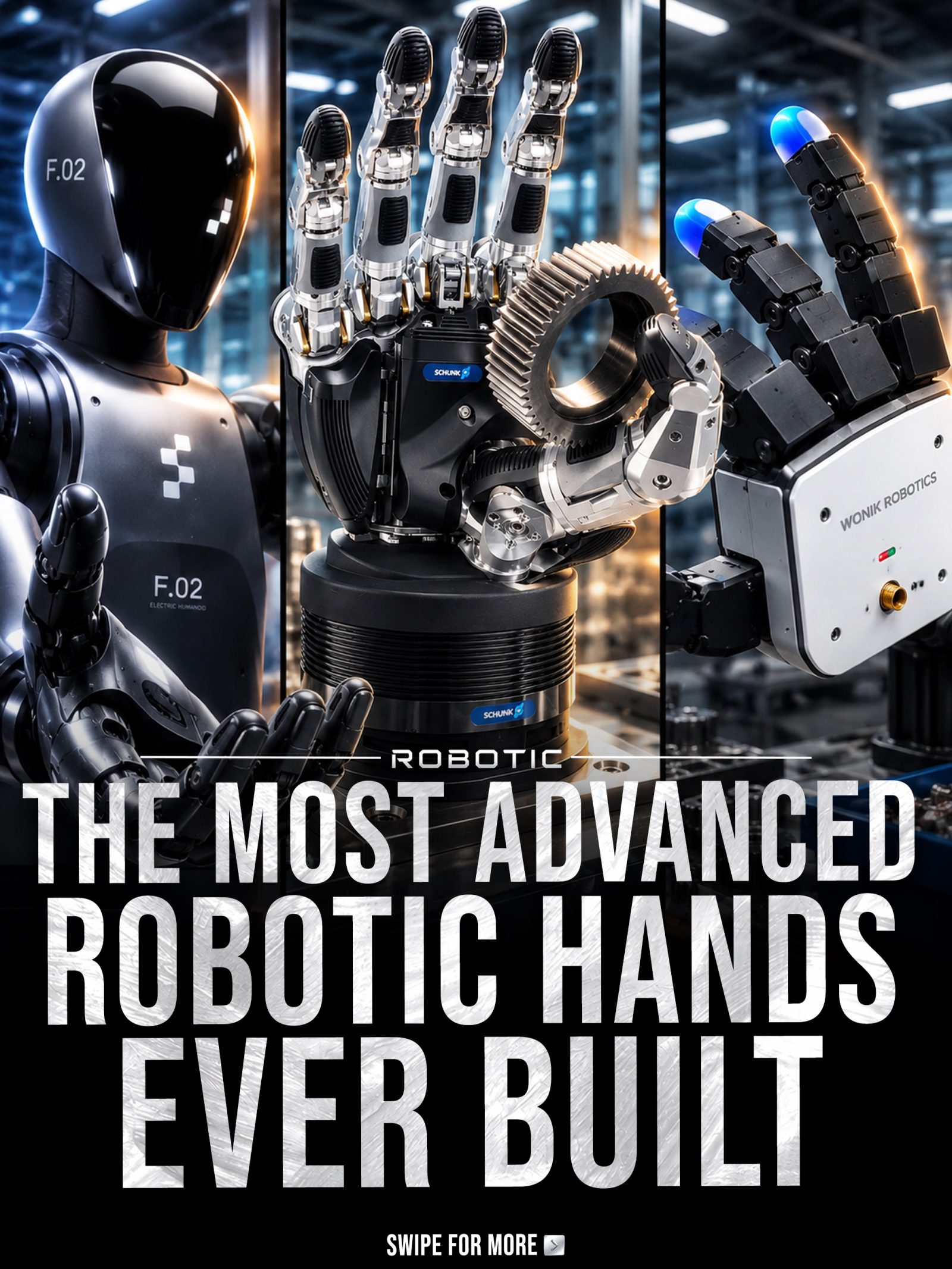
Robotic Hands: The Future of Dexterity in Robotics
Robotic hands are evolving rapidly, pushing the boundaries of what humanoid robots can achieve. These advanced robotic hands are enabling robots to grasp, manipulate, and interact with objects in ways that closely mimic human capabilities.
Why This Matters
The development of robotic hands is crucial for advancing various fields, including AI research, factory automation, prosthetics, laboratory work, and the creation of next-generation humanoid robots. As these hands become more precise, stronger, and better at tactile control, they open up new possibilities for robotic applications in both industrial and everyday environments.
Main Discussion
Leading Examples of Advanced Robotic Hands
Several robotic hands stand out for their innovative designs and capabilities. These include the Shadow Hand, 1X’s NEO Hand, Tesla’s Optimus Hand, Figure 02 Hand, Allegro Hand, Schunk’s SVH 5-Finger Hand, Inspire Dexterous Hand, and Linker Hand. Each of these hands has unique features that contribute to their effectiveness in different applications.
Schunk's SVH 5-Finger Hand
Schunk’s SVH 5-Finger Hand is engineered for industrial and laboratory applications. It provides powerful gripping with precise five-finger control, making it ideal for tasks that require fine motor skills. The hand's design allows it to handle a variety of objects with ease, from delicate laboratory equipment to heavy industrial tools.
Tesla's Optimus Hand
Tesla's Optimus Hand is another notable example of advanced robotic hand technology. Built for the Optimus humanoid robot, this hand features AI-powered fingers that can grasp, sort, and handle everyday objects. The hand's ability to grip an egg demonstrates its precision and dexterity, highlighting its potential for use in a wide range of applications.
Practical Tips
When considering the use of robotic hands in your projects, there are several key factors to keep in mind:
Assess Your Application Needs
Different robotic hands are suited to different tasks. For example, if you need a hand that can handle delicate laboratory equipment, the Schunk SVH 5-Finger Hand might be an excellent choice. On the other hand, if you require a hand that can perform a wide range of everyday tasks, Tesla's Optimus Hand could be more suitable.
Consider Precision and Strength
The precision and strength of a robotic hand are crucial factors to consider. For tasks that require fine motor skills, look for hands with precise five-finger control. For tasks that involve heavy lifting, prioritize hands with powerful gripping capabilities.
Evaluate Tactile Control
Tactile control is essential for robots that need to interact with their environment in a delicate manner. Hands with advanced tactile control can handle objects with greater sensitivity, reducing the risk of damage.
Important Takeaways
Robotic hands are revolutionizing the way humanoid robots interact with the world. As these hands continue to improve, they are expanding the range of tasks that robots can perform, from industrial automation to complex laboratory work.
Conclusion
The future of robotic hands is bright, with continuous advancements in precision, strength, and tactile control. Whether you're involved in AI research, factory automation, or the development of next-generation humanoid robots, understanding the latest in robotic hand technology is crucial. By leveraging the capabilities of advanced robotic hands, you can push the boundaries of what's possible in robotics and beyond.
Watch the Reel
Questions readers ask
What are some of the key advancements in robotic hand technology?
Recent advancements in robotic hand technology include improved dexterity, enhanced tactile feedback, and increased strength. These developments allow robotic hands to interact with objects more like human hands, enabling better grasping and manipulation in various applications, such as prosthetics and automation.
How are robotic hands used in AI research?
In AI research, robotic hands are used to develop and test algorithms for object recognition, grasping, and manipulation. By mimicking human hand movements, these robotic hands help train AI models to understand and interact with the physical world more effectively.
What are some real-world applications of advanced robotic hands?
Advanced robotic hands have a wide range of applications, from assisting in factory automation and laboratory work to enhancing prosthetics for amputees. They are also crucial in creating next-generation humanoid robots that can perform complex tasks in everyday environments.
What is the Tesla Optimus robot and how does it use robotic hand technology?
The Tesla Optimus robot is a humanoid robot developed by Tesla. It utilizes advanced robotic hand technology to grasp and manipulate objects, showcasing the company's innovative approach to integrating robotics into future automotive and industrial applications.
How do robotic hands like the SVH hand and Schunk robotic grippers differ?
The SVH (Shadow Versatile Hand) is known for its high dexterity and ability to perform delicate tasks, making it suitable for research and applications requiring fine motor skills. In contrast, Schunk robotic grippers are designed for industrial use, focusing on strength and durability for heavy-duty tasks in automated manufacturing environments.
What role do robotic hands play in prosthetics?
In prosthetics, robotic hands are designed to restore functionality and mobility for amputees. These advanced hands offer improved grasping capabilities, tactile feedback, and customization options, significantly enhancing the quality of life for users by mimicking the natural movements of a human hand.
How are robotic hands integrated into laboratory settings?
Robotic hands in laboratory settings are used for precise and repetitive tasks, such as handling delicate samples, conducting experiments, and automating data collection. This integration improves efficiency and accuracy, reducing the risk of human error in delicate research environments.
Related deep dives
Similar reads based on topic and creator.


Recent articles
Fresh deep dives from the latest Reels we unpacked.




Comments
Be the first to comment.