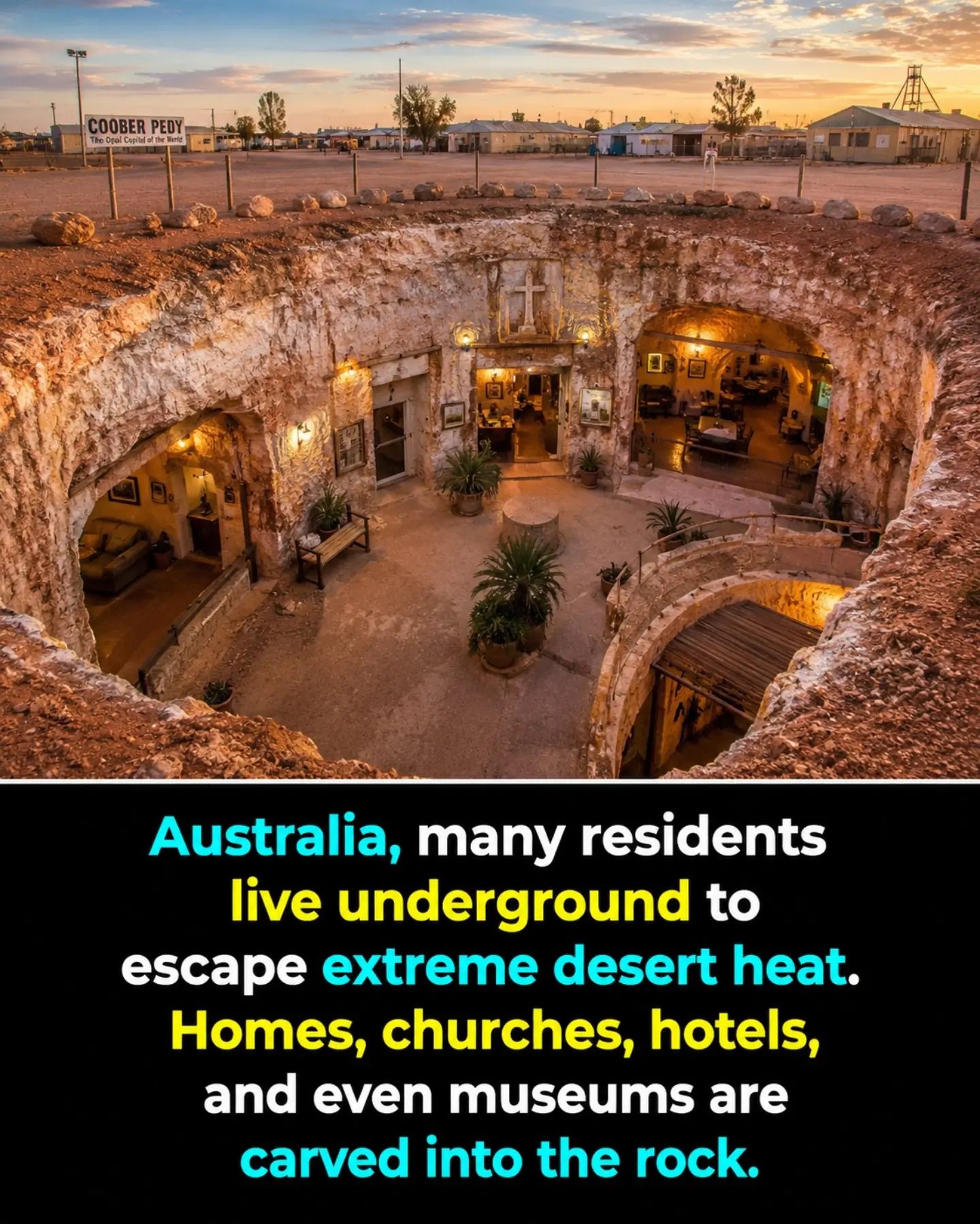
Underground Living in Australia
Discover the unique lifestyle of residents in one of Australia's most distinctive locations: Coober Pedy, often referred to as the 'opal capital of the world.' In this remote outpost, many people live underground, carving their homes, churches, hotels, and even museums directly into the rock. This unusual way of life is a direct response to the region's challenging environment.
Context: Why this Matters
Coober Pedy, situated in the heart of South Australia's outback, is known for its opal mining industry. The arid desert climate can be brutal, with temperatures soaring during the day and plummeting at night. Living underground offers a natural solution to these extreme conditions, providing a constant temperature around 22-24°C (72-75°F), making it a comfortable and practical way to live in this harsh environment.
Main Discussion
The Origins of Underground Living
The history of underground living in Coober Pedy is closely tied to its opal mining industry. Miners initially dug tunnels and caves to extract opals, but soon realized the advantages of living underground. The cool, stable temperatures made it an ideal refuge from the scorching sun and the harsh desert nights. Over time, this necessity evolved into a unique lifestyle that combines modern amenities with an ancient concept of subterranean living.
Types of Underground Structures
The underground structures in Coober Pedy are not just homes. The community has also developed underground churches, hotels, and museums. Each of these structures showcases the ingenuity and adaptability of its residents. For instance, the Underground Church of St. Euphemia is a serene sanctuary, while the Coober Pedy Opal Mine Museum offers a fascinating glimpse into the town's mining history.
Homes: Underground homes, or "dugouts," are the most common structures. They range from simple single-room dwellings to more complex multi-room houses. Each home is uniquely designed to suit the family's needs. Some homes feature gardens and courtyards, while others incorporate modern amenities like air conditioning and solar power.
Churches: The Underground Catholic Church and the Serbian Orthodox Church are notable examples. These churches offer a peaceful and cool environment for worship, providing a spiritual oasis in the desert.
Hotels: The town boasts several underground hotels, including the Coober Pedy Underground Motel and the Desert Cavern Hotel. These hotels offer guests a unique experience, allowing them to stay in cool, comfortable rooms carved into the rock.
Museums: Museums like the Coober Pedy Opal Mine Museum and the Old Timers Mine and Museum provide insights into the town's rich mining history and the opal industry. Visitors can learn about the tools and techniques used by miners and see displays of opal specimens.
The Benefits of Underground Living
Living underground offers several benefits. The constant temperature is the most significant advantage, making life more comfortable. Additionally, the underground structures are naturally insulated, reducing the need for heating and cooling. This insulation can also help protect against dust storms and the extreme weather conditions common to the region.
Residents also report that the underground environment offers a sense of security and peace. The quiet, cool spaces provide a retreat from the bustling activity and heat of the surface world. This can contribute to a more relaxed and stress-free lifestyle.
Challenges and Considerations
While the benefits are numerous, underground living also presents unique challenges. One of the primary concerns is the need for proper ventilation to ensure a steady supply of fresh air. Residents must invest in ventilation systems to maintain a healthy indoor environment. Additionally, the construction of these underground structures requires specialized skills and materials, which can be costly and time-consuming.
The isolation and remote location of Coober Pedy can also pose challenges. Access to healthcare, education, and other essential services can be limited. However, the close-knit community often compensates for these challenges by supporting each other and creating a strong sense of belonging.
Practical Tips
If you're considering a visit to Coober Pedy or are intrigued by the idea of underground living, here are some practical tips:
Visiting Coober Pedy
- Best Time to Visit: The best time to visit Coober Pedy is during the cooler months, from April to September. The weather is milder, making it more comfortable to explore the town and its surroundings.
- Accommodation: Stay in one of the underground hotels for a unique and authentic experience. The Coober Pedy Underground Motel and the Desert Cavern Hotel are popular choices.
- Activities: Explore the Coober Pedy Opal Mine Museum to learn about the town's opal mining history. Visit the Underground Church of St. Euphemia for a serene experience. Take a guided tour of the underground homes and attractions.
Building Underground
If you’re interested in building an underground home, consider the following:
- Location: Choose a location with stable rock formations to ensure structural integrity.
- Ventilation: Invest in a reliable ventilation system to maintain air quality.
- Design: Work with experienced architects and builders who have experience in underground construction.
- Regulations: Check local regulations and permits for underground construction, as they can vary by region.
Important Takeaways
Underground living in Coober Pedy offers a unique and sustainable way of life, providing a comfortable and secure environment in a challenging climate. The community's innovative approach to housing, combined with the town's rich history and cultural heritage, makes it a fascinating place to visit or consider as a potential residence.
Conclusion
Coober Pedy stands as a testament to human ingenuity and adaptability. The town's underground structures offer a sustainable solution to the harsh desert environment, showcasing how people can adapt to challenging conditions. Whether you're planning a visit or intrigued by the idea of underground living, Coober Pedy offers a glimpse into a unique way of life that continues to evolve and thrive in the heart of Australia's outback.
Watch the Reel
Questions readers ask
Why do people live underground in Coober Pedy?
Residents of Coober Pedy live underground primarily to escape the harsh desert climate. Above-ground temperatures can reach extremes, so living beneath the surface provides a constant and comfortable temperature year-round.
How were the underground homes in Coober Pedy created?
The underground homes in Coober Pedy were initially created as a result of opal mining. Over time, residents began to expand and adapt these underground tunnels and cavities into living spaces, carving out rooms and entire homes directly from the rock.
What types of buildings can be found underground in Coober Pedy?
In addition to homes, various buildings, hotels, churches, and even museums exist underground. This creates a unique community where many aspects of daily life take place beneath the surface.
How does the climate in Coober Pedy influence underground living?
The arid desert climate of Coober Pedy, with its extreme temperature fluctuations, makes underground living particularly appealing. The consistent temperature below ground, around 22-24°C (72-75°F), offers a respite from the scorching heat and cold nights.
What is the significance of the opal mining industry in Coober Pedy's underground living?
The opal mining industry is directly responsible for the development of underground living in Coober Pedy. As miners searched for opals, they dug extensive tunnels and shafts, which were later repurposed into living spaces and community structures.
Are there any unique interior design challenges for underground homes in Coober Pedy?
Interior design in Coober Pedy's underground homes presents unique challenges, such as limited natural light and ventilation. However, residents have adapted by using clever lighting solutions and creative use of available space to make their homes both functional and comfortable.
Related deep dives
Similar reads based on topic and creator.



Recent articles
Fresh deep dives from the latest Reels we unpacked.



Comments
Be the first to comment.