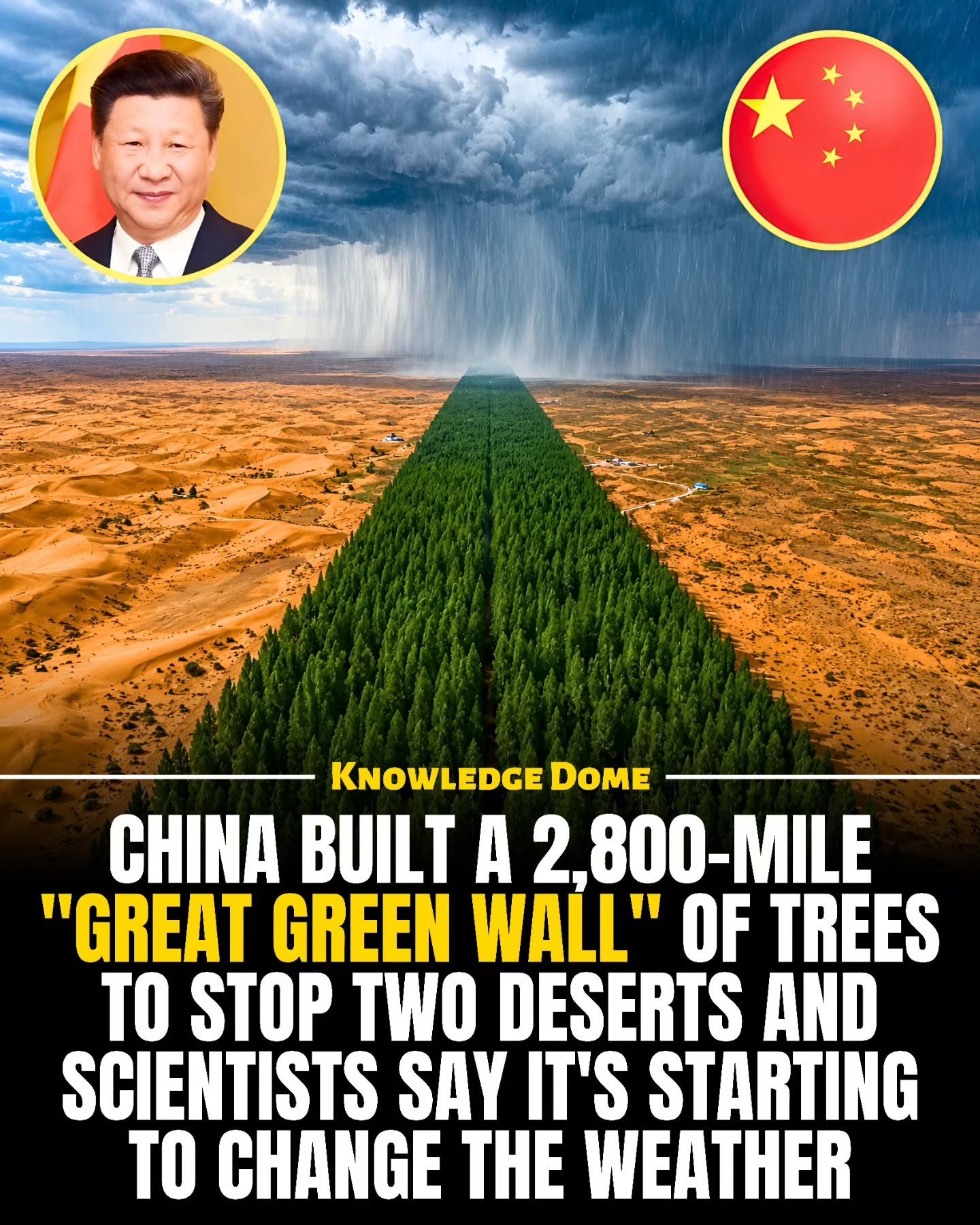
China's Great Green Wall
China's Great Green Wall, also known as the Three-North Shelter Forest Program, is an ambitious environmental initiative that spans approximately 2,800 miles across northern China. This vast line of trees aims to combat the encroachment of the Gobi and Taklamakan deserts, protecting the land from further desertification and creating a barrier to both dry conditions and strong dust storms.
Context / Why this matters
The Great Green Wall is more than just a reforestation project; it is a critical effort to mitigate the effects of desertification, which threatens the livelihoods and ecosystems of northern China. By planting billions of trees, the project seeks to alter local weather patterns, introduce more moisture into the air, and promote cooler, wetter conditions. The trees also play a crucial role in stabilizing the soil, reducing the intensity and frequency of dust storms.
Main discussion
The Scale and Scope of the Project
The Great Green Wall is an enormous undertaking, stretching over 2,800 miles and encompassing a wide range of plant species. It's the largest reforestation project in the world. This project is not just about planting trees; it's about creating a sustainable barrier to halt the desert's expansion. The initiative aims to protect valuable agricultural land, maintain biodiversity, and improve the quality of life for millions of people.
The Impact on Weather Patterns
One of the most intriguing aspects of the Great Green Wall is its potential to alter local weather patterns. Scientists have observed that the growing forests may be increasing moisture in the air, leading to cooler temperatures and, in some cases, more rainfall. This phenomenon, known as "afforestation," can have a profound impact on the region's climate, potentially shifting it towards more favorable conditions.
Environmental Challenges
While the Great Green Wall has many benefits, it is not without its challenges. Some experts have raised concerns about the sustainability of planting so many trees in arid regions. The process can be water-intensive, and many trees struggle to survive in such harsh conditions. To address these issues, China is shifting towards a more adaptive approach, focusing on native and drought-resistant plant species that are better suited to the dry landscape.
The Role of Soil Stabilization
One of the critical functions of the Great Green Wall is soil stabilization. By holding the soil in place, the trees help prevent strong winds from eroding the land, reducing the frequency and intensity of dust storms. This stabilization is essential for maintaining the fertility of agricultural land and protecting local ecosystems.
Adaptive Greening Strategies
Recognizing the challenges of traditional reforestation in arid regions, China is increasingly adopting smarter greening techniques. This includes the use of drought-resistant and native plants that are better adapted to the harsh conditions. These adaptive strategies aim to create a more resilient and sustainable ecosystem, ensuring the long-term success of the Great Green Wall.
Practical tips
For Environmental Projects
- Assess Local Conditions: Before embarking on a large-scale reforestation project, thoroughly assess the local climate and soil conditions. This will help in selecting the most suitable plant species.
- Diversify Plant Species: Plant a variety of drought-resistant and native species to ensure resilience and biodiversity.
- Monitor and Adapt: Continuously monitor the project's progress and be prepared to adapt strategies based on new data and challenges.
For Individuals
- Support Local Initiatives: Participate in or support local reforestation and greening initiatives. Even small efforts can contribute to larger environmental goals.
- Plant Native Species: When planting trees or gardens, choose native and drought-resistant species that are better adapted to your local climate.
- Water Wisely: Use water-efficient irrigation methods and be mindful of water usage, especially in arid regions.
Important takeaways
The Great Green Wall is a monumental effort to combat desertification and alter local weather patterns. While it faces challenges, the project demonstrates the potential of large-scale environmental initiatives to create sustainable and resilient ecosystems. By adopting smarter greening techniques and focusing on native, drought-resistant plants, China is paving the way for more effective and sustainable reforestation efforts.
Conclusion
The Great Green Wall is a testament to China's commitment to environmental sustainability and climate resilience. By addressing the challenges of desertification and adapting to the local climate, the project aims to create a greener, more sustainable future. As we continue to face global environmental challenges, initiatives like the Great Green Wall serve as a model for how large-scale, adaptive greening projects can make a difference.
Watch the Reel
Questions readers ask
How long is the Great Green Wall in China?
The Great Green Wall in China stretches approximately 2,800 miles across the northern part of the country. This immense length makes it one of the largest ecological initiatives in the world.
What are the primary goals of the Great Green Wall project?
The primary goals of the Great Green Wall project are to halt the spread of deserts, stabilize soil to prevent erosion, and alter local weather patterns to create more favorable conditions for agriculture and human settlements.
What types of trees are planted in the Great Green Wall?
The Great Green Wall primarily uses drought-resistant tree species that can survive in the harsh conditions of northern China. These include species like the Siberian elm, and various types of poplar, willow, and oak trees.
How does the Great Green Wall impact local weather patterns?
The vast number of trees in the Great Green Wall can introduce more moisture into the air, promote cooler temperatures, and create a barrier against strong dust storms, ultimately altering local weather patterns.
What progress has been made on the Great Green Wall project?
The Great Green Wall, initiated in the late 1970s, has seen significant progress with billions of trees planted across northern China. However, challenges remain, including issues with tree survival and the integration of local communities.
What are some benefits of the Great Green Wall beyond desertification prevention?
Beyond preventing desertification, the Great Green Wall provides habitats for wildlife, supports biodiversity, and offers economic opportunities for local communities through forestry and eco-tourism.
What are some of the challenges faced by the Great Green Wall project?
Challenges include the survival of planted trees in harsh conditions, the need for sustainable water management, and ensuring the long-term maintenance and monitoring of the vast reforested areas.
Related deep dives
Similar reads based on topic and creator.


Recent articles
Fresh deep dives from the latest Reels we unpacked.




Comments
Be the first to comment.