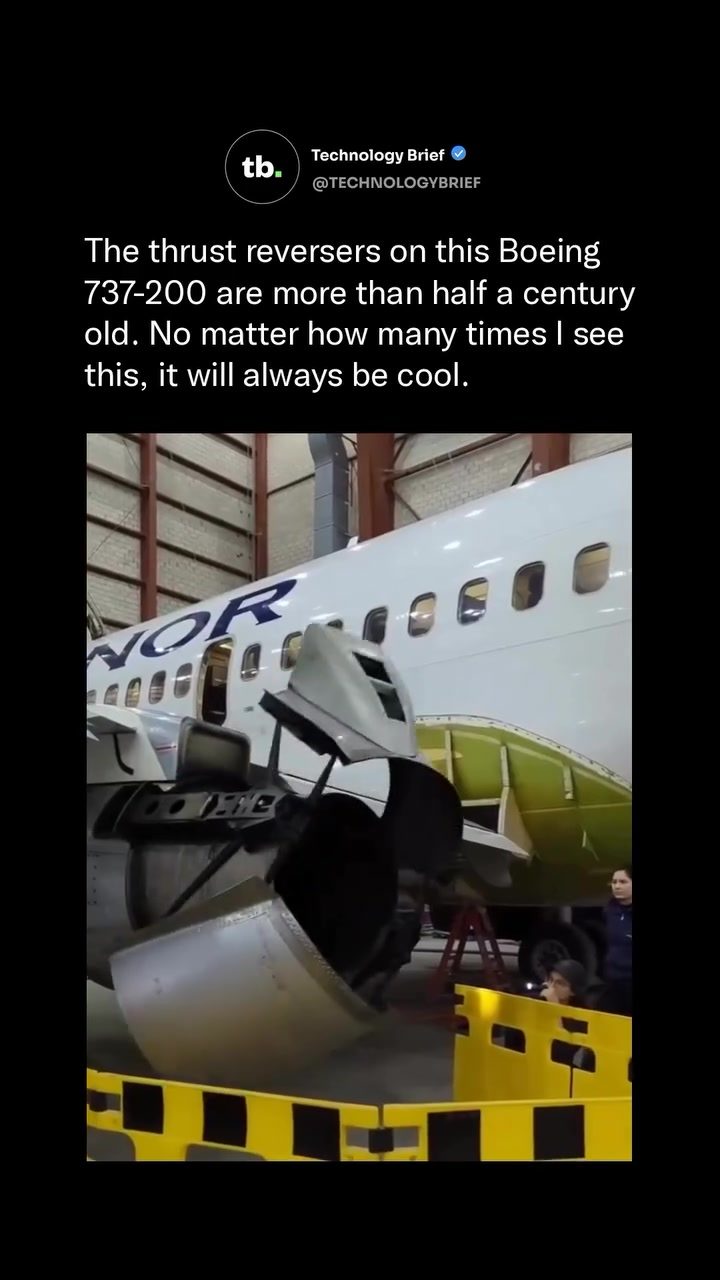
Boeing 737-200 Thrust Reversers
The Boeing 737-200 is a classic aircraft that has been in service for over 50 years. One of its most distinctive features is its thrust reverser system, known as the bucket reverser. This system plays a crucial role in the aircraft's landing process, and understanding its design and function offers valuable insights into aviation technology.
Context
Why This Matters
The Boeing 737-200's thrust reverser system is a testament to the ingenuity of early aviation engineering. Its bucket reverser design, though outdated, provides a clear contrast to the more modern cascade-style reversers used in today's aircraft. Understanding the intricacies of this older system can offer a deeper appreciation for the evolution of aviation technology and the challenges faced by engineers in designing efficient and effective aircraft components.
Main Discussion
The Bucket Reverser Design
The Boeing 737-200 employs a bucket reverser system, which consists of two large clamshell-style doors that form the engine’s exhaust nozzle during normal flight. When the aircraft is landing, these doors swing open and redirect the engine exhaust forward, creating a force that works against the plane’s motion. This helps to slow down the aircraft more effectively.
The bucket reverser design is particularly notable because it has been in use since the late 1960s. Early 737s, including the 737-200, had slim, low-bypass engines that provided enough ground clearance for the bucket doors to swing fully open. However, this design had its limitations. As engine diameters grew over the decades, there simply wasn't enough room below the wing for the bucket doors to function effectively.
Cascade-Style Reversers
In contrast, most modern jets use cascade-style reversers. These reversers use sliding sleeves and direct fan air through vented panels in the engine casing. This design is more space-efficient and can accommodate the larger engine diameters found in contemporary aircraft. Cascade-style reversers offer a more versatile and reliable solution for modern aviation needs, providing better performance and safety features.
How Thrust Reversers Work
Thrust reversers, regardless of their design, do not stop a plane on their own. Instead, they work in tandem with wheel brakes to shorten the landing roll and reduce brake wear. This cooperation is particularly important on wet runways, where the forward blast of redirected exhaust can kick up a dramatic spray of water, enhancing the plane’s braking effectiveness.
Practical Tips
When observing an aircraft like the Boeing 737-200, pay close attention to the thrust reversers during landing. Look for the distinctive clamshell doors that swing open to redirect the exhaust. On wet runways, notice the spray of water kicked up by the exhaust, which is a clear indication of the reversers at work. This visual cue can provide a practical understanding of how the thrust reversers function in real-time.
The Evolution of Aviation Technology
The progression from bucket reversers to cascade-style reversers highlights the continuous evolution of aviation technology. Engineers and designers constantly seek more efficient, reliable, and space-saving solutions. Modern aircraft benefit from these advancements, offering better performance, safety, and fuel efficiency. By studying the Boeing 737-200 and its thrust reverser system, one can appreciate the historical context and the ongoing innovation in aviation.
The Legacy of the Boeing 737-200
Despite its age, some operators still fly the Boeing 737-200, keeping this decades-old mechanism in regular service. This aircraft has stood the test of time, and its design offers valuable lessons in aviation engineering. The bucket reverser system, while outdated, remains a fascinating example of early aviation technology.
Important Takeaways
The Boeing 737-200's bucket reverser system is a unique and historically significant component of aviation engineering. Its design, though limited by the constraints of early engine sizes, offers insights into the evolution of aircraft technology. Understanding the differences between bucket and cascade-style reversers can enhance one's appreciation for modern aviation advancements. Observing the thrust reversers in action, especially during landing on a wet runway, provides a practical demonstration of their functionality.
Conclusion
The Boeing 737-200's thrust reversers are a remarkable example of early aviation engineering. The bucket reverser design, though outdated, played a crucial role in the aircraft's landing process. Modern jets have since moved on to cascade-style reversers, which offer more efficient and space-saving solutions. Whether you are an aviation enthusiast or simply appreciate the intricacies of aircraft design, the Boeing 737-200's thrust reversers provide a fascinating window into the history and evolution of aviation technology.
Watch the Reel
Questions readers ask
What are bucket thrust reversers and how do they work?
Bucket thrust reversers, like those on the Boeing 737-200, are a type of thrust reverser system that uses hinged buckets to redirect engine exhaust forward. During landing, these buckets pivot down and out, blocking the exhaust and directing it forward, which helps to slow the aircraft down. This design was a significant innovation in early aviation engineering, allowing for safer and more controlled landings.
Why did the Boeing 737-200 use bucket thrust reversers?
The Boeing 737-200 was designed in an era when aviation technology was rapidly evolving. Boeing engineers chose the bucket thrust reverser design for its simplicity and reliability, making use of mechanical levers, hydraulic actuators, and hinged buckets. This design was effective for shorter runway lengths and lower approach speeds, which was beneficial for the types of operations the 737-200 was intended to serve.
How do bucket thrust reversers differ from modern thrust reversers?
Bucket thrust reversers use large, hinged buckets to redirect engine exhaust, while modern thrust reversers typically use a cascade system with blocker doors. The bucket design is simpler but less efficient and more mechanically complex than modern cascade systems, which are more integrated with the engine and offer better performance and reliability.
How did the bucket thrust reversers affect the 737-200's landing process?
The bucket thrust reversers on the 737-200 played a crucial role in slowing the aircraft during landing. By redirecting the engine exhaust forward, these reversers provided significant braking power, helping pilots to reduce ground speed and stop the aircraft safely and efficiently, even on shorter runways.
What are the 737 engine doors and what is their function?
The 737 engine doors refer to the doors that enclose the bucket thrust reversers on the Boeing 737-200. During normal flight, these doors are closed to maintain aerodynamic efficiency. However, during landing, the doors open to deploy the bucket reversers, allowing them to redirect the engine exhaust forward and assist in slowing the aircraft.
Why are bucket thrust reversers no longer used in modern aircraft?
Bucket thrust reversers are no longer used in modern aircraft due to advancements in technology that have led to more efficient, lighter, and more reliable designs. Modern cascade-style thrust reversers are more integrated with the engine, reducing weight and improving performance. These newer designs have become the industry standard in contemporary jet aviation.
What are some reasons to study the Boeing 737-200's thrust reversers?
The Boeing 737-200's thrust reversers are a valuable subject of study for aviation enthusiasts and professionals alike. They provide a historical perspective on aviation engineering, offering insights into the evolution of aircraft design and the innovations that have shaped the industry. Additionally, understanding the operation of these older systems can help appreciate the advancements in modern aircraft technology.
Recent articles
Fresh deep dives from the latest Reels we unpacked.




Comments
Be the first to comment.