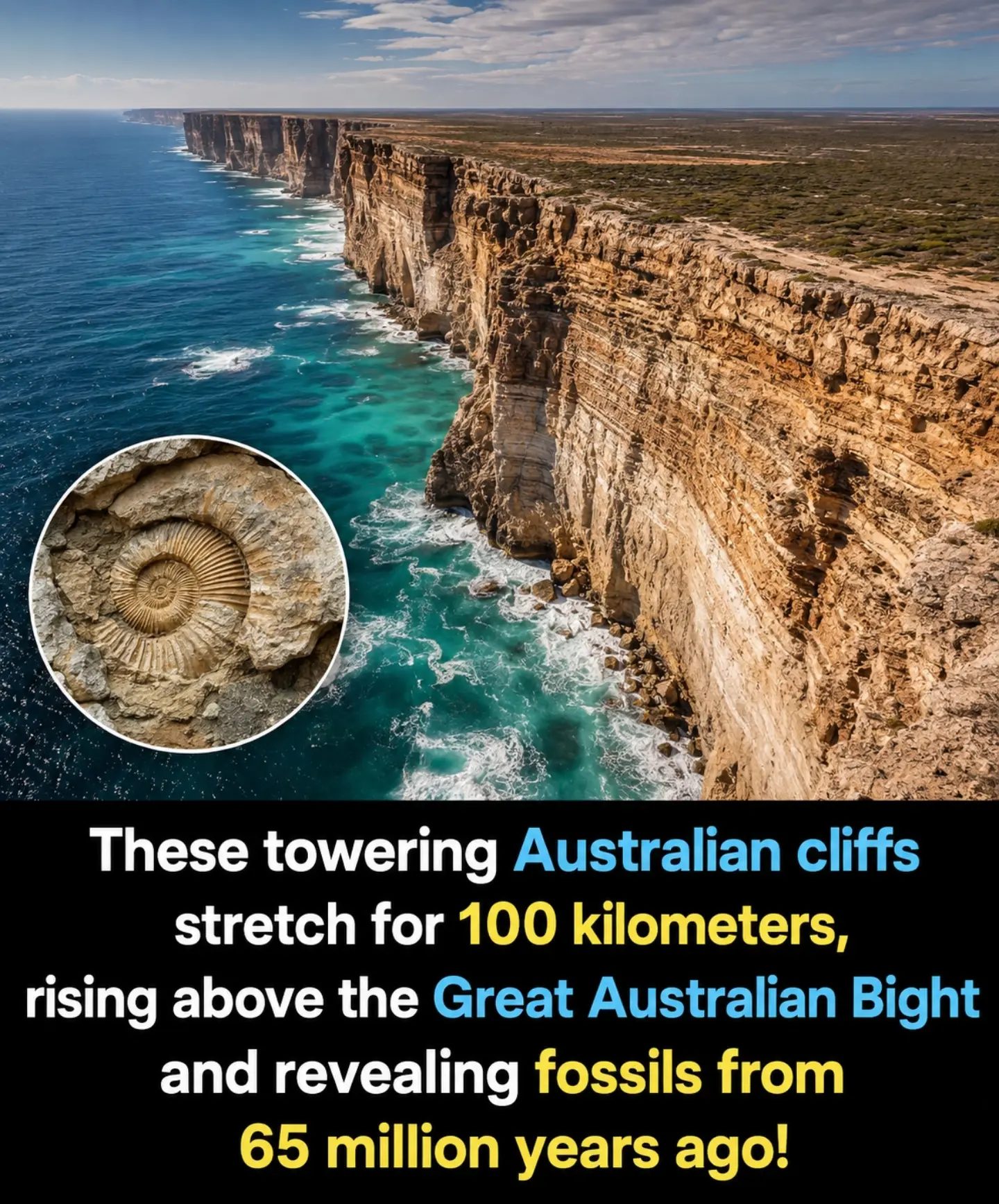
Australia's Great Australian Bight: A Stunning Landscape of Towering Cliffs and Ancient Fossils
The Great Australian Bight is a breathtaking stretch of coastline along Australia's southern edge, renowned for its towering cliffs and significant geological features. These cliffs span an impressive 100 kilometers, rising dramatically above the Great Australian Bight. The sheer scale and geological significance of this region make it a must-know destination for nature enthusiasts and geology buffs alike.
Why This Matters
The Great Australian Bight is not just a visually striking landscape; it is also a treasure trove of geological history. The cliffs in this region are home to fossils dating back 65 million years, offering a glimpse into the Earth's distant past. Understanding these geological features helps us appreciate the dynamic processes that have shaped our planet over millions of years.
The Great Australian Bight: A Geological Marvel
The Cliffs
The cliffs along the Great Australian Bight are a geological marvel. Stretching for 100 kilometers, these towering formations offer a stunning vista that is both awe-inspiring and scientifically significant. The cliffs are composed of sedimentary rock, which has been eroded over millennia by the forces of wind and water. This erosion has revealed layers of rock that provide a window into the Earth's geological history.
The sedimentary rocks in the cliffs are rich in fossils, offering a unique opportunity to study the creatures that lived millions of years ago. These rocks have been deposited over time, with each layer representing a different period in Earth's history. The Great Australian Bight is particularly notable for its fossils from the Cretaceous period, which ended around 65 million years ago.
Fossils
The fossils found in the Great Australian Bight are a significant draw for geologists and paleontologists. These fossils, including ammonites, provide valuable insights into the marine life that thrived in the region millions of years ago. Ammonites were a group of marine mollusks with spiral shells that lived during the Mesozoic era. Their fossils are common in the cliffs, offering a glimpse into the prehistoric marine ecosystem. These fossils are not only aesthetically pleasing but also hold immense scientific value, offering clues about the evolution of marine life and the environmental conditions of the past.
The Great Australian Bight's Environment
The Great Australian Bight is not just a geological wonder; it is also home to a diverse range of marine life. The cliffs provide nesting grounds for seabirds and support a complex ecosystem both on land and in the sea. The waters along the Bight are teeming with marine life, including various species of fish, whales, and dolphins. This ecosystem is crucial for conservation efforts, as many marine species rely on the Bight for their survival. The Great Australian Bight also plays a vital role in the ocean's nutrient cycling, contributing to the health of global marine ecosystems.
Practical Tips
-
Plan Your Visit: If you plan to visit the Great Australian Bight, be prepared for a rugged and remote environment. The cliffs can be challenging to access, so it's essential to plan your trip carefully. Consider hiring a guide or joining an organized tour to ensure a safe and informative experience.
-
Explore the Cliffs: Take your time to explore the cliffs and observe the various rock formations. The cliffs are home to a variety of sedimentary rocks, each with its unique history and characteristics. Look for fossils embedded in the rock layers, and use a geologist's guidebook to identify the different species.
-
Fossil Hunting: The Great Australian Bight is a treasure trove for fossil hunters. Bring a geologist's pick and a magnifying glass to help you identify and extract fossils from the cliffs. Remember to respect the environment and leave no trace behind.
Important Takeaways
- The Great Australian Bight is a geologically significant region, offering a unique glimpse into the Earth's geological history.
- The cliffs along the Bight are home to fossils from the Cretaceous period, providing valuable insights into marine life millions of years ago.
- The Great Australian Bight supports a diverse marine ecosystem, making it an essential area for conservation efforts.
- Visiting the Great Australian Bight requires careful planning and respect for the environment.
Conclusion
The Great Australian Bight is a geological marvel that offers a unique opportunity to explore the Earth's distant past. The towering cliffs and ancient fossils reveal a rich history of marine life and environmental processes. From the stunning vistas to the scientific treasures hidden within the rocks, the Great Australian Bight is a must-visit destination for anyone interested in geology, paleontology, or simply the beauty of the natural world. Whether you are a seasoned geologist or a curious traveler, the Great Australian Bight promises an unforgettable experience.
Watch the Reel
Questions readers ask
What makes the cliffs of the Great Australian Bight unique?
The cliffs of the Great Australian Bight are unique due to their vast extent of 100 kilometers and their dramatic rise above the coastline. Additionally, their sedimentary rock formations are rich in fossils, providing a window into the Earth’s history dating back 65 million years.
What types of fossils can be found in the Great Australian Bight?
The Great Australian Bight is home to a variety of ancient fossils, including ammonite fossils, which are particularly notable. These fossils offer insights into the marine life that thrived in the region millions of years ago.
How can visitors access the Great Australian Bight cliffs?
The Great Australian Bight cliffs can be accessed through various viewpoints and trails along the coast. Several designated lookout points offer stunning views of the towering cliffs and the ocean below. It is important to check local guidelines for safe access points.
Why is the Great Australian Bight significant for geology?
The Great Australian Bight is significant for geology because of its sedimentary rock formations, which contain fossils from the Cretaceous period. These formations and fossils provide crucial information about Earth's geological past and the evolution of marine life.
What are some of the best spots to view the Great Australian Bight cliffs?
Some of the best spots to view the Great Australian Bight cliffs include the Nullarbor Plain and the city of Ceduna. These locations offer panoramic views of the cliffs and the Bight, allowing visitors to fully appreciate the majestic landscape and geological wonders.
Related deep dives
Similar reads based on topic and creator.


Recent articles
Fresh deep dives from the latest Reels we unpacked.




Comments
Be the first to comment.