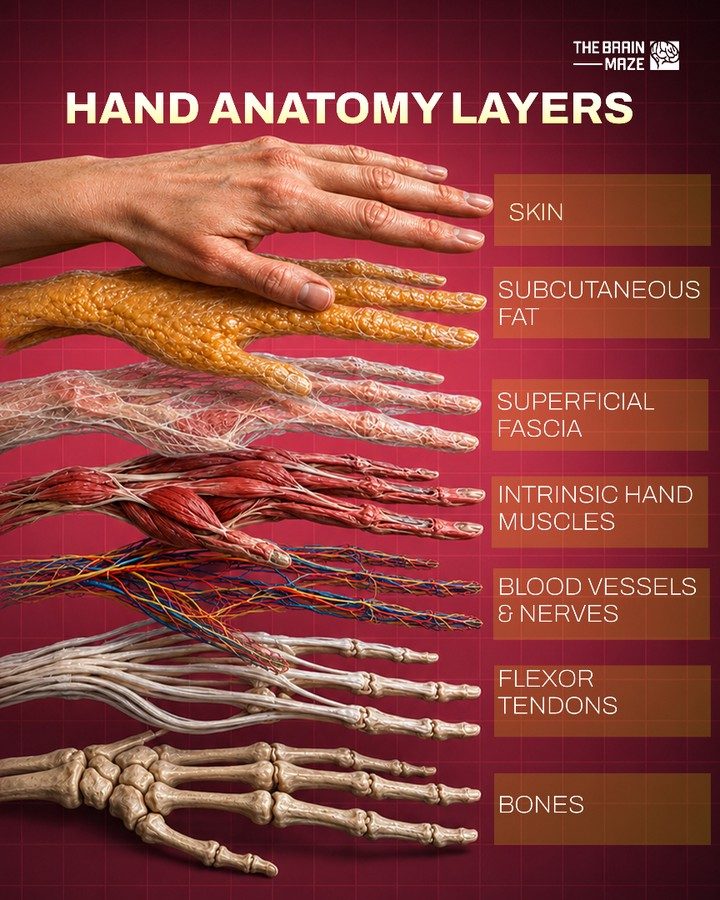
Hand Anatomy Layers
The human hand is a marvel of engineering, designed with precision to perform a vast array of tasks. Understanding the layers of hand anatomy reveals how each component contributes to the hand's strength, flexibility, and fine motor control.
Context / Why This Matters
The hand's intricate structure allows it to execute delicate movements, such as picking up a needle, as well as powerful actions, like gripping a tool. This complexity is made possible by the layered arrangement of various tissues, each with a specific role. By exploring these layers, we can gain a deeper appreciation for the hand's functionality and the critical roles these layers play.
Main Discussion
The Outer Layer: Skin
The outer layer of the hand is the skin, which serves as the body's first line of defense. The skin protects underlying tissues from injury, infection, and environmental hazards. It also houses specialized cells that detect touch, pressure, temperature, and pain, enabling the hand to interact with the environment effectively. The skin is not a uniform layer; it varies in thickness and texture across the hand, with the palms and fingertips being particularly thick to withstand constant use and friction.
Subcutaneous Fat
Beneath the skin lies a layer of subcutaneous fat. This layer acts as a cushion, protecting deeper tissues from impacts and providing insulation. Subcutaneous fat also plays a role in maintaining the hand's shape and structure, as well as storing energy reserves. The fat layer's thickness can vary based on factors such as age, overall body fat, and specific demands on the hand, such as those experienced by manual laborers.
Superficial Fascia
Deep to the subcutaneous fat is the superficial fascia, a connective tissue layer that envelops the hand. This layer provides structural support, anchors the subcutaneous fat, and contains a network of blood vessels and nerves. The superficial fascia contributes to the hand's flexibility and mobility, allowing it to move freely while maintaining its form.
Intrinsic Hand Muscles
The intrinsic hand muscles are located just beneath the fascia and are responsible for fine motor control. These muscles originate and insert within the hand, enabling precise movements of the fingers and thumb. The intrinsic muscles are crucial for tasks that require dexterity, such as typing, playing a musical instrument, or manipulating small objects. They work in conjunction with the extrinsic muscles of the forearm, which control larger movements of the hand and wrist.
Blood Vessels and Nerves
Running through the hand are intricate networks of blood vessels and nerves, which supply the tissues with oxygen, nutrients, and sensation. The nerves transmit signals from the brain to the muscles, enabling movement, and also convey sensory information back to the brain. The blood vessels facilitate the circulation of blood, ensuring that the tissues receive the oxygen and nutrients they need to function properly. Proximal to the wrist, the median, ulnar, and radial nerves are essential for sensation and motor control.
Flexor Tendons
The flexor tendons are strong, fibrous cords that connect the muscles of the forearm to the bones of the fingers and thumb. These tendons allow the hand to bend the fingers and grip objects tightly. The flexor tendons are crucial for performing tasks that require strength and precision, such as holding a pen or lifting a heavy object. They work in concert with the extensor tendons, which are responsible for straightening the fingers.
Bones
The bony framework of the hand consists of the carpal, metacarpal, and phalangeal bones. The carpal bones form the wrist and provide a stable base for the hand. The metacarpal bones make up the palm, and the phalangeal bones form the fingers and thumb. These bones provide the structural support necessary for the hand's complex movements and enable it to withstand the forces exerted during various activities.
Practical Tips
Understanding the layers of hand anatomy can provide valuable insights for several practical applications. For healthcare professionals, this knowledge is essential for diagnosing and treating injuries or conditions affecting the hand. For athletes and musicians, comprehending the hand's structure can help optimize performance and prevent injuries. Additionally, ergonomic design and rehabilitation strategies can be enhanced by considering the hand's anatomical layers and their respective functions.
Ergonomics
When designing workstations or tools, it is crucial to consider the hand's anatomical structure. Ergonomic designs that account for the hand's natural movements and the stress placed on different layers can reduce the risk of injuries, such as carpal tunnel syndrome and tendonitis. Proper ergonomics can also enhance comfort and efficiency during repetitive tasks.
Rehabilitation
For individuals recovering from hand injuries or surgeries, knowing the function of each anatomical layer can guide rehabilitation exercises. Rehabilitation programs focus on gradually restoring strength, mobility, and sensation to the affected layers. By targeting specific tissues, such as muscles, tendons, or nerves, rehabilitation can promote faster and more effective recovery.
Preventive Care
Maintaining hand health involves taking care of each anatomical layer. Regular exercise, including stretching and strengthening, can help preserve the hand's flexibility and strength. Additionally, using protective gear and practicing proper hand hygiene can prevent injuries and infections, ensuring overall hand health.
Important Takeaways
The hand's layered structure is a testament to the intricate design of the human body. Each layer—from the protective skin to the supportive bones—plays a vital role in the hand's complex functions. Understanding these layers provides valuable insights for various applications, from ergonomic design to rehabilitation and preventive care. By appreciating the hand's intricate organization, we can better utilize and care for this remarkable tool, enhancing our daily lives and activities.
Conclusion
The hand’s layered anatomy is a fascinating study in biological engineering. Each component, from the skin to the bones, contributes to the hand's extraordinary capabilities. By delving into the intricate workings of these layers, we gain a deeper appreciation for the hand's versatility and the critical roles each layer plays in its functionality. This knowledge is not just an academic curiosity but a practical tool for anyone seeking to optimize hand health, performance, and design.
Watch the Reel
Questions readers ask
What are the main layers of the hand and their primary functions?
The hand is composed of several key layers, including the skin, subcutaneous fat, fascia, and deeper structures like muscles, tendons, nerves, and bones. The skin provides protection and sensation. Subcutaneous fat acts as a cushion and insulator. Fascia supports and stabilizes the hand's structure, while deeper layers enable movement and control.
How does the skin layer of the hand contribute to its overall function?
The skin of the hand is thick and tough, providing crucial protection against external damage. It is rich in nerve endings, allowing for precise sensory feedback, which is essential for tasks requiring fine motor skills, such as handling small objects or typing.
What is the role of subcutaneous fat in the hand's anatomy?
Subcutaneous fat in the hand serves as a protective cushion, absorbing shock and reducing friction. It also helps to insulate the deeper tissues and supplies a layer of nourishment for the skin, contributing to the hand's overall flexibility and resilience.
What is fascia and how does it support hand anatomy?
Fascia is a fibrous connective tissue that surrounds and supports the muscles, tendons, and other structures in the hand. It provides structural integrity, facilitates movement, and helps distribute forces throughout the hand, which is vital for both delicate and powerful actions.
How do the intrinsic muscles and tendons in the hand facilitate movement and control?
Intrinsic muscles, located within the hand itself, enable precise, fine-tuned movements. Tendons, which connect muscles to bones, transmit the forces generated by both intrinsic and extrinsic muscles to produce coordinated actions. This intricate system allows for a wide range of movements from grasping to delicate manipulation.
What are the key roles of nerves and blood vessels in hand anatomy?
Nerves in the hand transmit sensory information and control muscle movements. Blood vessels supply oxygen and nutrients to the tissues, ensuring the hand's proper function and healing. This interdependent network allows for both powerful actions and delicate tasks, making the hand a versatile tool.
How does the layered structure of the hand contribute to its strength and dexterity?
The layered structure of the hand, from the skin to the bones, works in harmony to provide both strength and dexterity. Each layer has a specific role, such as protection, support, and movement, allowing the hand to perform a wide range of tasks with precision and control. This intricate design enables the hand to be both robust and agile.
Related deep dives
Similar reads based on topic and creator.




Recent articles
Fresh deep dives from the latest Reels we unpacked.




Comments
Be the first to comment.