The Remarkable Range of Bat Sizes
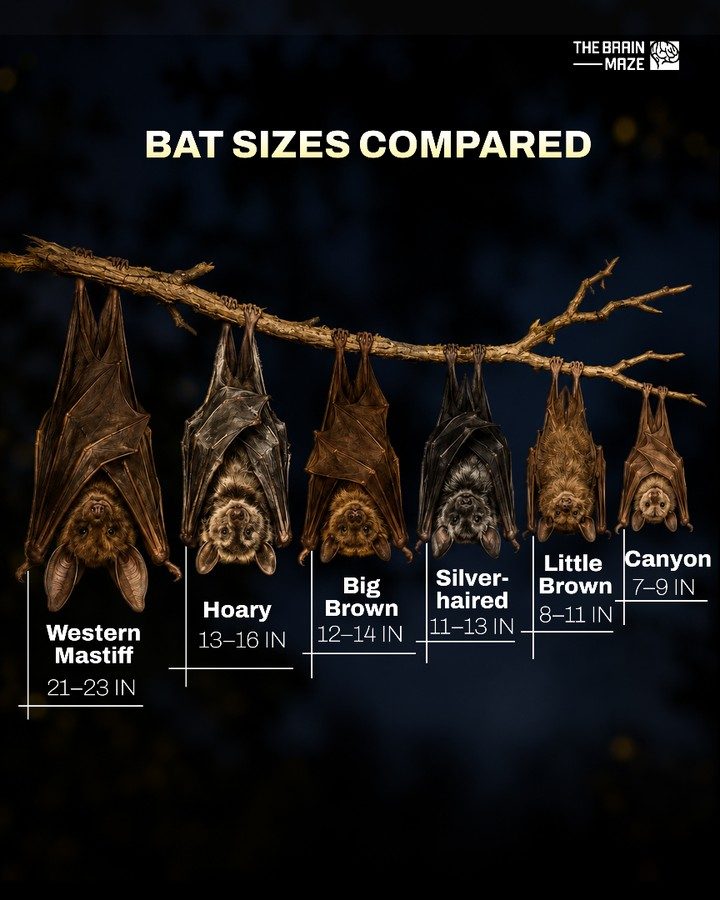
Bats are fascinating creatures known for their diverse sizes and remarkable adaptations. They range from the tiny Canyons bat, with a wingspan of just 7–9 inches, to the enormous Western Mastiff bat, which can reach up to 23 inches. This incredible variety in size is just one aspect of what makes bats so intriguing. Each species is finely tuned to its environment, utilizing flight, echolocation, and specialized hunting strategies to thrive. Size plays a pivotal role in determining prey choice, habitat, and flying efficiency.
Why Bat Sizes Matter
Understanding the size variations among bat species provides valuable insights into their ecology and behavior. The size of a bat influences its hunting techniques, the types of prey it pursues, and the environments it inhabits. Larger bats, for example, can cover more ground with fewer wing beats and may have different prey preferences compared to smaller species.
Adaptations and Survival
Bats have evolved a variety of adaptations to survive and thrive in their environments. Their unique ability to fly and use echolocation allows them to navigate and hunt in the dark. This combination of skills is crucial for their survival, enabling them to catch insects, small animals, and even fish, depending on the species. Size also impacts their energy efficiency and the amount of food they need to consume to sustain their flying activities.
Different Bat Species and Their Sizes
Western Mastiff Bat
The Western Mastiff bat is one of the largest bat species. With a wingspan of 21-23 inches, it is well-equipped for long-distance flight and hunting. These bats are often found in forests and open areas, where their size allows them to cover large territories efficiently.
Hoary Bat
The Hoary bat, with a wingspan of 13-16 inches, is a medium-sized species. Known for its distinctive fur, the Hoary bat is migratory and can travel long distances. Their size and migratory behavior make them well-suited for various habitats, including forests, deserts, and even urban areas.
Big Brown Bat
The Big Brown bat has a wingspan of 12-14 inches, making it a versatile predator. Commonly found in North America, these bats are known for their adaptability and can thrive in a variety of environments, from forests to urban areas. Their size allows them to hunt a wide range of insects, making them an important part of the ecosystem.
Silver-haired Bat
The Silver-haired bat, with a wingspan of 11-13 inches, is known for its distinctive silver-tipped fur. These bats are highly adaptable and can be found in both forested and urban areas. Their size and agility make them effective hunters of small insects and other prey.
Little Brown Bat
The Little Brown bat has a wingspan of 7-11 inches, making it a smaller species. Despite its size, it is one of the most common bats in North America. These bats are known for their ability to navigate and hunt in various environments, from forests to urban areas. Their small size allows them to enter into confined spaces, providing them with a variety of hunting opportunities.
Canyon Bat
The Canyon bat is one of the smallest bat species, with a wingspan of just 7-9 inches. Often found in desert and canyon environments, these bats are well-adapted to their arid habitats. Their small size allows them to conserve energy and navigate complex terrains efficiently.
Size Influences on Bat Behavior
Hunting Techniques
A bat's size significantly influences its hunting technique. Larger bats, with their stronger wings, can cover more ground and catch larger prey, while smaller bats may focus on smaller insects and use their agility to navigate through tight spaces.
Habitat Preferences
The size of a bat also determines its habitat preferences. Smaller bats, such as the Little Brown and Canyon bats, often inhabit more confined spaces like caves and attics. Larger bats, on the other hand, prefer open areas where they can fly more freely and cover larger distances.
Flying Efficiency
The relationship between a bat's size and flying efficiency is crucial for its survival. Larger bats benefit from fewer wing beats per mile, making long-distance flights more energy-efficient. Smaller bats, with their higher wing beat frequency, are better at quick maneuvers and navigating through dense environments.
Practical Tips for Observing and Understanding Bats
Identification
Identifying different bat species can be a rewarding experience. Pay attention to the size, fur color, and wing shape of the bat. Use a field guide or a reliable online resource to help you identify the different species in your area.
Habitat and Behavior
Getting to know the typical habitats and behaviors of various bat species can enhance your understanding of these fascinating creatures. For example, bats often roost in caves, trees, and attics. Observing their roosting sites and noting their flight patterns can provide valuable insights into their behavior.
Conservation Efforts
Bats play a crucial role in many ecosystems, and their conservation is vital for maintaining ecological balance. Join local conservation efforts, create bat-friendly environments, and support research initiatives to protect these remarkable creatures.
Important Takeaways
Each bat species is uniquely adapted to its environment, with size being a key factor in determining its survival strategies. From the tiny Canyon bat to the massive Western Mastiff bat, every species has evolved specific traits that allow it to thrive. Size influences everything from prey choice to habitat and flying efficiency, making bats one of the most fascinating and adaptable groups of mammals.
Conclusion
Bats come in a wide range of sizes, each with its unique adaptations and behaviors. Understanding the differences in size and how they influence a bat's survival strategies can provide a deeper appreciation for these remarkable creatures. Whether you are a wildlife enthusiast or simply curious about nature, exploring the world of bats offers endless opportunities for discovery and learning.
Watch the Reel
Questions readers ask
What is the wingspan of the smallest bat species?
The smallest bat species, the Canyons bat, has a wingspan ranging from 7 to 9 inches, making it one of the tiniest bats in the world.
How large can the Western Mastiff bat grow?
The Western Mastiff bat is one of the largest bat species, with a wingspan that can reach up to 23 inches, showcasing the incredible range of bat sizes.
Why is the size of a bat important for its hunting techniques?
The size of a bat significantly influences its hunting techniques. Larger bats can pursue bigger prey, while smaller bats often target smaller insects, utilizing their agility and quick flight.
What is the wingspan of a typical brown bat?
Brown bats typically have a wingspan ranging from 11 to 14 inches. This size allows them to efficiently navigate their habitats and hunt for insects.
What factors contribute to the diverse sizes of bats?
The diverse sizes of bats are influenced by their habitats, hunting strategies, and prey choices. Each size has adapted to specific ecological niches, making bats a captivating subject.
How does the size of a bat affect its habitat preference?
The size of a bat can greatly impact its habitat preference. Smaller bats may prefer confined spaces, whereas larger bats often require more open environments to accommodate their size and hunting needs.
Are there significant size differences among bat species?
Yes, there are remarkable size differences among bat species. These variations range from the tiny Canyons bat to the massive Western Mastiff bat, highlighting the incredible diversity in bat sizes.
Related deep dives
Similar reads based on topic and creator.




Recent articles
Fresh deep dives from the latest Reels we unpacked.




Comments
Be the first to comment.