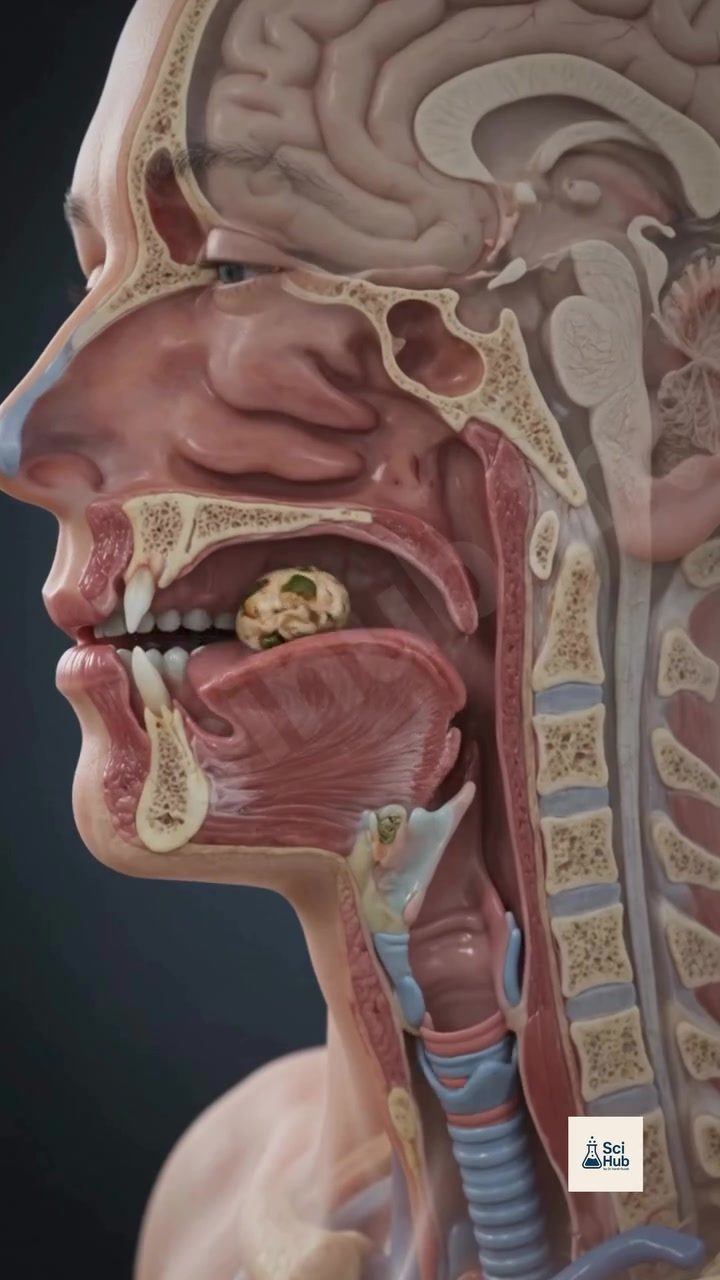
Human Anatomy Visualization: A Detailed Look at Head and Neck Anatomy
Exploring the intricate structures of the human head and neck can provide valuable insights into how these regions function and interact. The 3D visualization of the human head and neck anatomy, created by Sci Hub, offers a detailed and colorful representation of various organs and structures. This visualization is particularly useful for understanding the complex anatomy of the mouth, throat, esophagus, and spinal column.
Context / Why This Matters
Understanding the anatomy of the head and neck is crucial for medical professionals, students, and anyone interested in the human body. This region is home to vital structures that play essential roles in functions such as swallowing, speaking, and breathing. A detailed visualization can help demystify these complex areas, making it easier to comprehend their intricate workings and interactions.
Main Discussion
The Complexity of the Human Head and Neck
The human head and neck are home to a wide array of structures that work together to perform essential functions. These include the mouth, throat, esophagus, and spinal column, each playing a critical role in daily activities.
The Mouth and Throat
The mouth and throat are essential for both swallowing and speaking. The mouth is the entry point for food and liquid, where the process of digestion begins. The throat, or pharynx, connects the mouth to the esophagus and the larynx, which houses the vocal cords. This region is responsible for carrying both food and air, making it a crucial part of the digestive and respiratory systems.
The Esophagus and Spinal Column
The esophagus serves as a passageway for food from the mouth to the stomach. It contracts and relaxes in a coordinated manner to push food downwards. The spinal column, which runs through the neck, supports the head and protects the spinal cord, which is essential for transmitting signals between the brain and the rest of the body.
The 3D Visualization
The 3D visualization provided by Sci Hub offers a unique perspective on the anatomy of the head and neck. By using a cross-section view, it reveals the intricate details of these regions, allowing for a deeper understanding of their structures and functions. This 3D model is rendered in high detail and vibrant colors, making it an effective tool for learning and teaching.
Practical Tips
When examining a 3D model of the head and neck, here are some tips to enhance your understanding:
Focus on Key Structures
Pay close attention to the key structures such as the mouth, throat, esophagus, and spinal column. Understanding how these structures interact can provide valuable insights into their functions.
Use Interactive Tools
If available, use interactive tools that allow you to rotate and zoom in on specific areas of the model. This can help you gain a better understanding of the spatial relationships between different structures.
Compare with Real-Life Examples
Whenever possible, compare the 3D model with real-life examples or images. This can help you visualize how the structures in the model correspond to actual anatomical features.
Important Takeaways
The Importance of Anatomy Visualization
Anatomy visualization is a powerful tool for understanding the human body. It allows for a detailed examination of complex structures, making it easier to comprehend their functions and interactions.
The Value of 3D Models
3D models offer a unique perspective on anatomy, allowing for a more immersive and interactive learning experience. They can be particularly useful for medical students, professionals, and anyone interested in the human body.
Conclusion
The 3D visualization of the human head and neck anatomy by Sci Hub is an invaluable resource for anyone looking to understand the intricate structures of the mouth, throat, esophagus, and spinal column. By providing a detailed and colorful representation of these regions, the model offers a unique perspective on the complex anatomy of the head and neck, making it an essential tool for learning and teaching.
Watch the Reel
Questions readers ask
What are the key structures highlighted in the 3D Human Head & Neck Anatomy model by Sci Hub?
The model showcases various key structures, including the mouth, throat, esophagus, and spinal column. It provides a detailed view of the intricate interactions between these structures, offering a comprehensive understanding of the head and neck anatomy.
How can the 3D Human Head & Neck Anatomy model benefit medical professionals?
Medical professionals can use this model to enhance their understanding of complex anatomical structures. It serves as a practical tool for visualizing and studying the intricate details of the head and neck, aiding in diagnosis and treatment planning. The interactive 3D anatomy can also be used for patient communication and explaining medical conditions.
What makes the 3D Human Head & Neck Anatomy model by Sci Hub different from traditional 2D diagrams?
Unlike traditional 2D diagrams, the 3D Human Head & Neck Anatomy model allows users to rotate, zoom, and explore the structures from various angles. This interactive approach provides a more immersive and engaging experience, making it easier to understand the spatial relationships between different anatomical components.
Can the 3D Human Head & Neck Anatomy model help in understanding the process of swallowing?
Yes, the model offers a detailed look at the anatomy involved in swallowing, including the mouth, throat, and esophagus. By visualizing these structures in 3D, users can gain a better understanding of how they work together to facilitate the swallowing process, which is crucial for diagnosing and treating related disorders.
Is the 3D Human Head & Neck Anatomy model suitable for students?
Absolutely, the model is an excellent resource for students studying anatomy. It provides a clear, visual representation of the complex structures in the head and neck region, making it easier to learn and retain information. The interactive 3D anatomy learning experience can make studying more enjoyable and effective.
How can the 3D Human Head & Neck Anatomy model assist in anatomical research?
Researchers can use the model to explore and analyze the intricate details of the head and neck anatomy. The detailed visualizations can aid in identifying patterns, understanding anatomical variations, and developing new insights into the functions of these vital regions. The model can also support collaborative research by providing a common visual reference.
What are the benefits of using a 3D anatomy video in conjunction with the 3D Human Head & Neck Anatomy model?
A 3D anatomy video can enhance the learning experience by providing a dynamic exploration of the head and neck anatomy. Paired with the 3D model, users can observe the movements and interactions of various structures in real-time, making it easier to understand complex anatomical functions and processes.
Related deep dives
Similar reads based on topic and creator.

Recent articles
Fresh deep dives from the latest Reels we unpacked.




Comments
Be the first to comment.