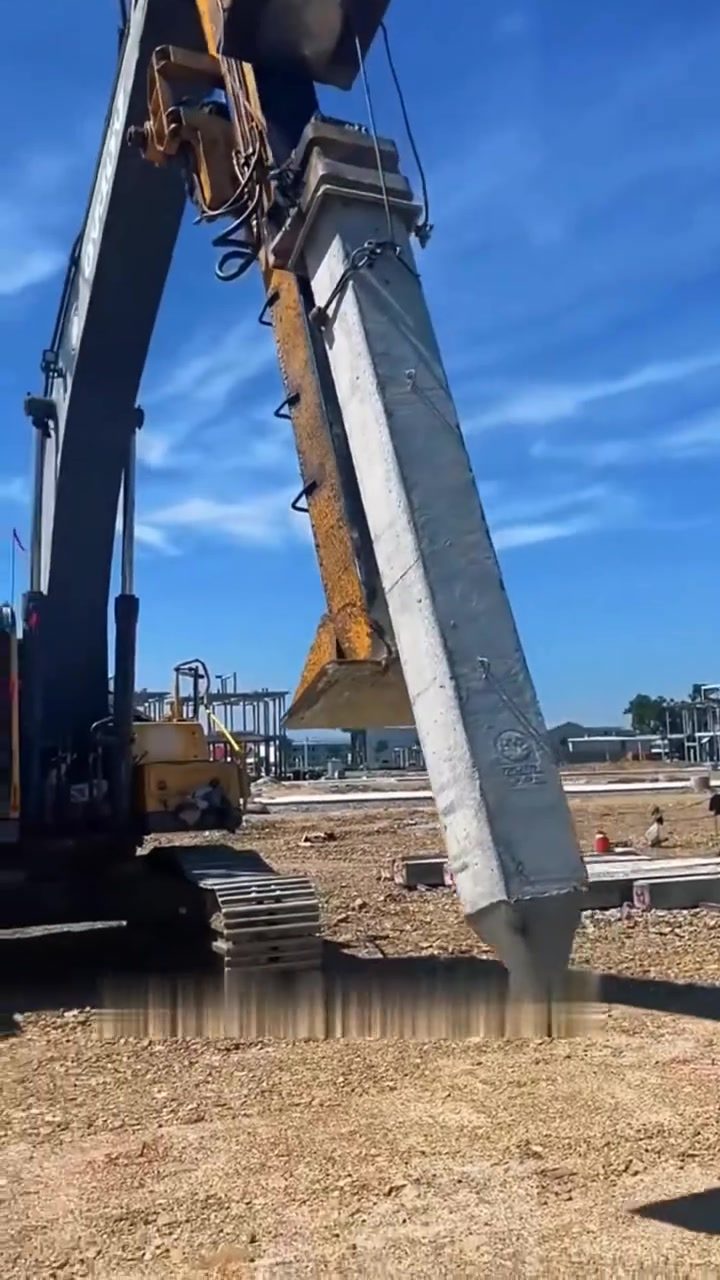
Excavators are indispensable in modern construction. They're used to dig trenches, demolish structures, and grade land. But one of their most critical roles is in foundation work, particularly in driving concrete piles deep into the ground. This process is the first step in building a strong, stable structure.
The Role of Concrete Piles in Construction
Concrete piles serve as the hidden backbone of any building. They are long, cylindrical columns of concrete that are driven deep into the ground to support the weight of the structure above. Unlike traditional foundations, which are poured on-site, concrete piles are prefabricated in factories. This means they are ready to install as soon as they arrive at the construction site, speeding up the building process significantly.
Driving concrete piles involves several steps. First, an excavator, such as the Volvo model demonstrated, lifts a pre-cast concrete pile into position. Workers carefully align the pile, ensuring it is perfectly vertical. Then, a giant hammer, often attached to the excavator, strikes the pile repeatedly, forcing it deep into the ground. This process continues until the pile reaches the required depth, providing a solid base for the structure.
The Importance of a Strong Foundation
A strong foundation is crucial for the longevity and safety of any building. Concrete piles prevent the structure from settling and cracking, which can lead to significant issues over time. By providing a stable base, concrete piles create the first and most important layer of safety before the house is even built. This is why excavators play a vital role in construction — they ensure that the foundation is solid and secure.
The Process of Driving Concrete Piles
Driving concrete piles is a precise and controlled process. The excavator, equipped with a piling attachment, lifts the pre-cast concrete pile and positions it over the designated spot. Workers use laser levels and other tools to ensure the pile is perfectly aligned. Once in position, the excavator's hammer strikes the pile, driving it into the ground. The excavator's power and precision are critical at this stage, as any misalignment can compromise the foundation's integrity.
Concrete piles are not made on-site but are prefabricated in factories. This prefabrication process ensures that the piles are uniform and of high quality. The piles are then delivered to the construction site ready to install, saving time and resources. This method also ensures that the piles are strong and durable, capable of supporting the weight of the entire structure.
The Speed and Power of Excavators
The Volvo excavator demonstrated in the video showcases the speed and power of modern construction equipment. The machine's ability to lift and position heavy concrete piles with precision is a testament to its capabilities. The text overlay "FASTER" highlights the excavator's efficiency, which is crucial in a construction environment where time is money.
Excavators are equipped with advanced features that enhance their performance. Hydraulic systems, for example, provide the necessary force to drive the piles deep into the ground. The excavator's cab is designed for optimal visibility, allowing the operator to align the piles accurately. Additionally, modern excavators come with attachments that can be swapped out depending on the task, making them versatile tools on any construction site.
Why This Matters
The process of driving concrete piles is fundamental to modern construction. It ensures that buildings have a strong, stable foundation, which is essential for their longevity and safety. When you see an excavator on a construction site, remember that it's not just moving dirt or clearing debris — it's laying the groundwork for structures that will stand for years to come.
Practical Tips for Excavator Operation
Operating an excavator for foundation work requires skill and precision. Here are some practical tips to ensure the process goes smoothly:
Pre-Planning and Site Preparation
Before starting any excavation work, it's crucial to have a detailed plan. This includes knowing the exact location and depth of the piles. Site preparation is also essential, as it ensures that the excavator can move freely and safely around the construction area.
Regular Maintenance
Excavators are powerful machines, and regular maintenance is key to keeping them in optimal condition. This includes checking the hydraulic systems, ensuring all moving parts are lubricated, and inspecting the attachments for wear and tear.
Proper Alignment
Aligning the concrete piles correctly is crucial for a strong foundation. Use laser levels and other alignment tools to ensure the piles are perfectly vertical. Any deviation can compromise the foundation's integrity.
Safety Precautions
Safety should always be a top priority when operating heavy machinery. Ensure that all workers are aware of the excavator's movements and maintain a safe distance. Wear appropriate protective gear and follow all safety protocols to prevent accidents.
Important Takeaways
Excavators, like the Volvo model, play a crucial role in modern construction. They are not just tools for digging and moving earth; they are essential in laying the foundation for strong, stable buildings. Concrete piles, driven deep into the ground by these powerful machines, provide the backbone of any structure, ensuring its longevity and safety. Understanding the process and the importance of a strong foundation can give you a deeper appreciation for the behind-the-scenes work that goes into building the structures we rely on every day.
Conclusion
Excavators are more than just construction tools; they are the backbone of modern building practices. Their ability to drive concrete piles deep into the ground ensures that structures have a strong, stable foundation. From the initial excavation to the final alignment, every step in this process is critical for the safety and longevity of the building. When you see an excavator at work, remember the vital role it plays in building the world around us.
Watch the Reel
Questions readers ask
What makes excavators essential for concrete foundation construction?
Excavators are vital for concrete foundation construction as they drive concrete piles deep into the ground. This process creates a stable base that prevents settling and cracking, ensuring the longevity and safety of the structure. Additionally, excavators can prepare the ground for foundation work by digging trenches and demolishing old structures.
How do concrete piles contribute to a strong building foundation?
Concrete piles act as the hidden backbone of any building, supporting the weight of the structure above. They are prefabricated in factories and driven deep into the ground, providing a stable base for the building, unlike traditional foundations that are poured on-site.
What are the benefits of using an excavator for site preparation in foundation construction?
Excavators streamline the excavation and preparation of the site for foundation construction. They can effectively grade and level the land, excavate soil and rocks, and even demolish existing structures, ensuring that the ground is ready for the foundation work.
What is the process of driving concrete piles using an excavator?
The process of driving concrete piles using an excavator involves the machine driving prefabricated concrete columns deep into the ground. These piles are long, cylindrical columns of concrete that provide a stable base for the structure. This is a crucial step in ensuring the structure's stability and longevity.
What types of excavators are best suited for concrete piling?
Excavators equipped with hydraulic hammers or vibro drivers are best suited for concrete piling. These attachments allow the excavator to drive concrete piles deep into the ground, ensuring a stable foundation. The choice of excavator can depend on the specific requirements of the project, such as the depth and type of piles needed.
Why is deep concrete piling important for building foundations?
Deep concrete piling is important for building foundations as it ensures that the structure's weight is distributed evenly and deeply into the ground. This helps to prevent settling and cracking, ensuring that the building remains strong and stable over time. The depth of the piling can also be adjusted depending on the conditions of the soil and the specific requirements of the project.
How do excavators contribute to the longevity and safety of buildings?
Excavators contribute to the longevity and safety of buildings by driving concrete piles deep into the ground, creating a stable and robust foundation. This ensures that the structure's weight is evenly distributed and supported, preventing issues such as settling and cracking, and enhancing the overall integrity of the building.
Recent articles
Fresh deep dives from the latest Reels we unpacked.




Comments
Be the first to comment.