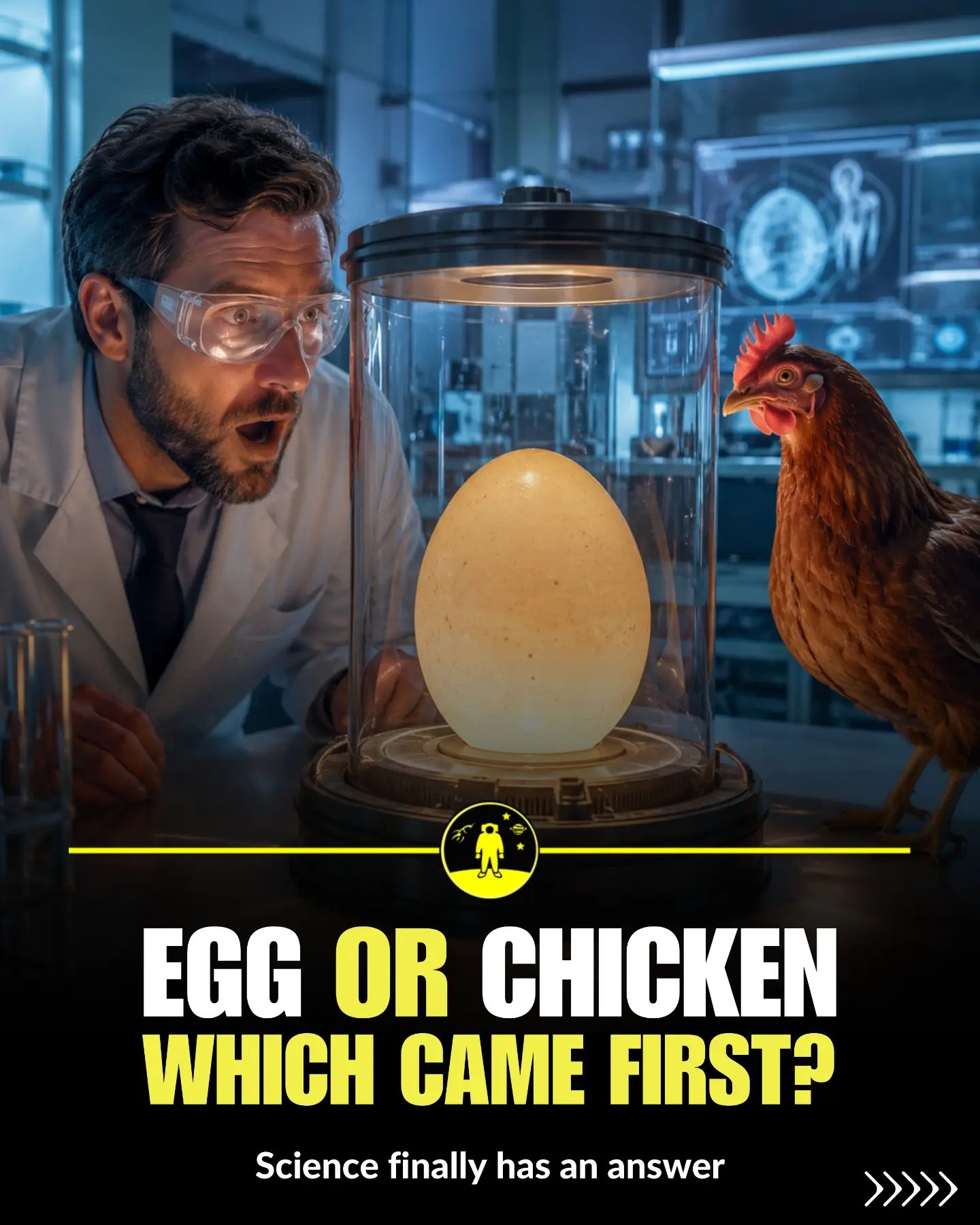
Egg or Chicken Origin: The Evolutionary Answer
The classic question of whether the egg or the chicken came first has baffled people for generations. The answer lies in the complex process of evolution, which involves gradual genetic changes over thousands or even millions of years.
Context: Why This Matters
Understanding the origin of the chicken and the egg isn't just a fun parlor trick; it provides insight into how evolution works. It demonstrates that new species emerge through small, incremental changes that accumulate over time. This knowledge is crucial for understanding the diversity of life on Earth and the mechanisms behind it.
The Evolution of the Chicken
Eggs have been around for hundreds of millions of years, long before chickens appeared. Fish, reptiles, dinosaurs, and countless other animals were already laying eggs. The first true chicken didn't suddenly materialize out of thin air. Instead, it evolved from birds that were almost, but not quite, chickens.
Small Genetic Changes
The evolution of the chicken involved tiny genetic changes over many generations. Eventually, two birds that were almost chickens reproduced. During the formation of the embryo, a small genetic mutation occurred inside the egg. This embryo hatched into what scientists would classify as the first true chicken. In other words, the bird that laid the egg wasn't technically a chicken, but the baby inside the egg was.
The Role of Mutations
Mutations play a crucial role in evolution. A mutation is a change in the genetic material (DNA) of an organism. Some mutations have no effect, while others can be harmful. However, some mutations can provide an advantage, allowing the organism to better adapt to its environment. In the case of the chicken, a beneficial mutation led to the development of the first true chicken.
The Egg Came First
So, why do scientists say the egg came first? If we're talking about the first chicken egg containing the first true chicken, then the egg came first. The bird that laid this egg was not yet a true chicken but was a close relative. The embryo inside the egg, however, had the genetic makeup of a chicken, making it the first true chicken.
Evolution in Action
This scenario illustrates how evolution works. New species don't appear overnight. They emerge gradually, one generation at a time, through small changes that accumulate over thousands or even millions of years. This process is ongoing, and it's the reason for the incredible diversity of life we see today.
Practical Tips for Understanding Evolution
Understanding evolution can be complex, but there are some practical tips to help grasp the concept:
Focus on Small Changes
Remember that evolution is a process of small, incremental changes. These changes accumulate over time, leading to new species.
Think in Generations
Evolution occurs over many generations. It's not something that happens in a single lifetime.
Important Takeaways
The question of which came first, the chicken or the egg, is a classic example of how evolution works. The first true chicken evolved from birds that were almost chickens, and a small genetic mutation inside an egg led to the first true chicken. This process underscores the gradual nature of evolution, where small changes accumulate over time.
Conclusion
The answer to the classic question of whether the egg or the chicken came first is rooted in the science of evolution. It's a reminder that new species emerge gradually through small genetic changes over many generations. The next time someone asks, "Which came first, the chicken or the egg?" you can confidently answer that the egg came first.
Watch the Reel
Questions readers ask
What is the scientific answer to the chicken or the egg question?
The scientific answer is that the egg came first. The first chicken was the result of a gradual genetic evolution process, emerging from an egg laid by a bird that was almost, but not quite, a chicken.
How did the first chicken evolve?
The first chicken evolved from significant genetic changes in a species of bird over an extended period. Different species evolved from these gradual changes, eventually developing into the modern chicken.
What role do eggs play in the evolution of the chicken?
Eggs have been a part of the reproductive cycle for hundreds of millions of years, predating the first chicken. They served as the vessel for the gradual genetic changes that eventually led to the emergence of the chicken species.
Can you explain the process of species development in relation to the chicken?
Species development, as seen in the chicken, involves small, incremental genetic changes over generations. These changes accumulate, leading to the emergence of new species from existing ones.
Why is understanding the chicken and egg question important?
Understanding the chicken and egg question provides a tangible example of the evolutionary process at work, including the gradual changes and incremental steps that lead to new species.
Related deep dives
Similar reads based on topic and creator.




Recent articles
Fresh deep dives from the latest Reels we unpacked.




Comments
Be the first to comment.