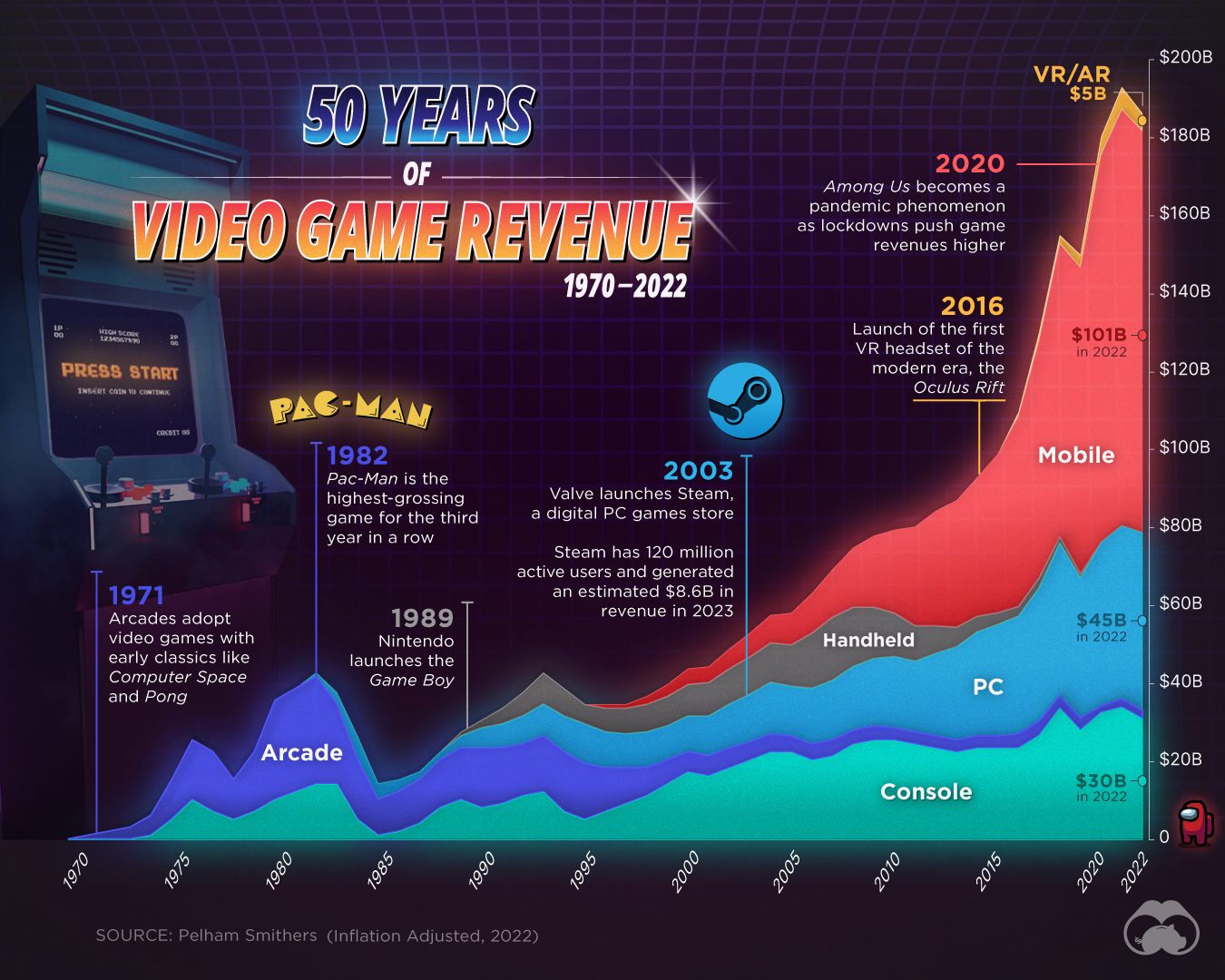
Video Game Revenue: A 50-Year Evolution
Video games have transformed from a niche interest to a dominant force in the entertainment industry. From humble beginnings in arcades to the modern era of mobile and virtual reality gaming, the revenue landscape has shifted dramatically.
Why This Matters
Understanding the trajectory of video game revenue reveals not just the industry's financial success but also its adaptability and innovation. As technology evolves, so do the platforms and formats that generate the most income. This timeline provides a clear view of how video games have grown and adapted, shaping the broader entertainment landscape.
The Early Days: Arcades and Consoles
The story of video game revenue begins in the early 1970s with the rise of arcades. Games like "Computer Space" and "Pong" were among the first to capture the public's imagination and wallets. The arcades became social hubs where people could gather to play and compete. This period set the foundation for the industry, with revenues steadily increasing as more people discovered the joy of interactive entertainment.
The Golden Age of Arcades
Arcades were more than just places to play games; they were cultural phenomena. With bright lights, loud sounds, and the thrill of competition, they attracted players of all ages. The revenue generated by arcade games in the 1970s and 1980s was substantial, creating a market that would soon diversify.
The Introduction of Home Consoles
As the 1980s progressed, home consoles began to gain traction. The Nintendo Entertainment System (NES) and the Game Boy, in particular, brought video games into living rooms and on-the-go entertainment. These consoles not only expanded the player base but also introduced iconic characters like Mario, who would become staples of the industry. The Game Boy, for example, revolutionized handheld gaming, making it possible for players to enjoy their favorite games anywhere.
The Rise of PC Gaming
The emergence of PC gaming marked a new chapter in the industry's revenue growth. With the launch of digital stores like Steam in 2003, PC gaming became more accessible and varied. Valve's Steam platform has since become a cornerstone of the PC gaming world, offering a vast library of games and fostering a thriving community of developers and players. Steam has 120 million active users and generated an estimated $8.6 billion in revenue in 2023, highlighting its impact on the industry.
Digital Distribution and Its Impact
The advent of digital distribution changed how games are sold and played. Instead of purchasing physical copies, players could download games directly to their computers. This shift not only reduced distribution costs but also allowed for easier updates and patches, enhancing the overall gaming experience. The convenience and variety offered by digital platforms have contributed significantly to the industry's growth.
The Mobile Revolution
Mobile gaming has seen exponential growth, transforming the way people play games. The accessibility of smartphones and tablets has made gaming a ubiquitous pastime, with millions of players worldwide. Mobile games range from casual titles like "Angry Birds" to more complex, story-driven experiences. This format has democratized gaming, making it available to a broader audience.
The Impact of Mobile Technology
The rise of mobile gaming can be attributed to advancements in mobile technology. Screens have become larger and more responsive, while processors have become more powerful, allowing for high-quality graphics and complex gameplay. The convenience of mobile gaming has also made it a popular choice for players who prefer to game on the go. With its massive user base and diverse offerings, mobile gaming continues to drive industry revenue.
The Modern Era: Virtual Reality and Beyond
The launch of the Oculus Rift in 2016 ushered in a new era of virtual reality (VR) and augmented reality (AR) gaming. These immersive technologies offer a more engaging and interactive experience, pushing the boundaries of what is possible in gaming. While still emerging, VR/AR holds tremendous potential for future growth.
The Future of Gaming
As technology continues to evolve, so too will the formats and platforms that generate revenue. Virtual reality, augmented reality, and cloud gaming are just a few of the emerging trends that could shape the industry's future. These technologies promise more immersive, accessible, and dynamic gaming experiences, ensuring the industry's continued growth and innovation.
Practical Tips for Understanding Gaming Revenue Trends
For those interested in the gaming industry, staying informed about revenue trends can provide valuable insights. Here are a few tips:
-
Stay Updated on Technological Advances: Keeping an eye on new technologies like VR and AR can help predict future trends in gaming revenue.
-
Follow Industry Reports: Reports from sources like Pelham Smithers provide valuable data on industry performance. These reports can offer insights into revenue growth, market trends, and the impact of new technologies.
-
Monitor Key Milestones: Understanding significant milestones, such as the launch of new consoles or platforms, can help predict shifts in revenue.
-
Engage with the Community: Participating in gaming communities and forums can provide firsthand insights into what gamers are interested in and how their preferences evolve over time.
Important Takeaways
Video game revenue has seen remarkable growth and diversification over the past 50 years. Here are the key takeaways from this journey:
- Adaptability: The gaming industry has shown an incredible ability to adapt to new technologies and platforms.
- Diversification: Revenue sources have diversified significantly, from arcades to mobile and VR/AR, reflecting the industry's flexibility.
- Innovation: Continuous innovation has kept the industry relevant and thriving, attracting new players and maintaining the interest of existing ones.
Conclusion
The video game industry's revenue timeline is a testament to its resilience and adaptability. From the golden age of arcades to the modern era of VR/AR, the industry has continually evolved, driven by technological advancements and the changing preferences of players. As we look to the future, the potential for further growth and innovation is vast, ensuring that video games remain a dominant force in the entertainment landscape.
Watch the Reel
Questions readers ask
How did arcade games contribute to the early video game industry revenue?
Arcade games were the foundation of the video game industry in the 1970s and 1980s. Players would insert coins to play, generating significant revenue. Classic titles like 'Pong' and 'Pac-Man' drew large crowds and helped build the industry's initial financial success, setting the stage for future innovations.
What caused the shift from arcades to home consoles in the 1980s and 1990s?
The introduction of home consoles allowed people to play games in their own living rooms, eliminating the need for coin-operated arcade machines. Additionally, the games could be played for free once purchased, and the more affordable consoles created a more accessible revenue model.
How did handheld gaming devices impact the video game revenue landscape?
Handheld gaming devices, such as the Game Boy, introduced a new level of portability and convenience. This allowed users to play games anywhere, leading to increased sales and a new revenue stream, which has greatly influenced the industry.
What role did Nintendo play in the video game industry’s revenue growth?
Nintendo has been a significant player in the video game industry since the 1980s, with consoles like the NES and Nintendo 64, and handhelds like the Game Boy. Their iconic games and innovative hardware have consistently driven revenue. In addition, their online store continues to generate revenue.
How has the rise of mobile gaming affected the video game industry's revenue?
The rise of mobile gaming has revolutionized the industry, making games more accessible and growing the consumer base. With the growth of smartphones, mobile games have become a significant revenue source, with many games offered for free but with in-app purchases.
What were the highest earning games in the early 2000's?
The early 2000's saw the rise of several high-earning games, particularly on consoles like the PlayStation 2 and Xbox. Titles such as 'Grand Theft Auto: San Andreas' and 'Halo 2' generated billions in revenue, setting records for game sales and influencing the industry.
How has the video game market evolved between 1970 and 2022?
The video game market has evolved from arcade machines to home consoles, and then to mobile devices and virtual reality. Each shift has introduced new revenue models, from coin-operated machines to game sales, in-app purchases, and subscription services.
Related deep dives
Similar reads based on topic and creator.


Recent articles
Fresh deep dives from the latest Reels we unpacked.




Comments
Be the first to comment.