Movie Set Design and Visual Effects: The Art of Miniature Cityscapes
Creating dramatic scenes for movies often involves extensive visual effects, particularly when depicting large-scale disasters or events. Before digital technology became prevalent, one of the primary techniques for achieving these effects was through the use of miniature city models and practical effects. This method required meticulous planning, a large crew, and specialized equipment.
Why This Matters
Visual effects, whether digital or practical, are integral to the storytelling process in filmmaking. They help bring fantastical or large-scale scenes to life, making them believable and immersive for the audience. Understanding the techniques used in the past provides valuable context for appreciating the advancements in digital effects today.
The Art of Miniature City Models
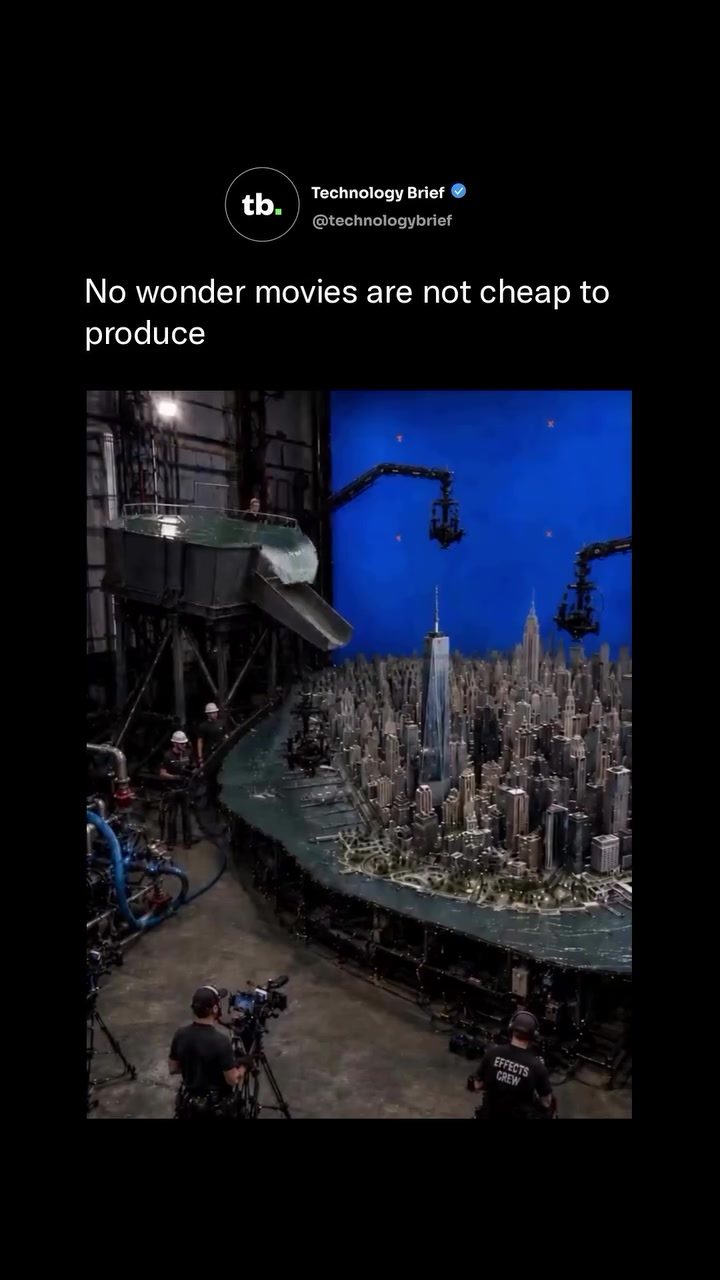
The process of flooding a miniature city involves several key steps. First, effects crews construct detailed models of cityscapes, complete with scaled skyscrapers and street layouts. These models are then placed in a controlled environment where thousands of gallons of water can be released in a single take. This method ensures that the destruction is captured in a single shot, as the models can only be destroyed once.
To make the water behave convincingly at miniature scale, the crew films at high speed and carefully scales the camera angle. This technique tricks the eye into believing the water's flow and impact are occurring on a much larger scale. A blue screen background allows editors to insert additional footage or a realistic sky later in post-production. The result is a dramatic scene that appears as though a catastrophe is swallowing an entire city, even though the entire set fits within a studio.
Historical Context
This technique has a rich history in Hollywood. It dates back to at least 1939, when the film The Rains Came used a 50,000-gallon tank and 14 cameras to stage its flood sequence on a Fox soundstage. The film won the Oscar for Best Special Effects. In the 1970s, disaster films pushed the scale even further, with custom dump tanks releasing hundreds of gallons of water at once onto miniature sets.
Practical Water Rigs and Miniatures
While most effects work today is done digitally, practical water rigs with miniatures still play a crucial role in filmmaking. Directors often use these techniques when they want the physics of the water and destruction to look unmistakably real. Practical effects add a level of authenticity that digital effects sometimes struggle to replicate.
The Role of the Effects Crew
The effects crew is responsible for the intricate details and execution of these visual effects. Constructing the miniature sets requires precision and a deep understanding of scale. Each element, from the buildings to the streets, must be perfectly proportioned to create a convincing miniature city. The crew also handles the logistics of pouring water over the miniature city, ensuring that the single take captures the desired effect.
The Complexity of Visual Effects
Creating realistic scenes through visual effects involves much more than just building a miniature city. It requires a large crew and specialized equipment. High-speed cameras, precise camera angles, and controlled environments are all essential components. The crew gets one shot to capture the destruction, making each take a high-stakes moment.
Practical Tips for Aspiring Filmmakers
For aspiring filmmakers interested in visual effects, understanding the principles behind miniature city models and practical effects can be invaluable. Here are some practical tips:
Start Small
Begin with small-scale projects to get a feel for the techniques involved. Experiment with different materials and methods to see what works best.
Attention to Detail
Pay close attention to the details of your miniature sets. Every element, no matter how small, contributes to the overall believability of the scene.
Invest in Quality Equipment
High-speed cameras and precision tools can make a significant difference in the quality of your effects. Invest in good equipment to achieve the best results.
Plan Carefully
Plan every aspect of your shoot meticulously. From the construction of the sets to the timing of the water release, each element must be carefully coordinated.
Important Takeaways
Building a miniature city and flooding it for a film scene is a complex process that requires a lot of skill and resources. The techniques used involve constructing detailed models, filming at high speed, and using blue screens for post-production editing. This method has a long history in Hollywood, dating back to the 1930s, and continues to be used today for its ability to create realistic and dramatic effects.
Conclusion
The art of creating miniature city models and using practical effects is a testament to the creativity and skill of filmmakers. While digital effects have largely taken over, the techniques used in the past continue to inspire and inform modern filmmaking. Understanding these methods provides valuable insight into the evolution of visual effects and the dedication required to bring dramatic scenes to life on screen.
Watch the Reel
Questions readers ask
How were miniature city models built in the past for movies?
Miniature city models were typically built using materials like wood, plastic, and foam. Artisans would meticulously craft each building, ensuring the scale and detail were accurate. The models were often constructed in sections to allow for precise control over each part of the scene.
What are some challenges in creating miniature cityscapes for movies?
Creating miniature cityscapes involves several challenges, including maintaining precise scale, ensuring realistic textures and details, and making sure the models are sturdy enough to withstand filming conditions. Weathering and aging techniques are also crucial to make the models look authentic on screen.
Why are miniature city models still used in filmmaking today?
Miniature city models offer a tangible and highly detailed approach to creating cityscapes. They provide a level of realism that can be difficult to achieve with digital effects alone. Additionally, they can be useful for creating unique textures and details that add depth to a scene. Even when combined with digital effects, miniature models can enhance the overall visual quality of a film.
What techniques are used to create miniature water effects in movies?
Miniature water effects often involve using a combination of liquids like water and glycerin, along with specialized pumps and nozzles to simulate waves and currents. For larger water effects, such as a tsunami or a massive wave, foam, and other materials may be used to create the desired effect.
How do filmmakers create realistic scale model cityscapes for disaster scenes?
To create realistic scale model cityscapes, filmmakers often use a combination of precise model making, weathering, and controlled destruction. Scene destruction is achieved through controlled explosions, hydraulic systems, and other specialized equipment. This process requires careful planning to ensure the models are destroyed in a believable and dramatic way.
What role do practical effects play in the creation of miniature cityscapes in movies?
Practical effects are essential in creating miniature cityscapes, as they add a level of authenticity and immediacy that digital effects may not capture. These effects range from explosions, fires, and weather phenomena to mechanical devices that simulate earthquakes or floods, making the scenes more immersive for the audience.
Recent articles
Fresh deep dives from the latest Reels we unpacked.




Comments
Be the first to comment.