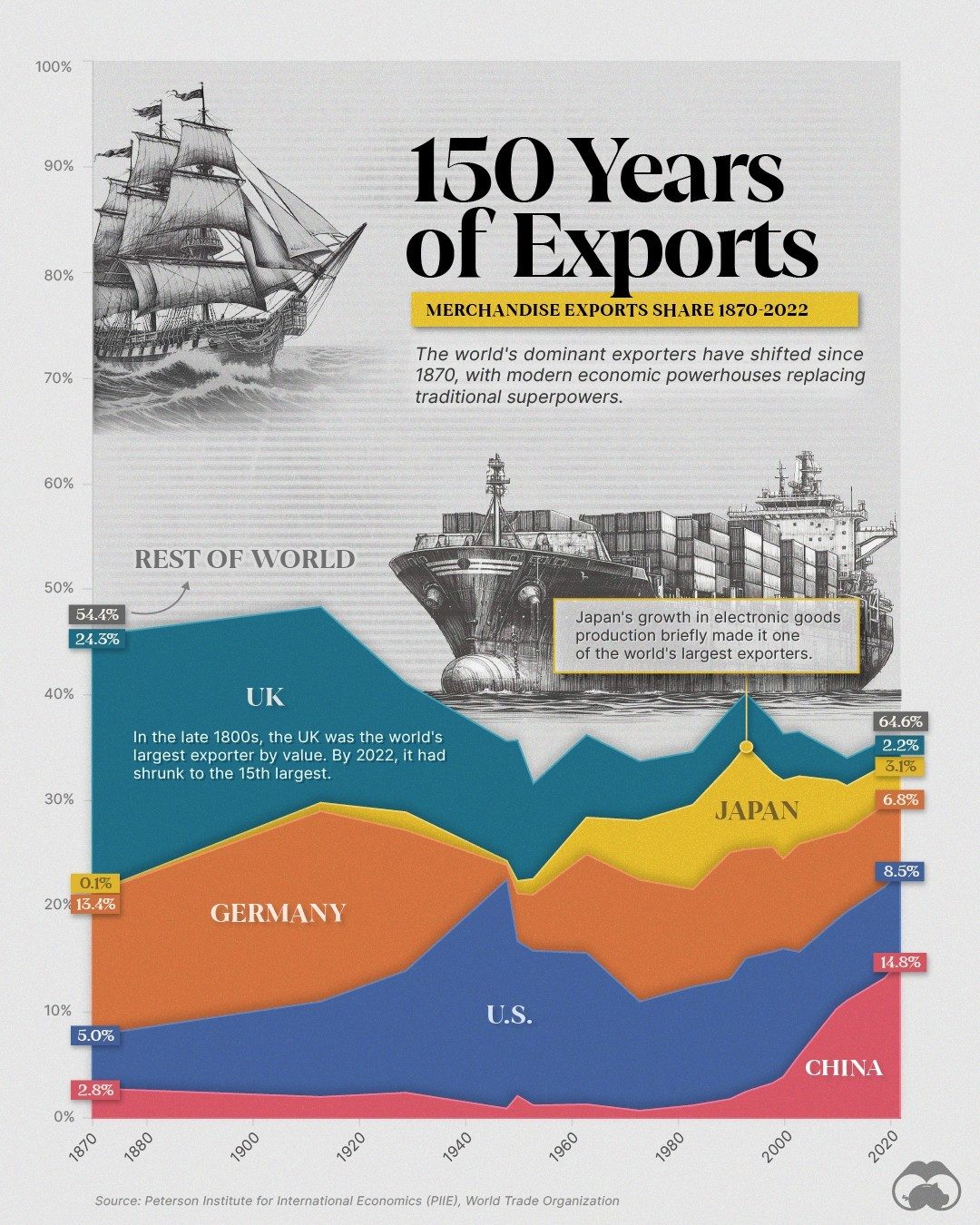
Historical Merchandise Exports 1870-2022
Understanding the global landscape of merchandise exports over the past 150 years provides valuable insights into the dynamics of international trade and the shifting economic powers. From the dominance of Britain in the 19th century to the rise of China in the modern era, the world's top exporters have seen significant changes. This article explores the key shifts in merchandise exports from 1870 to 2022, highlighting the roles of major players like the UK, Germany, the U.S., and China, as well as Japan's growth in electronic goods.
Why This Matters
Global merchandise exports are a critical component of international trade, influencing economic growth, employment, and technological advancements. By examining the historical shifts in export shares, we gain a better understanding of how economic powerhouses have evolved and what factors have driven these changes. This knowledge is essential for policymakers, economists, and businesses looking to navigate the complexities of global trade.
The Rise and Fall of Major Exporters
Britain's Dominance in the 19th Century
During the 19th century, Britain was the world's richest and most advanced economy, dominating merchandise exports. The UK's industrial revolution fueled its export prowess, making it a global leader in trade. Britain's dominance was characterized by its superior manufacturing capabilities, extensive trade networks, and control over vital maritime routes. The country's economic might was evident in its high export shares, particularly in textiles, machinery, and coal.
Germany and the U.S. in the 20th Century
As the 20th century unfolded, Germany and the U.S. emerged as significant players in global trade. Germany's industrial capabilities and technological innovations, particularly in engineering and chemicals, boosted its export performance. Meanwhile, the U.S. leveraged its vast resources, advanced manufacturing, and robust consumer market to become a major exporter of various goods, including automobiles, electronics, and agricultural products.
Japan's Growth in Electronic Goods
Japan's rise as a major exporter, particularly in electronic goods, is a notable development in the global trade landscape. Japan's focus on innovation, high-quality manufacturing, and technological advancements allowed it to become a leading exporter of electronics. This growth was driven by companies that pioneered products like televisions, cameras, and later, consumer electronics. The country's success in this sector underscores the importance of technological innovation in global trade.
China's Rise to Dominance
China has emerged as a major global exporter, accounting for nearly 15% of all merchandise exports. The country's transition from a largely agrarian society to a manufacturing powerhouse has been remarkable. China's export growth has been fueled by its vast labor force, favorable government policies, and strategic investments in infrastructure. The country has become a dominant player in various sectors, including electronics, textiles, and machinery.
The United Kingdom's Decline
The UK, once the world's largest exporter, has seen a decline in its global export share. Various factors, including post-industrial economic shifts, increased competition from other nations, and changes in global trade dynamics, have contributed to this decline. The UK's focus on services and its reliance on foreign direct investment have also impacted its manufacturing capabilities and export performance.
The Role of Global Trade Organizations
The Peterson Institute for International Economics (PIIE) and the World Trade Organization (WTO) have played crucial roles in monitoring and analyzing global trade trends. These organizations provide valuable data and insights into the shifting dynamics of merchandise exports. Their reports and analyses help policymakers and businesses understand the complexities of global trade and make informed decisions.
Practical Tips for Understanding Global Trade
To better understand and navigate the complexities of global trade, consider the following tips:
- Stay Informed: Keep up with the latest trends and data on global merchandise exports. This will help you anticipate changes and make informed decisions.
- Analyze Historical Data: Examine historical data and trends to identify patterns and understand the factors driving changes in global trade.
- Focus on Innovation: Prioritize technological innovation and high-quality manufacturing to stay competitive in the global market.
- Understand Global Dynamics: Recognize the role of global trade organizations and the importance of international cooperation in fostering a stable and prosperous trading environment.
- Adapt to Changes: Be prepared to adapt to shifting economic powers and changing trade dynamics. Flexibility and agility are key to succeeding in a rapidly evolving global market.
Important Takeaways
Exploring the historical shifts in merchandise exports from 1870 to 2022 reveals several important takeaways:
- Economic Power Shifts: The world's dominant exporters have shifted significantly over the past 150 years, with modern economic powerhouses replacing traditional superpowers.
- Technological Innovation: Countries that prioritize technological innovation and high-quality manufacturing have seen significant growth in their export shares.
- Global Trade Organizations: The role of organizations like the PIIE and WTO in monitoring and analyzing global trade trends is crucial for understanding the complexities of international trade.
- Adaptation and Flexibility: The ability to adapt to changing economic dynamics and global trade patterns is essential for sustained success in the global market.
Conclusion
The history of global merchandise exports from 1870 to 2022 tells a story of shifting economic power, technological innovation, and the importance of international cooperation. From Britain's dominance in the 19th century to China's rise in the modern era, the dynamics of global trade have evolved significantly. Understanding these changes and their implications is essential for navigating the complexities of the global market. By staying informed, prioritizing innovation, and adapting to changing economic landscapes, businesses and policymakers can position themselves for success in the ever-evolving world of international trade.
Watch the Reel
Questions readers ask
How has the global landscape of merchandise exports changed from 1870 to 2022?
The global landscape of merchandise exports has evolved significantly, shifting from Britain's dominance in the 19th century to China's prominent role in the modern era. This change reflects the rise and fall of economic powers and technological advancements, with key players like Germany, the U.S., and Japan influencing international trade dynamics.
What were the key shifts in global merchandise exports during the 20th century?
The 20th century saw substantial shifts in global merchandise exports, including the rise of Germany and the U.S. as major players, and the ascent of Japan in the electronics sector. These changes were driven by industrialization, technological innovations, and evolving geopolitical dynamics.
Why is understanding historical trade data important for analyzing global merchandise exports?
Historical trade data provides essential context for understanding the current state and future trends of global merchandise exports. By examining past shifts in export patterns, one can identify recurring themes, the impact of technological advancements, and the influence of major economic players on trade dynamics.
How did Japan's export of electronic goods influence global trade?
Japan's export of electronic goods significantly impacted global trade, establishing the country as a major player in the technology sector. This influence not only boosted Japan's economic growth but also drove technological advancements and set new standards for electronic products worldwide.
What were the major changes in global merchandise exports from 1870 to the present day?
Major changes include Britain's decline from its dominant position, the rise of Germany and the U.S. as leading exporters, and China's emergence as a top global exporter. These shifts highlight the fluid nature of global trade, influenced by economic growth, technological progress, and geopolitical changes.
How can trade data visualization help in understanding the evolution of world trade?
Trade data visualization offers a clear and engaging way to understand the evolution of world trade by presenting complex data in an accessible format. Visualizations can highlight trends, shifts in export rankings, and the impact of economic events, making it easier to grasp the dynamics of global merchandise exports over time.
What are the top exporting countries in 2022?
As of 2022, the top exporting countries have been influenced by ongoing global trade shifts. While specific rankings can vary, countries like China, the U.S., Germany, and Japan have consistently been among the leading exporters, reflecting their strong industrial bases and technological capabilities.
Related deep dives
Similar reads based on topic and creator.


Recent articles
Fresh deep dives from the latest Reels we unpacked.




Comments
Be the first to comment.