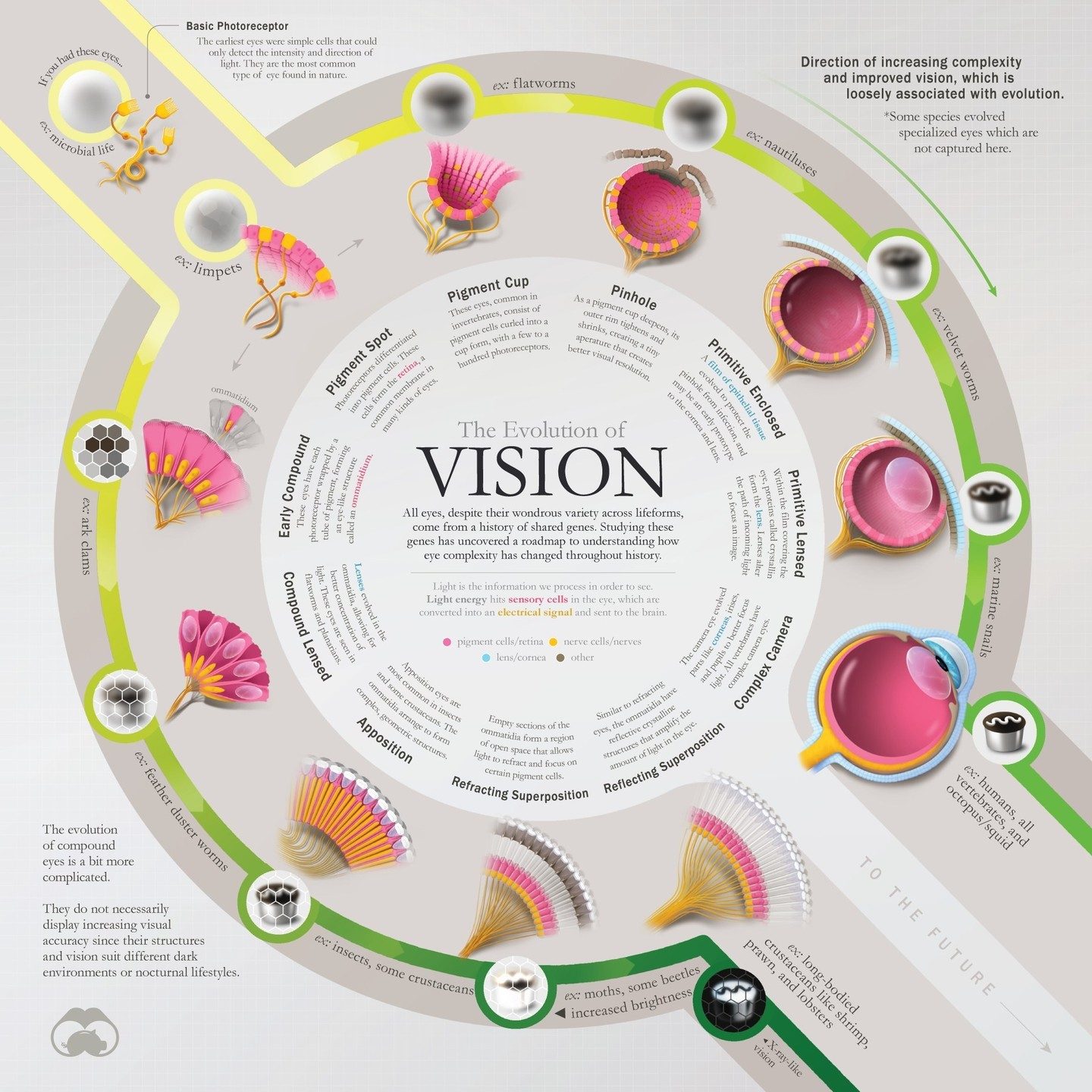
The evolution of vision in creatures can be traced through remarkable advancements in eye structures and functions. This journey starts with simple light-sensing cells in microbial life and progresses to the intricate camera eyes of modern vertebrates, creating a fascinating narrative of adaptation and complexity.
Context / Why Vision Matters
Vision is a critical sense for many organisms, enabling them to navigate environments, find food, avoid predators, and interact with their surroundings. The evolution of eyes has allowed creatures to adapt to different ecological niches, influencing their survival and reproduction. Understanding how eyes have evolved provides valuable insights into the mechanisms of natural selection and the genetic pathways that shape biological diversity.
The Evolution of Vision in Different Lifeforms
From Light-Sensing to Eyes
The earliest forms of vision can be traced back to simple light-sensing cells in microbial life. These cells, known as pigment cups, were capable of detecting light but lacked the ability to form images. The pigment cup is essentially a depression in a cell that contains light-sensitive pigments, allowing it to differentiate between light and dark. Examples of organisms with this primitive structure include some flatworms and microorganisms.
Developing Depth Perception
As lifeforms evolved, so did their eyes. The pinhole eye emerged, offering a significant improvement over the pigment cup. This structure allowed light to pass through a small opening, creating a rudimentary image on the retina. Pinhole eyes are still present in some marine snails, squids, and other invertebrates. This design provided a more accurate perception of depth and form, aiding in navigation and predation.
Enclosed and Lensed Eyes
The next phase in eye evolution saw the development of enclosed eyes, which sealed the opening of the pinhole eye to protect it from damage and improve image quality. This structure is found in various marine creatures, such as limpet and clams. These eyes further enhanced the ability to perceive images, providing a clear advantage in diverse habitats.
Meanwhile, the emergence of lensed eyes introduced a new level of sophistication. The lens improves focus and clarity, allowing for more detailed vision. This type of eye is found in organisms like the nautilus and feather duster worms. Lensed eyes can form more precise images, aiding in hunting and evading predators.
The Complex Camera Eye
The pinnacle of eye evolution is the camera eye, found in vertebrates like humans, fish, and birds. This complex structure includes a lens, iris, and retina, working together to create a high-resolution image. Camera eyes have evolved independently in different lineages, yet share a common genetic framework, highlighting the power of convergent evolution.
Camera eyes have several advantages, including the ability to see colors, detect motion, and perceive depth. This advanced vision allows organisms to thrive in a wide range of environments, from the depths of the ocean to the skies.
The Evolution of Compound Eyes
Invertebrates like insects and crustaceans, have evolved compound eyes, which consist of multiple individual units called ommatidia. Each ommatidium functions as a miniature eye, contributing to the overall image. Compound eyes offer a wide field of view and excellent motion detection, making them ideal for fast-moving creatures. The development of compound eyes showcases how different evolutionary paths can lead to highly specialized visual systems.
Genetic Insights
All eyes, despite their variety, share a common genetic history. This genetic continuity has allowed scientists to map out the evolution of vision, tracing how different eye structures have developed over time. The study of these genes has revealed a roadmap showing how eye complexity has changed, reflecting the adaptive pressures faced by different species.
Practical Tips
Understanding the evolution of vision can provide practical insights into various fields, from biology to engineering. For instance, studying the principles of vision in different creatures can inspire innovative designs in optics and robotics. Some practical applications include:
Bio-Inspired Optics
Designers and engineers can draw inspiration from the natural world to create advanced optical systems. For example, the principles behind compound eyes are being used to develop innovative camera lenses and imaging technologies.
Medical Applications
Research into the genetics of vision can lead to breakthroughs in treating eye diseases. By understanding the genetic pathways that control eye development, scientists can identify potential targets for therapeutic interventions.
Environmental Conservation
Studying the evolution of vision can also provide insights into how different species adapt to their environments. This knowledge can inform conservation efforts, helping to protect endangered species and ecosystems.
Vision Enhancement
Understanding how different creatures perceive their surroundings can inspire new technologies for enhancing human vision. For instance, the principles behind insect eyes are being used to develop wide-angle lenses and motion-sensing devices.
Important Takeaways
The evolution of vision is a testament to the power of adaptation and natural selection. From simple light-sensing cells to the complex camera eyes of vertebrates, the journey of vision showcases the remarkable diversity and resilience of life on Earth. Key takeaways include:
- Diverse Eye Structures: Different creatures have evolved various eye structures, each tailored to their specific needs and environments.
- Genetic Continuity: Despite their variety, all eyes share a common genetic framework, revealing a roadmap of how vision has evolved.
- Adaptation and Survival: The evolution of vision has played a crucial role in the survival and adaptation of diverse species, influencing their interactions with the environment.
Conclusion
The evolution of vision is a fascinating journey that highlights the ingenuity of nature. From the simplest light-sensing cells to the intricate camera eyes of modern vertebrates, the progression of vision reflects the adaptive pressures and genetic pathways that shape life on Earth. By studying this evolution, we gain valuable insights into the mechanisms of natural selection, the diversity of life, and the potential for future innovations in optics, medicine, and conservation.
Watch the Reel
Questions readers ask
How did the evolution of eyes begin?
The evolution of eyes began with simple light-sensing cells in microscopic organisms. These cells were capable of detecting changes in light, allowing microorganisms to respond to their surroundings. Over time, these cells evolved into more complex structures, paving the way for the intricate eyes we see in various creatures today.
What are the key stages in the evolution of vision?
The evolution of vision can be broken down into several key stages. It starts with light-sensing cells in microorganisms, progresses to simple eye cups in invertebrates, and then to more complex designs like the camera eyes found in vertebrates. Each stage represents a significant leap in the ability of organisms to perceive their environment and react accordingly.
How do camera eyes in vertebrates differ from other eye types?
Camera eyes, found in vertebrates, are characterized by a lens that focuses light onto a light-sensitive layer at the back of the eye. This design allows for sharp, focused vision and the perception of depth, unlike simpler eye types such as those found in invertebrates, which may only detect light and basic shapes.
What role did natural selection play in the evolution of eyes?
Natural selection played a crucial role in shaping the evolution of eyes. Organisms with more effective light-sensing capabilities had a survival advantage, leading to the preservation and enhancement of these traits over generations. This process drove the development of increasingly complex and efficient eye structures, tailored to the diverse needs of different species.
How have eyes evolved differently in various creatures?
The evolution of eyes has resulted in a wide variety of structures and functions across different creatures. For example, some insects have compound eyes composed of many individual units, while vertebrates possess camera eyes. These differences reflect adaptations to specific ecological niches and the unique challenges each creature faces in its environment.
Can the evolution of eyes be illustrated in an infographic?
Yes, the evolution of eyes can be effectively illustrated in an infographic. Such a visual representation could show the progression from simple light-sensing cells to more complex structures, highlighting key milestones and the diversity of eye types across different species. This provides a clear roadmap of how vision has evolved over time.
What insights can be gained from studying the evolution of eyes?
Studying the evolution of eyes offers profound insights into the mechanisms of natural selection and the genetic pathways that drive biological diversity. By examining how different eye structures have developed, scientists can better understand the adaptations that have enabled organisms to thrive in various environments, from deep-sea creatures to birds of prey.
Related deep dives
Similar reads based on topic and creator.




Recent articles
Fresh deep dives from the latest Reels we unpacked.




Comments
Be the first to comment.