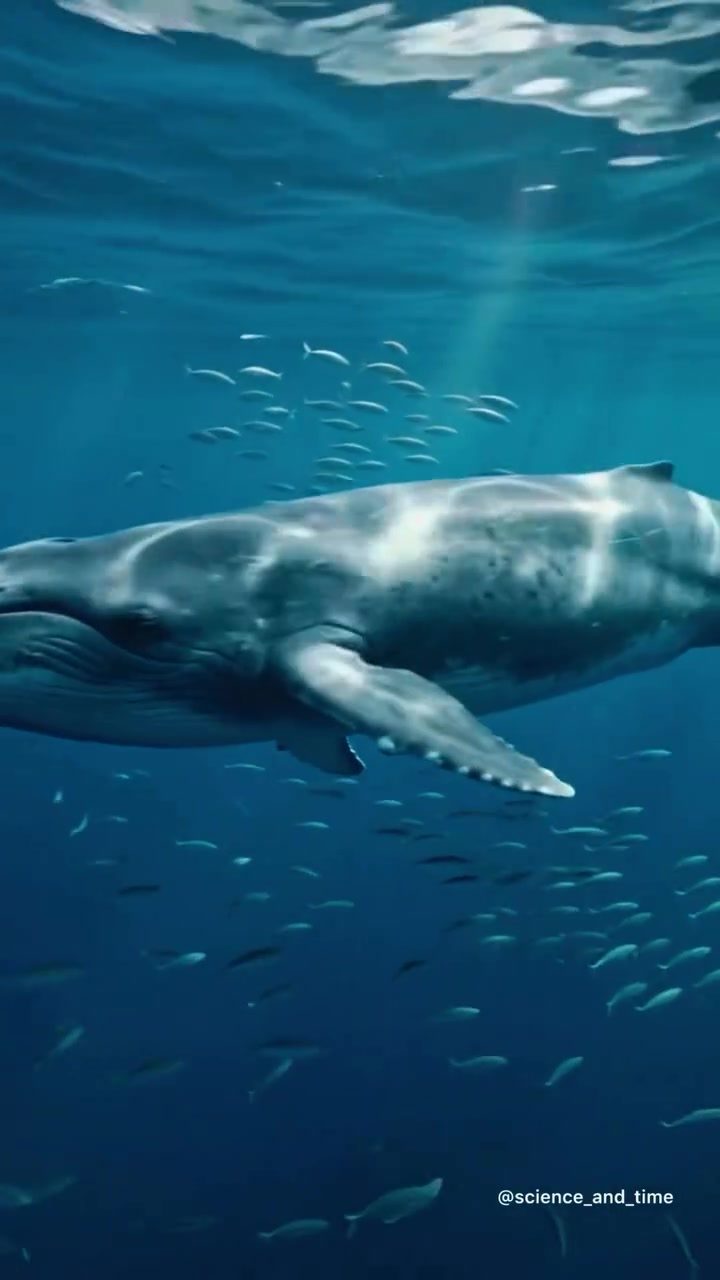
Prehistoric Animals and Marine Life: The Evolution of the Blue Whale
The blue whale stands as the largest animal to ever inhabit Earth, dwarfing even the most colossal dinosaurs. Its journey, however, began long after the dinosaurs' demise, sparked by the asteroid impact 66 million years ago. The extinction event that wiped out the dinosaurs opened an evolutionary pathway for the blue whale, transforming small land mammals into the ocean giants we know today.
Context
The asteroid impact that ended the dinosaurs' reign didn't create whales; it created opportunity. With the dinosaurs gone, mammalian species began to diversify and fill new ecological niches. For one particular lineage, the journey from tiny land-dwelling mammals to the blue whale would span tens of millions of years, driven by incredible evolutionary processes.
The Evolution of the Blue Whale
The Journey from Land to Sea
The blue whale's ancestors started their journey in rivers. These small, land-dwelling mammals were drawn to the water where food was abundant and hunting was safer than on land. Over generations, the strongest swimmers thrived, and evolution slowly reshaped their bodies to better suit aquatic life. This transition period saw the emergence of various whale prototypes, each one more adapted to life in the water than the last.
Ambulocetus: The Walking Whale
One of the most fascinating stages in the blue whale's evolutionary history is the emergence of Ambulocetus, the "walking whale." This ancient creature could still walk on land but spent most of its life hunting in the water. Ambulocetus serves as a crucial evolutionary link, showcasing the transition from land-dwelling mammals to fully aquatic whales. This stage highlights the gradual adaptation process where life on land slowly faded away, and aquatic life became dominant.
Rodhositis and the Loss of Legs
The evolutionary process didn't stop with Ambulocetus. Over millions of years, whales like Rodhositis evolved to become even stronger swimmers. Their bodies grew longer, and their legs became smaller, eventually disappearing as their lifestyle became fully aquatic. This transformation marked a significant milestone in the blue whale's evolutionary journey, adapted specifically to life in the oceans.
Bacillosaurus and the Emergence of Baleen
Around 40 million years ago, whales like Bacillosaurus took the final step into full aquatic life. Though tiny hind legs remained, these were vestigial remnants of their terrestrial past. This period saw the development of baleen, a soft, filter-feeding structure that allowed whales to efficiently consume vast amounts of krill. This adaptation, which replaced teeth in some lineages, was a game-changer, enabling whales to filter thousands of tiny krill with every mouthful.
The Rise of the Blue Whale
From Small Mammals to Ocean Giants
The abundance of krill in the oceans provided a rich food source that allowed one whale lineage to grow larger and stronger over time. This lineage eventually became the blue whale, the largest animal in Earth's history. The transformation was driven by the nutritional richness of the oceans, which supported the growth of larger and more powerful whales.
Ice Ages and Krill Swarms
Ice ages played a crucial role in shaping the oceans and the whales that inhabited them. Nutrient-rich waters, influenced by the ice ages, created vast swarms of krill. Evolution rewarded the whales that grew bigger and could travel farther, as these adaptations allowed them to exploit these abundant food sources more effectively.
Practical Tips: Understanding Evolutionary Adaptations
Observing the extraordinary journey of the blue whale offers valuable insights into evolutionary adaptations that can inspire various fields, from biology to engineering. Here are a few key takeaways:
-
Adaptability: The blue whale's evolutionary journey highlights the importance of adaptability in the face of environmental changes. Whether it was the disappearance of dinosaurs or the onset of ice ages, these landmarks in Earth's history forced evolutionary adaptations that ultimately led to the blue whale's dominance.
-
Efficient Feeding Mechanisms: The development of baleen allowed some whale lineages to filter feed, which was a significant evolutionary advantage. This adaptation can inspire engineers and biologists to design more efficient filtering systems for various applications.
-
Body Morphology: The transformation from land-dwelling mammals to fully aquatic whales showcases the incredible plasticity of body morphology in response to environmental pressures. This process can inform both biological research and fields like robotics, where designing adaptive mechanisms is critical.
Important Takeaways
The blue whale's journey from a small land-dwelling mammal to the largest animal on Earth underscores the power of evolution. This process, driven by environmental changes and the availability of food sources, has shaped the blue whale into the gentle giant it is today. The blue whale’s story is a testament to the resilience and adaptability of life on Earth, and it serves as a reminder of the incredible transformations that can occur over millions of years.
Conclusion
The blue whale's evolutionary journey offers a fascinating glimpse into the history of life on Earth. From the asteroid impact that wiped out the dinosaurs to the development of baleen and the rise of ocean giants, the blue whale's story is one of adaptability, resilience, and the incredible power of evolutionary processes. Understanding this journey not only deepens our appreciation for the natural world but also inspires us to explore the potential for adaptation and innovation in various scientific and engineering fields. The next time you look at the ocean, remember the extraordinary journey of the blue whale, a testament to the wonders of evolution.
Watch the Reel
Related deep dives
Similar reads based on topic and creator.




Recent articles
Fresh deep dives from the latest Reels we unpacked.




Comments
Be the first to comment.