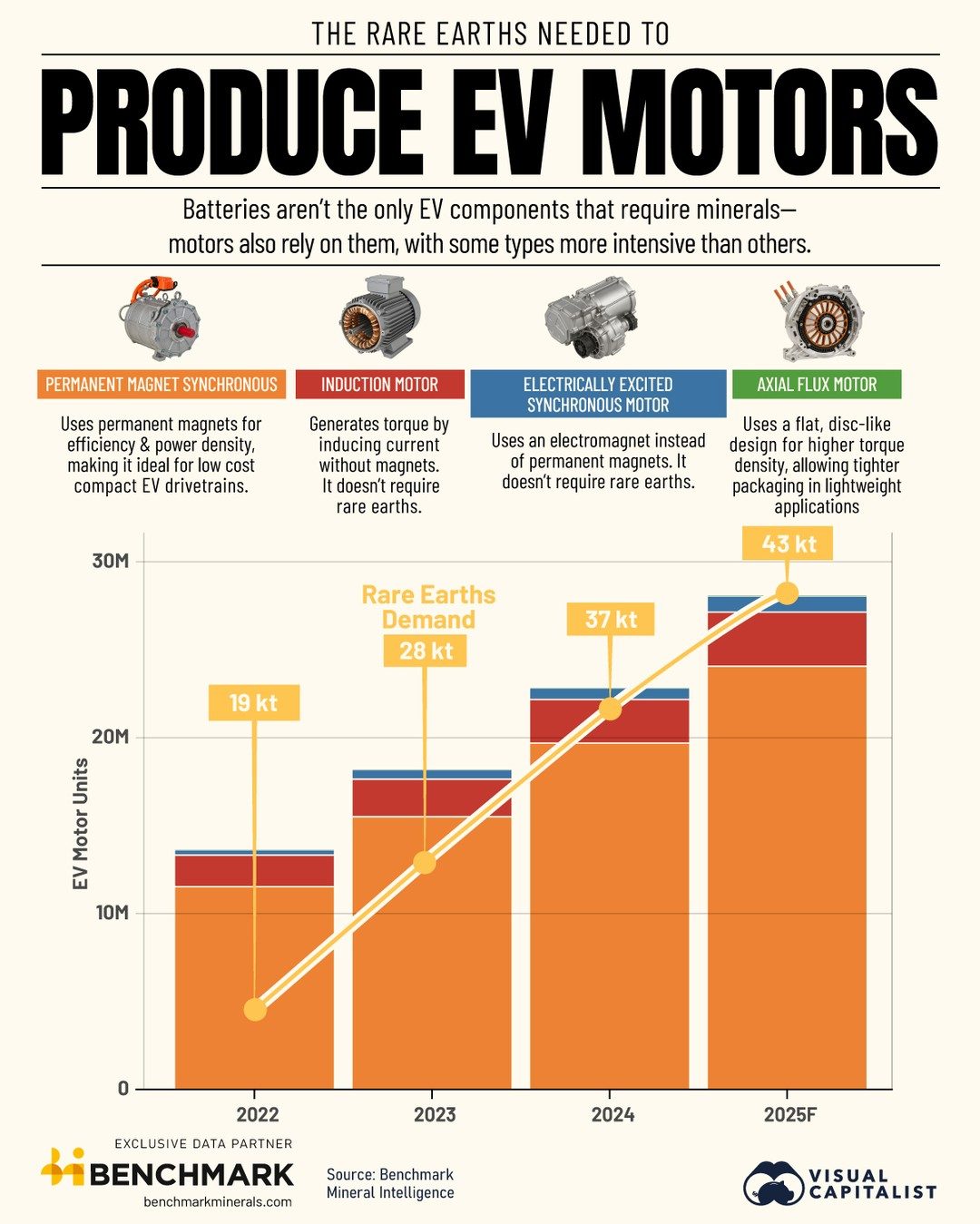
EV Motor Mineral Demand
Electric vehicles (EVs) are increasingly prevalent, and with this growth comes a heightened demand for the minerals that power them. While much of the conversation around EV minerals focuses on batteries, it's crucial to recognize that EV motors also depend on specific minerals, particularly rare earth elements.
Why This Matters
Rare earth elements are critical for the production of EV motors, especially those that use permanent magnets. These elements include neodymium, dysprosium, and terbium, which are essential for the efficiency and power density of EV motors. Understanding the demand for these minerals is vital for ensuring a sustainable supply chain and for advancing clean energy technologies.
Different Types of EV Motors and Their Mineral Requirements
Permanent Magnet Synchronous Motors
Permanent magnet synchronous motors (PMSMs) are widely used in EVs due to their high efficiency and power density. These motors rely on permanent magnets, which are made from rare earth elements like neodymium and dysprosium. The demand for PMSMs has been steadily increasing, largely due to their suitability for low-cost EV drivetrains. According to the infographic, the demand for rare earths in PMSMs reached 37 kilotons (kt) in 2024, up 32% from the previous year.
Induction Motors
Induction motors, unlike PMSMs, do not require rare earth elements. They generate torque by inducing current in the rotor, which eliminates the need for permanent magnets. This type of motor is less intensive in terms of mineral requirements, making it a more sustainable option. However, induction motors are less efficient compared to PMSMs, which is why they are not as commonly used in high-performance EVs.
Electrically Excited Synchronous Motors
Electrically excited synchronous motors (EESMs) use an electromagnet instead of permanent magnets, which means they also do not require rare earth elements. EESMs are known for their high efficiency and reliability, making them a viable alternative to PMSMs. However, they are less popular in EVs due to their higher cost and complexity.
Axial Flux Motors
Axial flux motors (AFMs) are designed for higher torque density, allowing for more compact and lightweight applications. These motors use a flat, disc-like design that provides more power in a smaller package. Like induction and electrically excited motors, AFMs do not require rare earth elements, making them a more sustainable choice. However, their complex design and manufacturing processes can pose challenges.
Projected Demand for Rare Earths in EV Motors
The demand for rare earth elements in EV motors is projected to continue growing. In 2022, the demand for rare earths in motors was 28 kt, and it is expected to reach 28 kt by 2025. This increase is driven primarily by the demand for PMSMs, which are ideal for low-cost EV drivetrains. The rising popularity of EVs and the need for more efficient and powerful motors are expected to further drive this demand.
Practical Tips for Managing Rare Earth Demand
Diversify Mineral Sources
Relying heavily on a few countries for rare earth minerals can lead to supply chain disruptions. Diversifying mineral sources can help mitigate this risk. Companies should explore alternative sources and consider partnering with suppliers from different regions.
Invest in Research and Development
Investing in research and development can lead to the discovery of new technologies that reduce the reliance on rare earth elements. For example, advancements in induction and electrically excited synchronous motors can make them more efficient and cost-effective, reducing the overall demand for rare earths.
Improve Recycling and Reuse
Recycling and reusing rare earth elements can help reduce the demand for new minerals. Implementing effective recycling programs can ensure that rare earth elements are recovered from end-of-life products and reused in new applications. This not only reduces the environmental impact but also helps in maintaining a stable supply of these critical minerals.
Collaborate with Industry Partners
Collaboration with industry partners, such as Benchmark Mineral Intelligence, can provide valuable insights and data on mineral demand and supply. By working together, companies can develop strategies to manage mineral demand more effectively and ensure a stable supply of rare earth elements.
Important Takeaways
- The demand for rare earth elements in EV motors is driven by the need for efficient and powerful motors, particularly permanent magnet synchronous motors.
- Different types of EV motors have varying mineral requirements, with induction and electrically excited synchronous motors being less intensive in terms of rare earth elements.
- The demand for rare earths in EV motors is projected to continue growing, driven by the increasing popularity of EVs and the need for more efficient motors.
- Managing the demand for rare earth elements involves diversifying mineral sources, investing in research and development, improving recycling and reuse, and collaborating with industry partners.
Conclusion
Understanding the demand for rare earth elements in EV motors is crucial for ensuring a sustainable supply chain and advancing clean energy technologies. By recognizing the mineral requirements of different types of EV motors and implementing strategies to manage this demand, companies can contribute to a more sustainable and efficient future for electric vehicles.
Watch the Reel
Questions readers ask
Which rare earth minerals are most crucial for EV motor production in 2024?
The most crucial rare earth minerals for EV motor production in 2024 are neodymium, dysprosium, and terbium. These elements are particularly important for motors that use permanent magnets, which are common in many electric vehicles due to their high power density and efficiency.
Why are permanent magnets important in EV motors, and which rare earths do they require?
Permanent magnets are important in EV motors because they enable high power density and efficiency, which are crucial for the performance of electric vehicles. These magnets require specific rare earth minerals, namely neodymium, dysprosium, and terbium, to function effectively.
How does the demand for dysprosium in EV motors look for 2024?
The demand for dysprosium in EV motors is expected to increase in 2024 due to the growing number of electric vehicles being produced. Dysprosium is used to enhance the performance of permanent magnets at high temperatures, making it a vital component in the production of efficient and powerful EV motors.
What role does terbium play in electric vehicle motors?
Terbium plays a significant role in electric vehicle motors, particularly in those that use permanent magnets. It is used to improve the temperature stability of the magnets, which is crucial for the longevity and reliability of EV motors.
What are the mineral requirements for synchronous motors in electric vehicles?
Synchronous motors in electric vehicles, particularly those with permanent magnets, typically require rare earth minerals such as neodymium, dysprosium, and terbium. These minerals are essential for creating powerful and efficient magnets that drive the motor's operation.
How will the increasing production of electric vehicles impact the demand for rare earth minerals in 2024?
The increasing production of electric vehicles will significantly impact the demand for rare earth minerals in 2024. As more EVs are manufactured, the need for minerals like neodymium, dysprosium, and terbium will rise. This heightened demand underscores the importance of securing a stable supply chain for these critical resources.
What can be expected in 2024 regarding exclusive data on EV mineral requirements?
In 2024, exclusive data on EV mineral requirements is expected to provide deeper insights into the specific needs of the EV industry. This data will be crucial for manufacturers, policymakers, and investors to understand the evolving demand for rare earth minerals and to plan for a sustainable future in clean energy technologies.
Related deep dives
Similar reads based on topic and creator.


Recent articles
Fresh deep dives from the latest Reels we unpacked.




Comments
Be the first to comment.