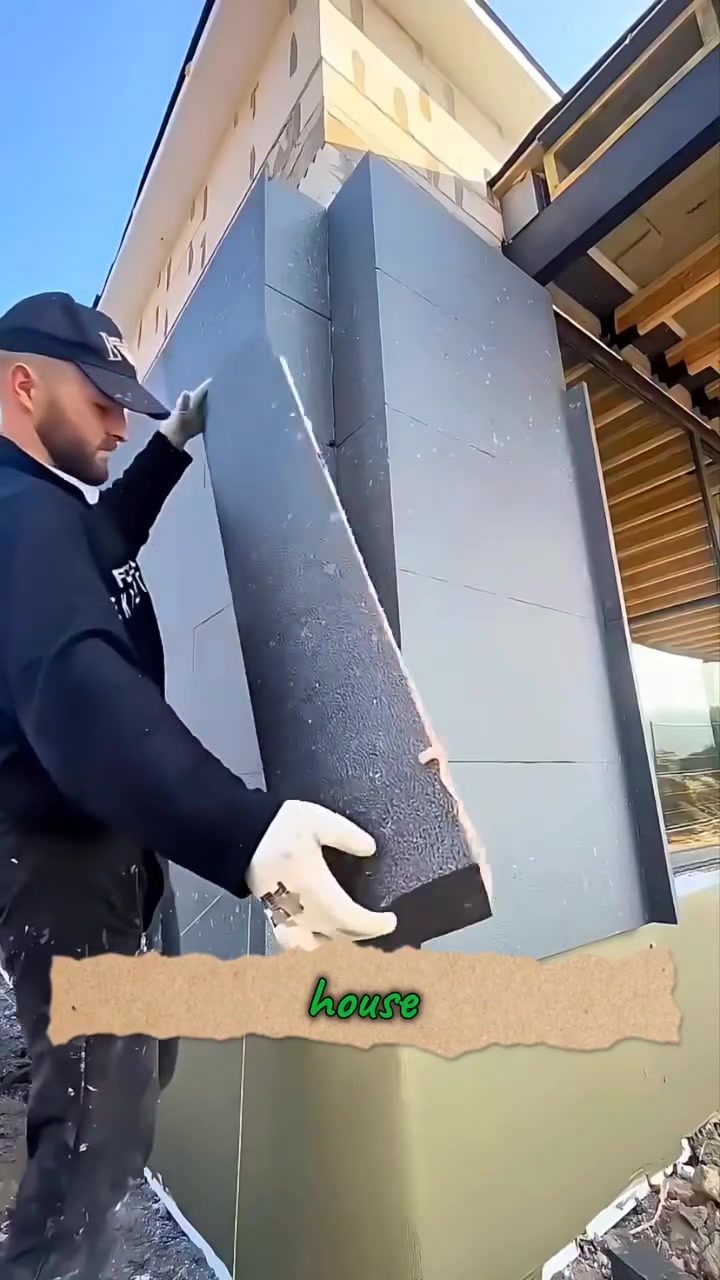
Wrapping Houses with Foam Boards: A European Construction Technique
When it comes to construction, especially in colder regions, the exterior insulation of a house plays a pivotal role. In Europe, many foreigners adopt a unique method after building a house: instead of rushing to paint the walls, they cover the entire exterior with thick foam boards. This technique, while it may initially appear to be simple, or even cheap, is actually a highly effective method to enhance the building's insulation. Here’s a deeper dive into why this method is used and how it benefits homeowners.
Why This Matters: Energy Efficiency and Comfort
In colder countries, the primary issue isn't the strength of the walls but the heat escaping through the building. Traditional insulation methods may not fully address these heat leaks, making the exterior foam boards a superior solution. These foam boards, known as EPS (Expanded Polystyrene) and XPS (Extruded Polystyrene) insulation panels, are not just ordinary materials. They are specifically designed with trapped air that blocks heat loss efficiently.
The Science Behind EPS and XPS Insulation
EPS and XPS insulation panels are composed of tiny air pockets, which are highly effective in trapping heat. Unlike traditional insulation methods, which may fail at preventing thermal bridges, these panels create a consistent barrier around the house. This means that the temperature inside the house remains stable, and the heating costs are significantly reduced.
The installation of these foam boards on the exterior is crucial. By wrapping the entire exterior, the house effectively becomes a giant insulated jacket, protecting the warmth inside. This method fortifies the structure against thermal bridges, which are areas where heat can escape and cause mold. The effectiveness of this insulation method is backed by Europe’s push for energy-efficient passive houses, which are designed to maximize energy efficiency and minimize heating costs.
Main Discussion
Understanding Thermal Bridges
Thermal bridges occur when heat escapes through areas that are not properly insulated. These can be gaps, cracks, or joints in the building structure, and they can lead to significant energy loss. By covering the exterior with foam boards, these thermal bridges are effectively sealed, preventing heat from escaping and cold air from entering. This not only keeps the house warmer but also reduces the likelihood of mold formation, which can be a significant health hazard.
The Benefits of Exterior Insulation
Exterior insulation, as opposed to interior insulation, offers several advantages. One of the primary benefits is that it prevents the formation of condensation within the walls. When warm air meets cold surfaces, it can condense, leading to mold and mildew. By insulating the exterior, this condensation occurs on the outer surface of the insulation, where it can readily evaporate or be wiped away.
Additionally, exterior insulation allows for more flexibility in interior design. Since the insulation is on the outside, homeowners can choose any type of interior finish without worrying about compromising insulation. This makes the design process more versatile and allows for more customization of the living space.
The Construction Process
The process of applying construction adhesive to these foam boards is straightforward. The adhesive is applied to the building materials, and the foam boards are then attached. The construction adhesive ensures a strong bond, making the installation process both simple and effective. This method is becoming increasingly common in Europe, where energy efficiency and sustainability are top priorities.
Practical Tips
When considering this insulation method for your home, there are a few practical tips to keep in mind:
- Choose the Right Insulation: Ensure you are using EPS or XPS insulation panels, as they are specifically designed for this purpose.
- Proper Installation: Make sure the foam boards are installed correctly with no gaps or overlaps. Use a construction adhesive for a strong and durable bond.
- Regular Maintenance: While these insulation panels are durable, it’s essential to inspect them regularly for any signs of damage or wear.
Important Takeaways
- Effective Insulation: Exterior foam boards are highly effective in preventing heat loss and maintaining a stable indoor temperature.
- Health Benefits: This insulation method reduces the risk of mold formation, which can be detrimental to health.
- Cost Savings: By minimizing heat loss, this technique significantly reduces heating costs, making it a cost-effective solution in the long run.
- Energy Efficiency: This method aligns with the global push for energy-efficient houses, making it a sustainable choice for homeowners.
Conclusion
For those looking to enhance their home's insulation, wrapping the exterior with foam boards is a technique worth considering. This method, popular in Europe, not only keeps the house warm but also saves on heating costs and reduces the risk of mold. By understanding the benefits and the process, homeowners can make an informed decision that can greatly improve their living conditions and contribute to a more sustainable future.
Watch the Reel
Questions readers ask
What are EPS and XPS panels, and why are they commonly used in European house wrapping?
EPS (Expanded Polystyrene) and XPS (Extruded Polystyrene) panels are types of foam boards often used in house wrapping. These materials are lightweight, durable, and excellent at trapping heat, making them ideal for enhancing a home's insulation. They help create a consistent barrier that reduces energy costs by keeping the interior warm in cold climates.
How does wrapping a house in foam boards help reduce energy costs?
Foam board insulation creates a thermal barrier that minimizes heat loss through the walls. By keeping the interior warm, the heating system doesn't have to work as hard, leading to significant savings on energy bills. This is particularly beneficial in colder regions where heating demands are high.
What is the process of wrapping a house with foam boards in Europe?
The process typically involves securing thick foam boards to the exterior walls of a newly constructed home. These boards are attached using adhesives, mechanical fasteners, or a combination of both. The seams between the boards are sealed to ensure a continuous insulation layer, which is then often covered with a protective layer or cladding.
Can foam board insulation be used in warmer climates, or is it exclusive to colder regions?
While foam board insulation is particularly beneficial in colder climates due to its heat-trapping properties, it can also be useful in warmer regions. In hot climates, it helps to keep the interior cool by slowing down the heat transfer from the outside, reducing the need for excessive air conditioning and lowering energy bills.
Are there any environmental considerations when using foam boards for house insulation?
Foam boards, particularly EPS and XPS, are made from polystyrene, which is derived from petroleum. While they are effective insulators, their production and disposal can have environmental impacts. However, many manufacturers are now producing more sustainable and recyclable versions of these materials, and proper disposal methods can mitigate some environmental concerns.
How does foam board insulation compare to other insulation methods used in construction?
Foam board insulation offers several advantages over other methods. It provides a continuous insulation layer without thermal bridges, which can be a problem with stud-based insulation. Additionally, it is usually more cost-effective and easier to install on the exterior of a home compared to retrofitting insulation inside an existing structure.
What are the long-term benefits of using foam board insulation for new homes?
Long-term benefits include reduced energy costs, improved indoor comfort, and increased structural durability. Foam board insulation protects the building envelope from moisture and potential water damage, which can extend the lifespan of the home. Additionally, it can enhance the home's resale value due to its energy-efficient features.
Recent articles
Fresh deep dives from the latest Reels we unpacked.




Comments
Be the first to comment.