European Economic Growth Forecast: 2024 Trends
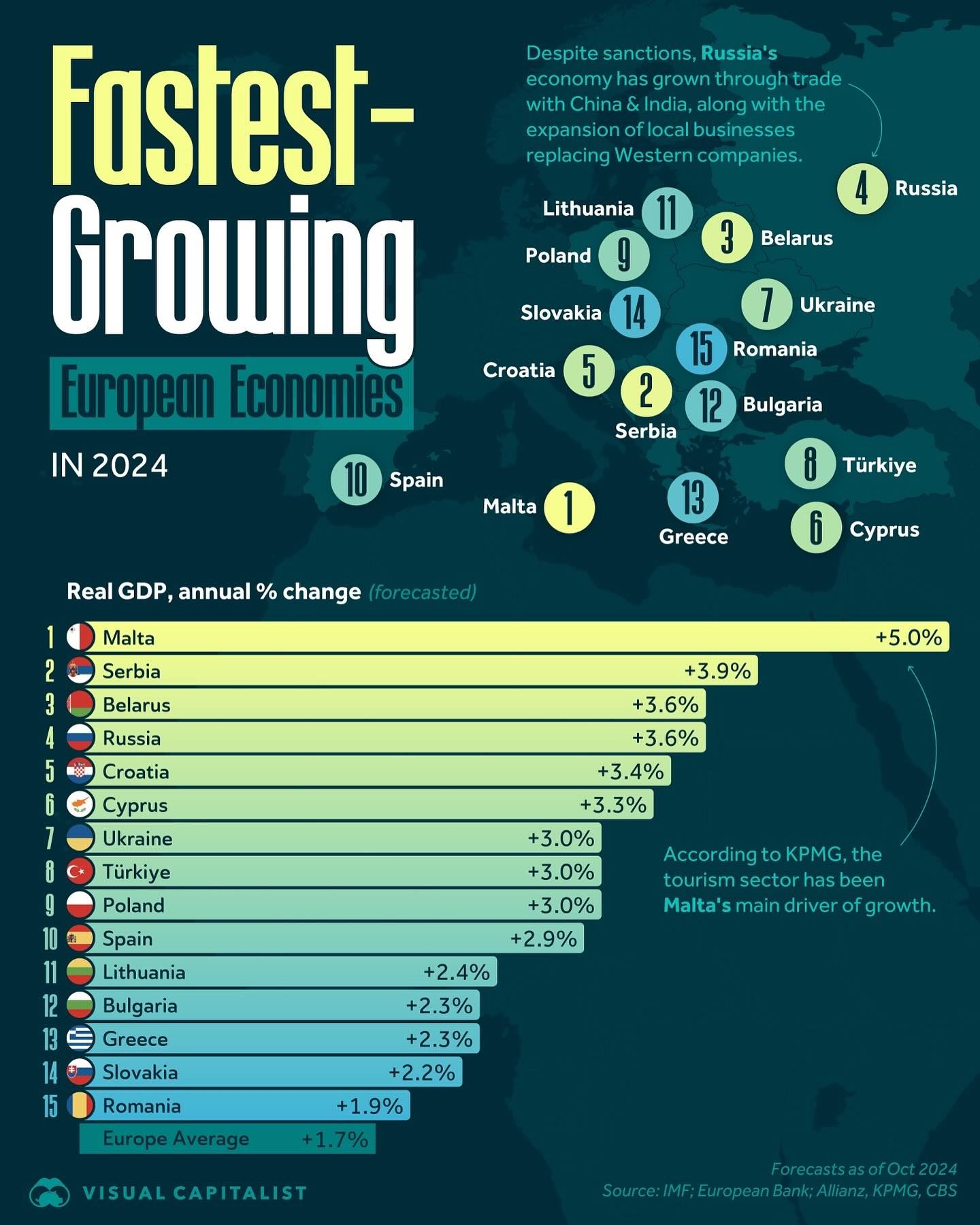
European economies are showing varied growth rates in 2024, with significant drivers and challenges influencing each country's performance. This forecast provides a detailed look at the economic outlook for Europe, highlighting key countries and sectors driving growth.
Context: Why This Matters
Understanding the economic growth trends in Europe is crucial for investors, policymakers, and businesses. These insights help in making informed decisions about investments, trade, and economic policies. The forecasted growth rates for 2024 offer a glimpse into the economic resilience and opportunities within the region.
Main Discussion
Malta's Economic Boom
Malta stands out as the fastest-growing European economy in 2024, with an impressive growth rate of 5.0%. The tourism sector has been the primary driver of this growth, along with a robust financial services industry. According to KPMG, Malta's tourism sector has been particularly instrumental in boosting the economy, attracting visitors and generating significant revenue. This growth highlights Malta's strategic importance in the European economic landscape.
Russia's Resilience
Despite facing economic sanctions, Russia's economy has shown resilience, growing by 3.9% in 2024. This growth is largely attributed to increased trade with China and India, as well as the expansion of local businesses that have filled the gaps left by Western firms. Russia's ability to maintain economic growth under sanctions underscores the country's adaptability and the diversification of its trade partners.
Key European Economy Performers
Several other European countries are also projected to experience notable growth in 2024. Lithuania is expected to lead with a growth rate of 2.4%, driven by its strong industrial and technology sectors. Greece, which has faced significant economic challenges in recent years, is expected to see a growth rate of 2.3%, primarily due to improved tourism and infrastructure development. Additionally, countries like Estonia, Poland, and Slovenia are anticipated to show stable growth rates, contributing to the overall economic stability in the region.
Europe's Average Growth
The overall average growth rate for European countries in 2024 is forecasted to be 1.7%. This moderate growth reflects a period of economic recovery and stability, albeit with varying growth rates across different countries. The diversity in growth rates underscores the importance of targeted economic policies and sector-specific investments to drive growth in individual countries.
Practical Tips
For investors and businesses looking to capitalize on Europe's economic trends:
-
Focus on Tourism: Countries like Malta and Greece are primed for growth in the tourism sector. Investing in tourism infrastructure, hospitality services, and related industries can yield significant returns.
-
Explore Emerging Markets: Russia's growth despite sanctions shows the potential of emerging markets. Exploring trade and investment opportunities in countries with growing economies, such as China and India, can provide new avenues for growth.
-
Engage in Sector-Specific Investments: Invest in sectors that are driving growth in specific countries. For example, focus on technology and industrial sectors in Lithuania, and financial services in Malta.
Important Takeaways
-
Malta's tourism sector is a key driver of economic growth, making it a prime investment destination.
-
Russia's resilience in the face of sanctions provides valuable lessons in economic adaptability and diversification.
-
The varying growth rates across European countries highlight the need for targeted economic policies and sector-specific investments.
-
Europe's overall average growth rate of 1.7% suggests a stable economic environment, with opportunities for investment and growth.
Conclusion
The economic landscape of Europe in 2024 is characterized by both resilience and diversity. Malta's tourism-driven growth, Russia's adaptive strategies, and the varied performances of other European countries offer unique opportunities and challenges. By understanding these trends, investors and policymakers can make informed decisions to navigate the economic landscape effectively. Whether focusing on tourism, emerging markets, or sector-specific investments, the forecasted growth rates provide a roadmap for strategic economic engagement in Europe.
Watch the Reel
Questions readers ask
Which European country is projected to have the highest GDP growth in 2024?
Malta is expected to lead Europe with a GDP growth rate of 5.0% in 2024. This growth is primarily driven by the expansion of its tourism sector and robust financial services industry, making it a standout performer in the region.
What factors are contributing to Russia's economic growth in 2024?
Russia is forecasted to achieve a 3.9% GDP growth in 2024, despite facing economic sanctions. This resilience can be attributed to its strategic trading partnerships and efforts to diversify its economy, which are helping to sustain growth.
What are the key drivers of European economic growth in 2024?
The key drivers of economic growth in Europe for 2024 include the robust performance of the tourism and financial services sectors. Additionally, strategic trading partnerships and economic diversification are playing significant roles in various countries' growth.
Why should investors and businesses pay attention to Europe's 2024 economic outlook?
Investors and businesses should closely monitor Europe's 2024 economic outlook to identify potential investment opportunities, understand market trends, and make informed decisions about trade and economic policies. The varied growth rates across countries offer a range of prospects for strategic investments.
How does the tourism sector impact Malta's economic growth in 2024?
Tourism is a primary driver of Malta's economic growth in 2024, contributing significantly to its projected 5.0% GDP expansion. The sector's robust performance is attracting investments and fostering economic activity, making it a crucial component of Malta's economic success.
Related deep dives
Similar reads based on topic and creator.




Recent articles
Fresh deep dives from the latest Reels we unpacked.




Comments
Be the first to comment.