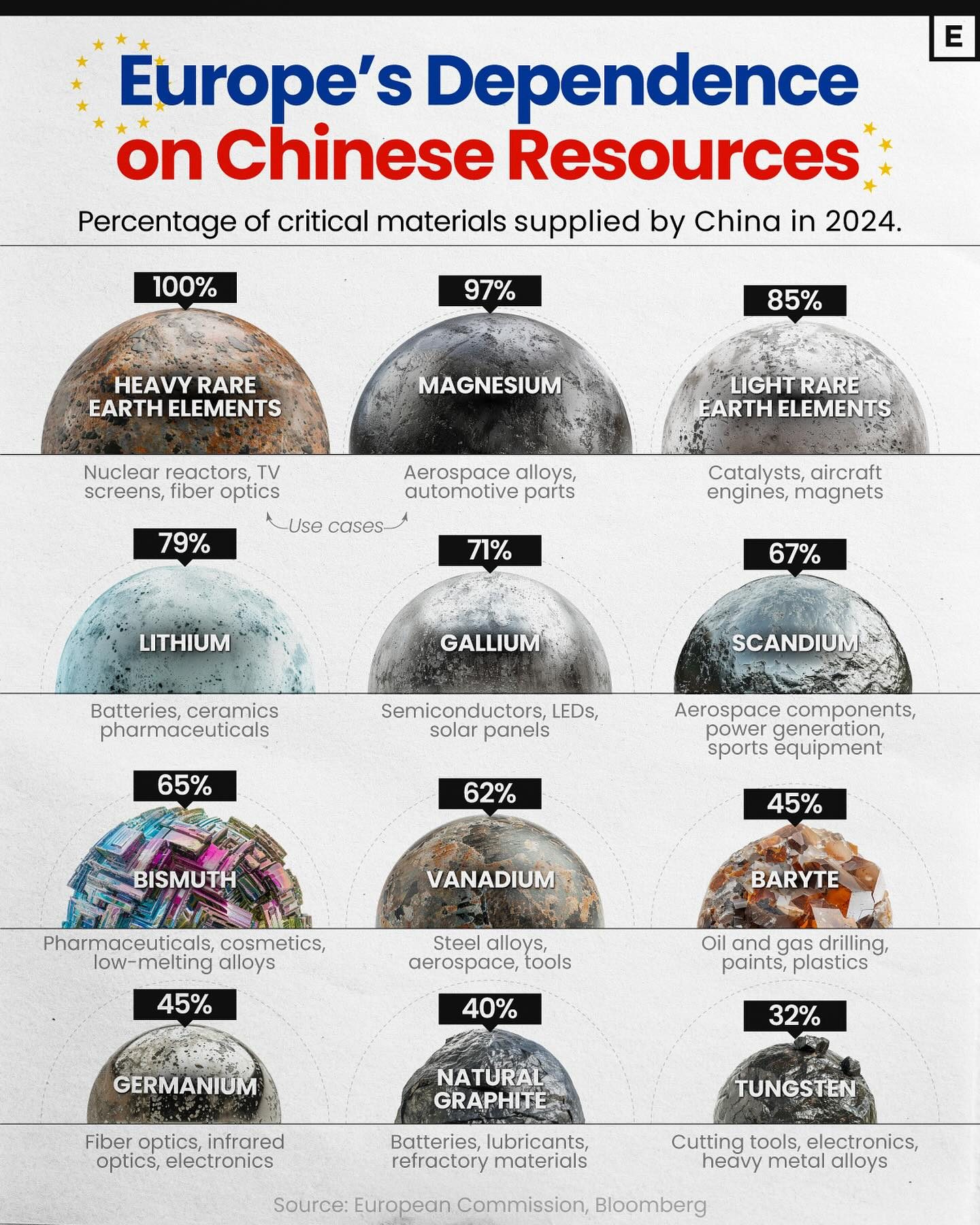
Europe's reliance on Chinese resources has significant implications for various industries and technologies, especially in the realm of critical materials. The European Union (EU) heavily depends on China for a range of essential raw materials that are fundamental to modern technologies and clean energy solutions. This dependence is particularly pronounced in the supply of heavy rare earth elements, which are crucial for hybrid cars, fiber optics, and nuclear power.
Context / Why this matters
The reliance on Chinese resources is not just an economic concern; it has far-reaching implications for Europe's energy security, technological advancement, and environmental sustainability. Understanding this dependence is crucial for policymakers, industry leaders, and consumers alike. This dependence is not just about the supply of raw materials but also about the geopolitical and economic dynamics that underpin global trade.
Main discussion
Heavy Rare Earth Elements
Heavy rare earth elements, particularly used in hybrid cars, are a critical component in the transition to cleaner energy sources. China currently supplies 100% of these elements to Europe. These elements are essential for the manufacturing of permanent magnets used in electric and hybrid vehicles, wind turbines, and various high-tech applications. The inability to diversify supply chains leaves the European automotive and renewable energy sectors vulnerable to global market fluctuations and geopolitical tensions.
Lithium and Batteries
Lithium is another critical material that Europe relies heavily on from China. With 79% of lithium supply coming from China, the EU's battery industry is significantly impacted. Lithium is a fundamental component in the production of lithium-ion batteries, which are used in electric vehicles, portable electronics, and energy storage systems. The EU's efforts to transition to electric vehicles and renewable energy sources are inherently linked to the availability and stability of lithium supply.
Scandium and Aerospace
Scandium, a critical material for aerospace components, power equipment, and sports equipment, is another area of significant dependence on China, with 67% of European supply originating from there. Scandium's unique properties make it an invaluable material for lightweight, high-strength alloys used in the aerospace industry. This reliance underscores the strategic importance of securing a stable and diverse supply chain for aerospace manufacturers in Europe.
Bismuth and Alloys
Bismuth, used in fire retardants and low-melting alloys, is another critical material that Europe sources significantly from China. With 65% of the supply coming from China, this dependence affects industries such as construction, electronics, and manufacturing. Bismuth's unique properties, such as its low melting point and non-toxicity, make it indispensable for various industrial applications, including fire safety and alloy production.
Gallium and Semiconductors
Gallium, a crucial component in semiconductors, LEDs, and solar panels, is another material where Europe relies heavily on China, with 62% of the supply coming from there. Gallium's role in the semiconductor industry is vital, as it is used in the production of gallium arsenide (GaAs) and gallium nitride (GaN) semiconductors, which are essential for high-frequency and high-power applications. This dependence affects Europe's technological competitiveness and its ability to innovate in areas such as telecommunications and renewable energy.
Baryte and Industrial Applications
Baryte, used in oil and gas drilling, paints, and plastics, is another material where Europe depends significantly on China, with 45% of the supply coming from there. Baryte's primary use in the oil and gas industry, as a weighting agent in drilling fluids, highlights its critical role in Europe's energy sector. Additionally, its use in paints and plastics underscores its importance in various manufacturing processes.
Vanadium and Steel
Vanadium, crucial for steel production, tools, and aerospace, is another area where Europe relies on China, with 40% of the supply coming from there. Vanadium's addition to steel significantly enhances its strength, making it essential for high-strength steel used in construction, machinery, and aerospace applications. This dependence impacts the European steel industry, which is a cornerstone of the continent's manufacturing sector.
Germanium and Optics
Germanium, used in fiber optics, infrared optics, and electronics, is another material where Europe depends on China, with 32% of the supply coming from there. Germanium's unique optical and electronic properties make it indispensable for applications such as fiber optic communication, infrared optics, and high-speed electronics. This dependence affects Europe's telecommunications, optoelectronics, and electronics industries, which rely on advanced materials for innovation and competitiveness.
Practical tips
For anyone looking to understand this issue more deeply, here are some practical steps:
- Stay Informed: Keep an eye on geopolitical developments that could impact the supply chain of critical materials. News sources, industry reports, and expert analyses can provide valuable insights.
- Diversify Investments: For investors, consider diversifying portfolios to include companies involved in the extraction and processing of critical materials, as well as those developing alternative technologies.
- Advocate for Policy: Engage with policymakers to advocate for strategies that promote domestic production, recycling, and alternative sources of critical materials.
- Research Alternatives: Support and invest in research and development of alternative materials and technologies that can reduce dependence on Chinese resources.
Important takeaways
- Europe's reliance on China for critical materials is extensive and affects multiple industries, from automotive and energy to aerospace and electronics.
- Diversifying supply chains is essential for reducing this dependence and mitigating risks associated with geopolitical tensions and market fluctuations.
- The transition to cleaner energy sources and advanced technologies is intrinsically linked to the availability and stability of these critical materials.
Conclusion
Europe's dependence on Chinese resources for critical materials presents both challenges and opportunities. While the reliance highlights the need for strategic diversification and innovation, it also underscores the importance of these materials in Europe's energy and industrial sectors. By understanding the extent of this dependence and taking proactive steps, Europe can work towards a more resilient and sustainable future.
Watch the Reel
Questions readers ask
Why is Europe dependent on China for heavy rare earth elements?
Europe relies on China for heavy rare earth elements due to China's dominance in mining and processing these materials. These elements are crucial for various high-tech applications, including hybrid cars, fiber optics, and nuclear power, making them indispensable for Europe's tech and energy sectors.
What are the implications of Europe's reliance on China for lithium?
Europe's dependence on China for lithium supply is significant, as lithium is a key component in batteries for electric vehicles and energy storage systems. This reliance can impact Europe's energy security and sustainability goals, as well as the competitiveness of its tech and energy industries.
How does Europe's material deficit affect its energy security?
Europe's critical material deficit, particularly in resources like heavy rare earth elements and lithium, poses a significant threat to its energy security. This deficit can lead to supply disruptions, increased costs, and reduced self-sufficiency in producing clean energy solutions and powering essential technologies.
What steps can Europe take to reduce its dependence on Chinese raw materials?
Europe can explore several strategies to reduce its reliance on Chinese raw materials, such as investing in domestic mining and processing capabilities, diversifying supply chains, and fostering international partnerships for resource access. Additionally, promoting recycling and circular economy initiatives can help secure critical materials within Europe.
Why is the supply of lithium crucial for Europe's tech and energy sectors?
Lithium is a vital component in the batteries that power electric vehicles, smartphones, and energy storage systems. As Europe transitions towards clean energy solutions, the demand for lithium is expected to surge, making a secure and sustainable supply of this resource essential for the continent's technological and energy advancement.
How does China's role in the EU-China trade impact Europe's technological advancement?
China's role in the EU-China trade significantly impacts Europe's technological advancement due to its control over critical materials. Europe's dependence on Chinese raw materials can hinder its ability to innovate and compete in high-tech industries, as well as achieve its climate and energy goals, particularly in areas like electric vehicles and clean energy technologies.
What are the environmental concerns related to Europe's material dependence on China?
Europe's material dependence on China raises environmental concerns, including the ecological impact of resource extraction, the carbon footprint of long-distance shipping, and the potential for supply chain disruptions. These factors can undermine Europe's sustainability efforts and its goals for a greener, more resilient economy.
Related deep dives
Similar reads based on topic and creator.


Recent articles
Fresh deep dives from the latest Reels we unpacked.




Comments
Be the first to comment.