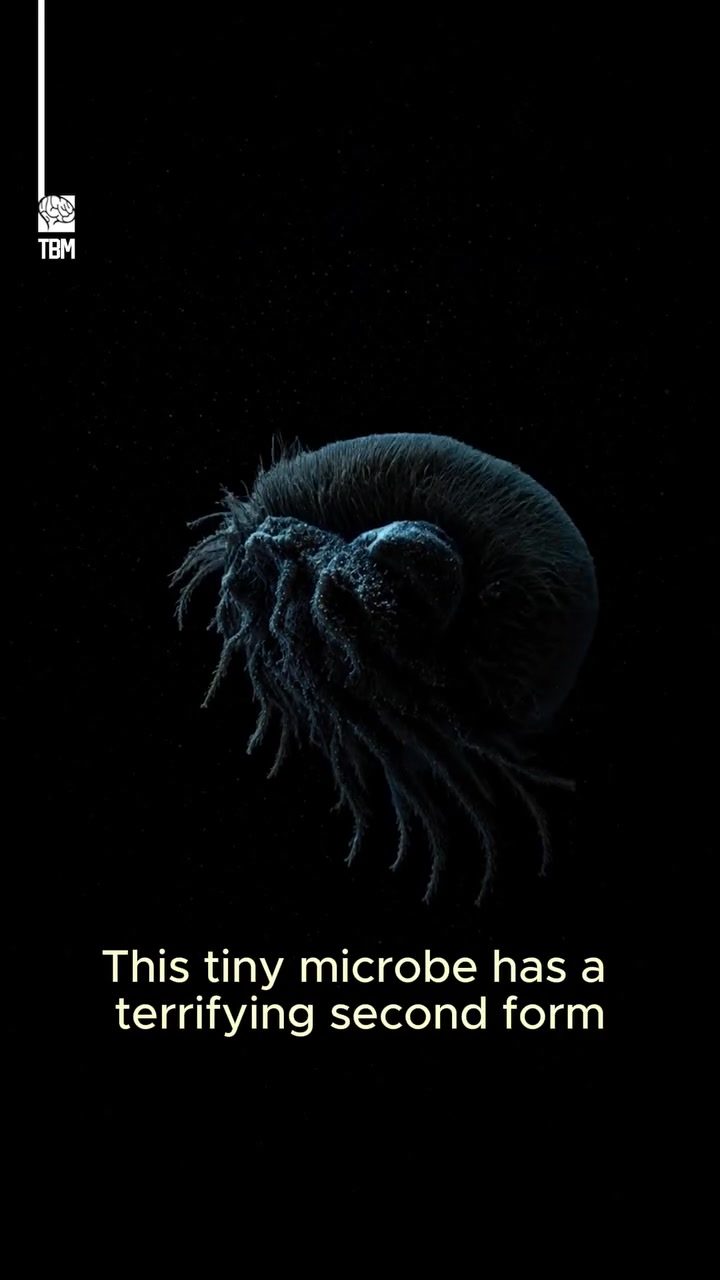
Euplotes gigatrox: The Microbe That Transforms into a Cannibalistic Supergiant
Euplotes gigatrox is a fascinating single-celled organism with a unique survival strategy. This tiny microbe, found in seawater near the Caribbean island of Curacao, undergoes a dramatic transformation when food becomes scarce. Some cells grow nearly three times their normal size, turning into what researchers call "supergiants." These enlarged cells then hunt and consume their own clones, a behavior that has captured the interest of scientists worldwide.
Context: Survival in the Deep Sea
This remarkable survival strategy is a testament to the adaptive capabilities of microorganisms in harsh environments. The deep sea, where Euplotes gigatrox resides, is a place of extreme conditions, with limited resources and constant challenges. The ability of these cells to transform and adapt to scarcity is a critical aspect of their survival.
The Transformation: From Harmless to Predator
Under normal conditions, Euplotes gigatrox is a harmless, single-celled organism that drifts through the water and feeds on bacteria. However, when food becomes scarce, some cells undergo a dramatic transformation. These cells grow nearly three times their normal size, becoming what researchers call "supergiants." This transformation is not just a change in size; it also involves a shift in behavior.
The Cannibalistic Phase
Once transformed, the supergiants abandon their usual diet and begin hunting their own clones. This behavior is surprisingly brutal. The supergiants crawl across surfaces, running over smaller cells and swallowing them whole. The attack is swift, with prey being consumed within minutes. This cannibalistic phase is a stark contrast to the otherwise peaceful existence of these microorganisms.
The Trade-Off
The monstrous transformation of Euplotes gigatrox comes with a significant trade-off. The giant cells become poor swimmers, losing the graceful movement that normal cells use to escape danger. This vulnerability makes them more susceptible to predators during their enlarged state. Despite this disadvantage, the supergiants return to their normal size within 24 hours, resuming their peaceful existence until starvation once again triggers the transformation.
The Temporary Nature of the Cannibalistic Phase
The cannibalistic phase of Euplotes gigatrox is temporary. Within 24 hours, the supergiants shrink back to their normal size, returning to their peaceful, drifting lifestyle. This temporary nature of the transformation is a critical aspect of their survival strategy. It allows the cells to quickly adapt to changing conditions and maximize their chances of survival in a harsh environment.
Practical Tips for Studying Adaptive Behavior in Microorganisms
Studying the adaptive behavior of microorganisms like Euplotes gigatrox can provide valuable insights into the survival strategies of life forms in extreme environments. Here are some practical tips for studying adaptive behavior in microorganisms:
Observe Under Different Conditions
To understand the adaptive behavior of microorganisms, it is essential to observe them under different conditions. This includes varying the availability of food, temperature, and other environmental factors. By doing so, researchers can gain a comprehensive understanding of how these organisms adapt to changing conditions.
Use Advanced Microscopy Techniques
Advanced microscopy techniques can provide detailed insights into the structural and behavioral changes that occur during the adaptation process. Techniques such as confocal microscopy and electron microscopy can reveal the intricate details of cellular transformations and behaviors.
Conduct Long-Term Studies
The long-term study of microorganisms is crucial for understanding their adaptive behavior. Long-term observations can reveal patterns and cycles in their behavior, such as the temporary cannibalistic phase of Euplotes gigatrox. This information can provide valuable insights into their survival strategies and help predict their responses to environmental changes.
Collaborate with Experts
Collaboration with experts in the field can enhance the understanding of adaptive behavior in microorganisms. By working with researchers specializing in different aspects of microbiology, such as molecular biology, genomics, and ecology, a holistic view of the adaptive mechanisms can be achieved.
Important Takeaways
Euplotes gigatrox is a remarkable example of a microorganism that has evolved a unique survival strategy. Its ability to transform into a cannibalistic supergiant when food is scarce is a testament to the adaptive capabilities of life in extreme environments. The temporary nature of this transformation and the associated trade-offs highlight the complex balance that organisms must maintain to survive.
Conclusion
The incredible transformation of Euplotes gigatrox from a harmless, single-celled organism to a cannibalistic supergiant is a fascinating study in adaptive behavior. By understanding the mechanisms behind this transformation, researchers can gain insights into the survival strategies of microorganisms in extreme environments. This knowledge can contribute to a broader understanding of life's adaptability and resilience in the face of adversity.
Watch the Reel
Questions readers ask
What triggers Euplotes gigatrox to become cannibalistic?
When food is scarce, Euplotes gigatrox undergoes a dramatic transformation. Some cells grow nearly three times their normal size, turning into 'supergiants' and beginning to hunt and consume their own clones.
Where is Euplotes gigatrox typically found?
This microbe is typically found in the deep waters of the Caribbean, specifically near the island of Curacao. It thrives in these harsh, nutrient-poor environments.
How does Euplotes gigatrox's cannibalistic behavior benefit the species?
This behavior allows the species to survive in environments where food is limited. By consuming their own clones, the 'supergiant' cells can sustain themselves and continue to reproduce, ensuring the survival of the species.
What are 'supergiants' in the context of Euplotes gigatrox?
'Supergiants' are Euplotes gigatrox cells that have grown to nearly three times their normal size. This growth is a response to food scarcity and precedes the onset of cannibalistic behavior.
Is cannibalism common among microbes?
While not all microbes exhibit cannibalistic behavior, it is a known survival tactic among some species. Euplotes gigatrox is a notable example, showcasing the extreme measures some microbes take to endure harsh conditions. More examples are reported in the literature. Researchers are continuing to investigate the mechanisms behind this behavior and its implications for understanding the evolution of predator-prey relationships.
Why is Euplotes gigatrox's cannibalistic behavior significant?
It is significant because it showcases the extreme survival strategies of microorganisms. This behavior provides insights into how microscopic organisms can adapt to harsh, low-nutrient environments.
Related deep dives
Similar reads based on topic and creator.




Recent articles
Fresh deep dives from the latest Reels we unpacked.




Comments
Be the first to comment.