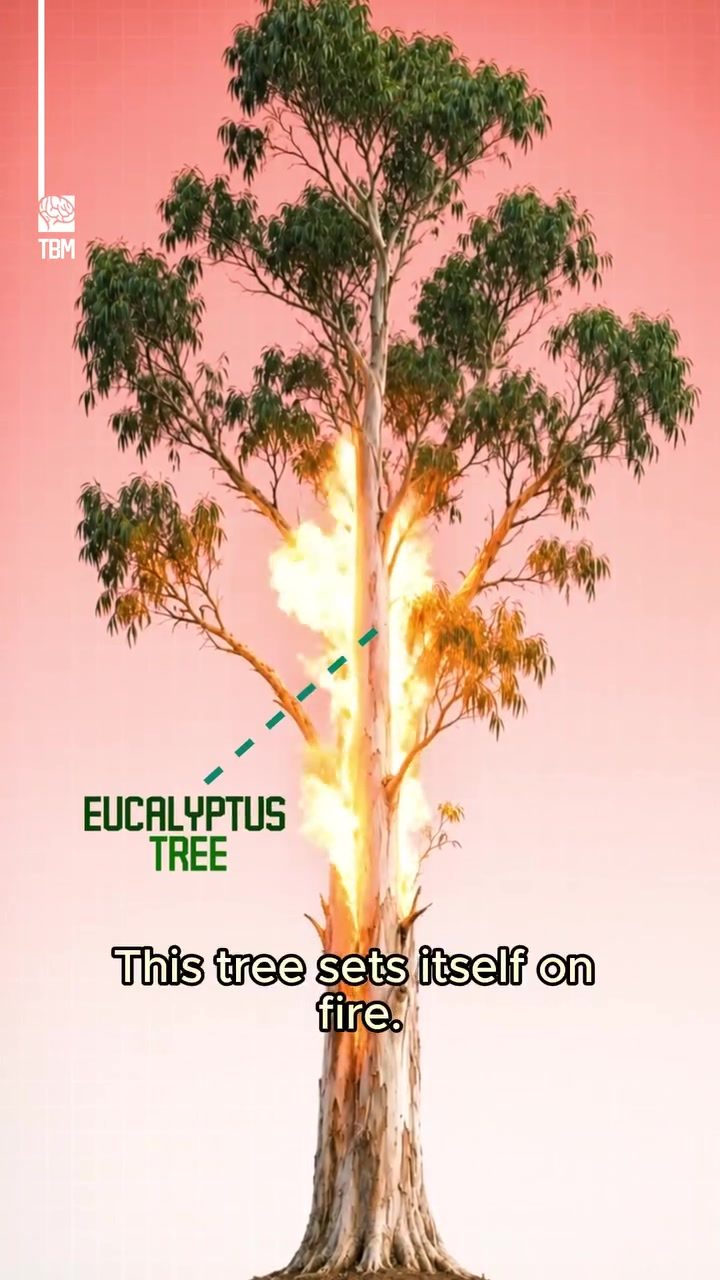
Eucalyptus Tree Fire Survival Strategies
Eucalyptus trees have a unique and fascinating survival strategy that involves fire. These trees are not only resilient to fires but also thrive in environments where fires are common. Their oil-rich leaves and bark ignite easily, helping to spread flames, but this seemingly fatal trait is part of a clever survival strategy.
Why This Matters
Eucalyptus trees are found in various parts of the world, including Australia, where bushfires are a common occurrence. Understanding how these trees survive and even benefit from fires can provide insights into fire ecology and forest management.
Eucalyptus Trees and Fire
Oil-Rich Bark and Leaves
Eucalyptus trees are distinctive because of their oil-rich leaves and bark. This feature enables the trees to catch fire rapidly, which might seem like a disadvantage at first glance. However, this quick ignition mechanism is a critical part of their survival strategy. The fast-burning bark helps to carry flames through the forest, clearing away competing plants and vegetation that cannot withstand intense fires.
The Protective Role of Thick Bark
One of the most significant features of eucalyptus trees is their thick, protective bark. This bark is filled with oils and acts as a natural insulator. While the outer layers may burn, the inner layers protect the vital tissue underneath, known as the cambium. The cambium is crucial for the tree's growth and regeneration, as it produces new bark and wood cells.
Hidden Buds and Regeneration
The thick bark also serves another essential function: it shields hidden buds that lie dormant beneath the surface. These buds can survive the intense heat of a fire and sprout new growth once the flames have passed. This regenerative ability allows eucalyptus trees to recover quickly after a fire, giving them a significant advantage in post-fire environments.
Seeds and Rapid Regrowth
Some eucalyptus species take the concept of fire survival to the next level. These trees only release their seeds after a fire, taking advantage of the cleared landscape to establish new growth. The absence of competition allows the seedlings to quickly colonize the area, ensuring rapid regrowth and dominance in the newly cleared forest.
Practical Tips for Forest Management
Understanding the survival strategies of eucalyptus trees can inform forest management practices, especially in areas prone to wildfires. By recognizing the role of fire in the natural regeneration of these ecosystems, forest managers can develop strategies that mimic these processes to promote the recovery of forests.
Importance of the Eucalyptus Bark
The Role of Oils in the Bark
The oils in eucalyptus bark are crucial for their fire-resistant properties. These oils not only aid in quick ignition but also contribute to the tree's ability to recover from fires. The bark's structure, dense with oils, acts as a barrier that prevents excessive heat from penetrating the tree's core, allowing it to survive the intense heat. Additionally, the oils in the bark produce a scent that is known to repel certain pests, providing an extra layer of protection.
Self-Regeneration and Adaptation
Eucalyptus trees' ability to regenerate after a fire is a testament to their adaptability. The protective mechanisms in place, including the thick bark and hidden buds, ensure that these trees can endure and thrive in environments where fires are a regular occurrence. This adaptability not only enhances their survival chances but also contributes to the overall health of the forest ecosystem by promoting rapid regrowth.
Important Takeaways
Eucalyptus trees are a remarkable example of natural adaptation and resilience. Their unique survival strategies, including the use of fire to clear competing vegetation, the protective role of their oil-rich bark, and their ability to regenerate from hidden buds, make them a key species in fire-prone ecosystems. By understanding these mechanisms, we can better manage forests and promote regeneration after wildfires.
Conclusion
The eucalyptus tree's ability to thrive in fire-prone environments is a testament to nature's ingenuity. From their oil-rich, fast-burning bark to their protective thick bark and hidden buds, these trees have evolved to take advantage of fires, turning destruction into an opportunity for regrowth. By appreciating these survival strategies, we can gain valuable insights into fire ecology and improve forest management practices.
Watch the Reel
Questions readers ask
How do eucalyptus trees survive wildfires?
Eucalyptus trees have a remarkable ability to withstand and recover from wildfires. Their thick bark and deep-rooted systems protect their vital living tissue, allowing them to regrow from the base after a fire. The fire also clears competing plants, reducing resources for other plants, thus giving eucalyptus trees room to thrive.
Why do eucalyptus trees have oil-rich leaves and bark?
The oil-rich leaves and bark of eucalyptus trees serve a dual purpose. While they make the trees more flammable, they also help the trees to spread their seeds and clear competing vegetation. After a fire, the cleared landscape allows eucalyptus trees to regrow with less competition for sunlight and nutrients.
What is the role of the eucalyptus cambium layer in fire survival?
The cambium layer, a thin layer of living tissue under the bark, is crucial for a eucalyptus tree's survival. This layer is responsible for the tree's growth and can regenerate new bark and wood. When a fire burns the outer bark, the cambium layer remains protected, allowing the tree to recover and grow anew.
How do eucalyptus trees help in fire-prone environments?
Eucalyptus forests often act as a barrier to fire spread by creating a fuel break, though this is not always the case. Due to their oil-rich leaves and bark, eucalyptus trees can ignite easily, which helps to clear the understory, preventing the buildup of dead plant material and reducing the risk of more severe fires. This ecological role makes eucalyptus trees beneficial in managing fire-prone landscapes.
Can eucalyptus trees regrow after a fire?
Yes, eucalyptus trees are known for their ability to regrow after a fire. The fire can stimulate new growth by clearing the area of competing plants and releasing nutrients from the soil. The combination of thick bark and a robust root system enables eucalyptus trees to survive the heat and regrow from the base, making them highly resilient in fire-prone regions.
How does the bark thickness of eucalyptus trees contribute to their fire survival?
The thick bark of eucalyptus trees acts as a natural insulator, protecting the inner living tissue from the intense heat of a fire. This thick layer of bark can withstand high temperatures and slow the spread of fire, giving the tree a better chance of survival. Additionally, the bark can regenerate after a fire, allowing the tree to continue growing.
What happens to eucalyptus forests after a wildfire?
After a wildfire, eucalyptus forests often regrow vigorously. The cleared landscape provides ample resources for new growth, and the trees can quickly resprout from their roots or stumps. This rapid regrowth helps to restore the forest and maintain its ecological balance, ensuring that eucalyptus trees continue to thrive in regions where fires are frequent.
Related deep dives
Similar reads based on topic and creator.



Recent articles
Fresh deep dives from the latest Reels we unpacked.




Comments
Be the first to comment.