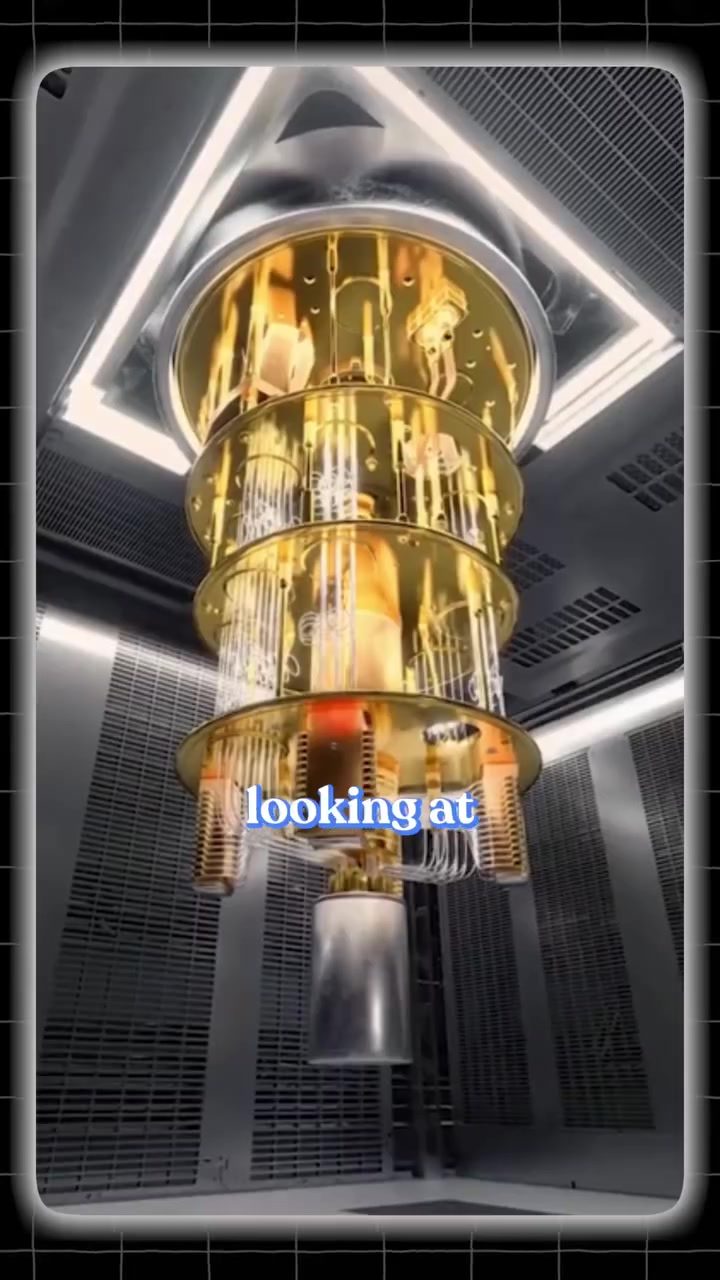
Quantum Computing and the Measurement Wall Challenge
Understanding quantum computing begins with grasping a fundamental principle: observing data in a quantum system can destroy it. This phenomenon, known as the measurement wall, is one of the most perplexing challenges in the field of quantum technology. When you attempt to inspect a qubit for errors, you inadvertently cause a collapse of the quantum state, crashing the entire system.
A qubit, the basic unit of quantum computing, operates on principles vastly different from the bits we're familiar with in classical computing. While a classical bit is either a 0 or a 1, a qubit exists in a state of superposition, where it can represent both 0 and 1 simultaneously, along with any quantum superposition of these states. This superposition allows quantum computers to process vast amounts of data more efficiently.
The act of measuring a qubit causes it to collapse into a definite state—either 0 or 1. This inevitability means that checking for errors in quantum systems can be extremely challenging. For instance, if you imagine a spinning coin, slapping your hand down on it to determine if it's heads or tails will stop the spin. In quantum computing, this halted spin is akin to losing the quantum state, effectively ending any potential computations that rely on the quantum data.
The delicate nature of qubits presents significant hurdles. Even minor variations in temperature can cause data leakage, making it nearly impossible to maintain a stable quantum state over extended periods. This instability has historically hindered the progress of quantum computing, making it a field largely dominated by ongoing research projects rather than practical applications.
Why This Matters
The significance of overcoming the measurement wall cannot be overstated. Until recently, researchers at ETH Zurich have found a groundbreaking solution. Instead of trying to observe qubits directly, they've developed a technique known as lattice surgery. This approach involves manipulating large blocks of quantum data, called lattices, using microwave pulses to stitch their boundaries together.
Lattice surgery works by merging these quantum data blocks, allowing the computer to measure the relationship between the blocks without directly observing the blocks themselves. This is analogous to feeling the vibration of a box to determine if something inside is broken without actually opening the lid. By doing so, the system can identify and correct errors without collapsing the quantum state, effectively bypassing the measurement wall.
Technical Insights
Lattice surgery is a complex process that requires an understanding of quantum mechanics and the delicate balance of qubits. Essentially, the technique involves:
- Manipulating Lattices: Lattices are large blocks of quantum data. By merging these lattices, the system can operate on a higher level of abstraction. This means that instead of dealing with individual qubits, the computer can work with entire blocks of data, reducing the risk of errors.
- Microwave Pulses: These pulses are used to stitch the boundaries of the lattices together. This process is akin to sewing the fabric of two different realities into one, creating a cohesive quantum state that can be measured without collapsing.
- Measuring Relationships: By measuring the relationships between the blocks, the system can spot errors and fix them without directly observing the qubits. This method ensures that the quantum state remains intact, allowing for more stable and error-free computations.
Practical Tips
While the concept of lattice surgery might seem abstract, it has practical implications for the future of quantum computing. Here are a few key points to consider:
- Error Correction: Traditionally, error correction in quantum systems has been a challenging task. Lattice surgery provides a new method for identifying and correcting errors without collapsing the quantum state. This makes it a crucial step forward in making quantum systems more reliable.
- Scalability: One of the primary goals of quantum computing is to scale up to practical applications. By addressing the measurement wall, lattice surgery paves the way for more scalable and stable quantum systems. This means that future quantum computers could handle more complex computations with greater reliability.
- Research and Development: For researchers and developers in the field, understanding lattice surgery is essential. It represents a significant shift in how quantum data is managed, opening up new avenues for research and development.
Important Takeaways
The breakthrough at ETH Zurich represents a pivotal moment in the evolution of quantum computing. By addressing the measurement wall, researchers have moved from quantum theory to quantum engineering, bringing us one step closer to mainstream quantum computing.
The development of lattice surgery has significant implications for the future of technology. It addresses one of the most fundamental challenges in quantum computing, making it a crucial step toward more stable and reliable quantum systems.
Conclusion
The measurement wall has long been a barrier to the practical implementation of quantum computing. However, with the introduction of lattice surgery, researchers have found a way to overcome this challenge. By merging quantum data blocks and measuring their relationships, the system can identify and correct errors without collapsing the quantum state.
This breakthrough represents a significant advancement in the field of quantum computing, bringing us closer to a future where quantum systems can be used for practical, everyday applications. As research continues, the possibilities for quantum technology are vast, and the future looks brighter than ever.
Watch the Reel
Questions readers ask
What is the 'measurement wall' in quantum computing?
The 'measurement wall' refers to the challenge in quantum computing where observing qubits to check for errors causes their quantum states to collapse, leading to a loss of data integrity and stability of the quantum system.
How does ETH Zurich's breakthrough address the measurement wall?
ETH Zurich's innovation allows for qubit measurements without collapsing their quantum states, thus preserving the quantum information. This advancement promises to enhance the stability and practicality of quantum computations.
Why is overcoming the measurement wall crucial for quantum computing?
Overcoming the measurement wall is vital because it enables the detection and correction of errors in quantum systems without destroying the quantum states, a key step in advancing quantum computing from a research phase to practical, real-world applications.
What are qubits and how do they differ from classical bits?
Qubits are the basic units of quantum computing that can exist in multiple states simultaneously, thanks to a property called superposition. Unlike classical bits, which can be either 0 or 1, qubits can represent both 0 and 1 at the same time, allowing for more complex computations.
How does ETH Zurich's research impact the future of quantum computing?
ETH Zurich's research significantly impacts the future of quantum computing by developing solutions that improve qubit stability and data integrity. This breakthrough could lead to more robust and practical quantum systems, paving the way for advancements in various fields reliant on data processing.
What are the practical applications of stable quantum computations?
Stable quantum computations can revolutionize numerous fields, including cryptography, optimization, and complex data analysis. By ensuring data integrity and stability, these advancements can lead to breakthroughs in secure communications, efficient problem-solving, and advanced data solutions.
What makes ETH Zurich's innovation significant in the realm of quantum technology?
ETH Zurich's innovation is significant because it directly addresses a longstanding challenge in quantum technology—the measurement wall. By finding a way to measure qubits without destroying their quantum states, ETH Zurich opens new avenues for stable and reliable quantum computations, driving the field forward.
Related deep dives
Similar reads based on topic and creator.



Recent articles
Fresh deep dives from the latest Reels we unpacked.




Comments
Be the first to comment.