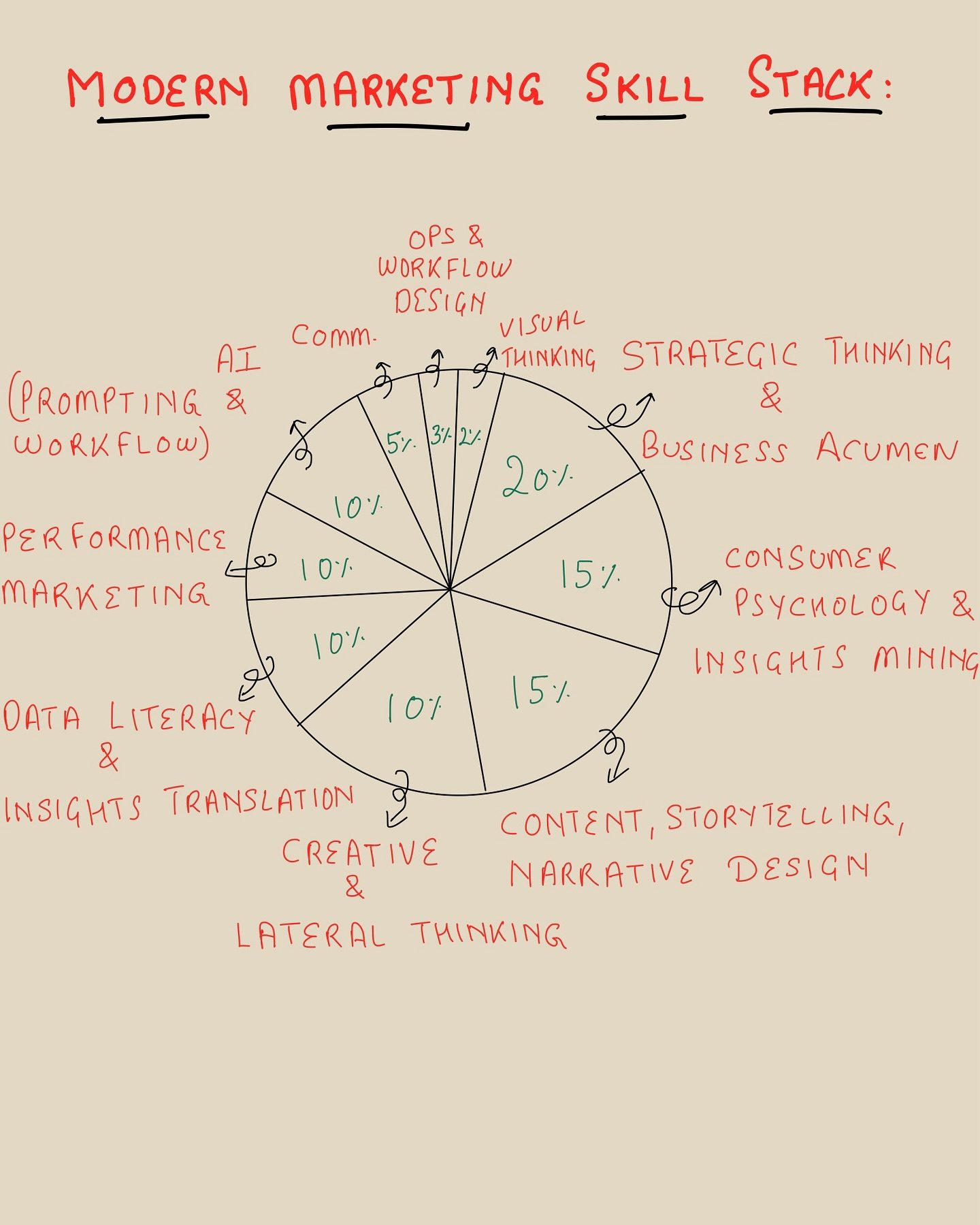
The Modern Marketing Skill Stack
Marketing in today's landscape is not just about creating campaigns; it's about refining processes and developing intellectual property (IP) through strategic thinking and automation. This guide delves into the essential skills and tools that can help you stay relevant in the ever-evolving marketing world. Here, we'll explore the modern marketing skill stack, focusing on key areas such as AI, strategic thinking, performance marketing, and more.
Why This Matters
In an era where technology and consumer behavior are constantly shifting, modern marketers need to be agile and well-rounded. The traditional marketing skill set is evolving to include a broader range of disciplines, from data literacy to creative thinking. By understanding and mastering these skills, marketers can automate repetitive tasks, develop IP, and stay ahead of the curve.
The Modern Marketing Skill Stack
AI and Data Literacy
AI and data literacy are at the core of modern marketing. AI can automate repetitive tasks, freeing up time for more strategic work. Tools like OpenAI and platforms like Zapier and Notion can help automate workflows and improve efficiency. Data literacy is equally important, allowing marketers to interpret data and make informed decisions. Skills like data analysis and insights translation are crucial for understanding consumer behavior and optimizing marketing strategies.
Communication and Visual Thinking
Effective communication and visual thinking are fundamental to marketing success. Whether it's crafting compelling narratives or designing engaging visuals, these skills help marketers connect with audiences on a deeper level. Communication and visual thinking are essential for creating content that resonates and drives action.
Strategic and Lateral Thinking
Strategic thinking involves developing long-term plans and making data-driven decisions. Lateral thinking, on the other hand, encourages creative problem-solving and innovative approaches. Both skills are vital for marketers looking to stay ahead in a competitive landscape. By thinking strategically and laterally, marketers can identify new opportunities and develop unique solutions.
Operations and Workflow
Operations and workflow management are crucial for ensuring marketing efforts are executed smoothly. This includes project management, task automation, and process optimization. Tools like Zapier and Notion can help streamline workflows, making it easier to manage tasks and projects.
Performance Marketing
Performance marketing focuses on measurable results and ROI. This involves using data to drive decisions and optimize campaigns for better performance. Skills in performance marketing include SEO, PPC, and social media advertising. By mastering performance marketing, marketers can ensure their campaigns deliver tangible results.
Content Creation and Storytelling
Content creation and storytelling are essential for engaging audiences and building brand loyalty. Crafting compelling narratives and designing engaging content can help brands stand out in a crowded marketplace. Resources like Donald Miller's "Building a Story" and the MarketingExamples.com newsletter can provide valuable insights into effective storytelling and content creation.
Business Acumen and Consumer Insights
Understanding business fundamentals and consumer psychology is crucial for developing effective marketing strategies. Business acumen involves grasping financials, market trends, and competitive dynamics. Consumer insights, on the other hand, involve understanding consumer behavior, motivations, and preferences. By combining these skills, marketers can create strategies that resonate with consumers and drive business growth.
Creative and Lateral Thinking
Creative and lateral thinking are essential for innovation and problem-solving. These skills enable marketers to come up with unique ideas, think outside the box, and develop solutions that stand out. Creative thinking encourages originality and imagination, while lateral thinking fosters divergent thinking and unconventional approaches. Resources like Rory Flynn's AI tool can help enhance these skills.
Practical Tips for Mastering the Modern Marketing Skill Stack
Start with the Basics
Begin by building a strong foundation in the core skills, such as AI and data literacy, communication, and strategic thinking. These foundational skills will provide a solid base for more advanced skills.
Leverage Tools and Resources
Utilize tools and resources that can help automate tasks and enhance your skills. Platforms like Zapier, Notion, and OpenAI can automate repetitive tasks, freeing up time for more strategic work. Resources like Donald Miller's "Building a Story" and the MarketingExamples.com newsletter can provide valuable insights into content creation and storytelling.
Continuous Learning
Marketing is a field that's constantly evolving, so continuous learning is essential. Stay updated with the latest trends, tools, and best practices. Engage with communities, attend webinars, and participate in online courses to keep your skills sharp.
Develop a Strategic Mindset
A strategic mindset is crucial for long-term success. Focus on developing long-term plans, making data-driven decisions, and identifying new opportunities. This mindset will help you stay ahead in a competitive landscape.
Build a Personal Roadmap
Developing a personal roadmap can help you stay focused and motivated. Break down your goals into three clear stages: Foundation, Execution, and Direction. The Foundation Layer involves building the mindset and basic fluency, the Execution Layer focuses on mastering tools and tactics, and the Direction Layer aims to evolve into a strategic thinker and leader.
Important Takeaways
The modern marketing skill stack encompasses a wide range of disciplines, from AI and data literacy to creative thinking and strategic planning. By mastering these skills, marketers can stay relevant, automate repetitive tasks, and develop IP with their thinking.
Focus on Continuous Improvement
Marketing is a dynamic field, and continuous improvement is key. Stay updated with the latest trends, tools, and best practices to keep your skills sharp.
Leverage Automation
Automation can help streamline workflows and improve efficiency. Tools like Zapier and Notion can automate repetitive tasks, freeing up time for more strategic work.
Stay Strategic
A strategic mindset is crucial for long-term success. Focus on developing long-term plans, making data-driven decisions, and identifying new opportunities.
Conclusion
Mastering the modern marketing skill stack involves developing a range of skills, from AI and data literacy to creative thinking and strategic planning. By leveraging tools, continuous learning, and a strategic mindset, marketers can stay relevant, automate repetitive tasks, and develop IP with their thinking. Begin by building a strong foundation, leverage available tools and resources, and continuously improve your skills to thrive in the dynamic world of modern marketing.
Watch the Reel
Questions readers ask
What are the key components of the modern marketing skill stack?
The modern marketing skill stack includes a mix of digital skills, strategic thinking, and automation. Key components are proficiency in AI, data literacy, performance marketing, and strategic thinking. Mastering these areas helps marketers excel and stay relevant in today's fast-paced marketing environment.
How does AI enhance marketing strategies?
AI enhances marketing strategies by enabling data-driven decision-making, predictive analytics, and personalized customer experiences. AI tools can automate routine tasks, analyze vast amounts of data, and provide insights that help marketers refine their strategies and improve campaign performance.
What is data literacy in marketing, and why is it important?
Data literacy in marketing refers to the ability to read, understand, and work with data. It is important because it allows marketers to make informed decisions, measure campaign effectiveness, and identify trends. With data literacy, marketers can optimize their strategies and deliver more targeted and effective content to their audiences.
What tools can help with marketing automation?
Marketing automation tools streamline repetitive tasks, allowing marketers to focus on strategic activities. Popular tools include HubSpot, Marketo, and Mailchimp, which offer features like email automation, social media scheduling, and lead nurturing. These tools help improve efficiency and ensure consistent messaging across various channels.
How can strategic thinking benefit modern marketers?
Strategic thinking in marketing involves developing a long-term vision and planning effective campaigns that align with business goals. It helps marketers anticipate changes, innovate, and create intellectual property (IP). By thinking strategically, marketers can refine processes, develop unique solutions, and stand out in a competitive market.
What does performance marketing involve, and how can it be effectively implemented?
Performance marketing focuses on measurable results and ROI. It involves using data and analytics to optimize campaigns in real-time. To implement performance marketing effectively, marketers should set clear KPIs, use A/B testing, and continuously monitor and adjust strategies based on performance data. This approach ensures that marketing efforts are aligned with business objectives and deliver tangible results.
Recent articles
Fresh deep dives from the latest Reels we unpacked.




Comments
Be the first to comment.