Epstein's Alleged Suicide Note: A Deep Dive into the Controversy
A handwritten note attributed to Jeffrey Epstein has resurfaced, sparking intense debate and skepticism. The New York Times recently released what is purported to be Epstein's final note, a document that has quickly become the center of a media storm. The note, however, comes with a significant caveat: the NYT admits it cannot verify that Epstein actually penned it.
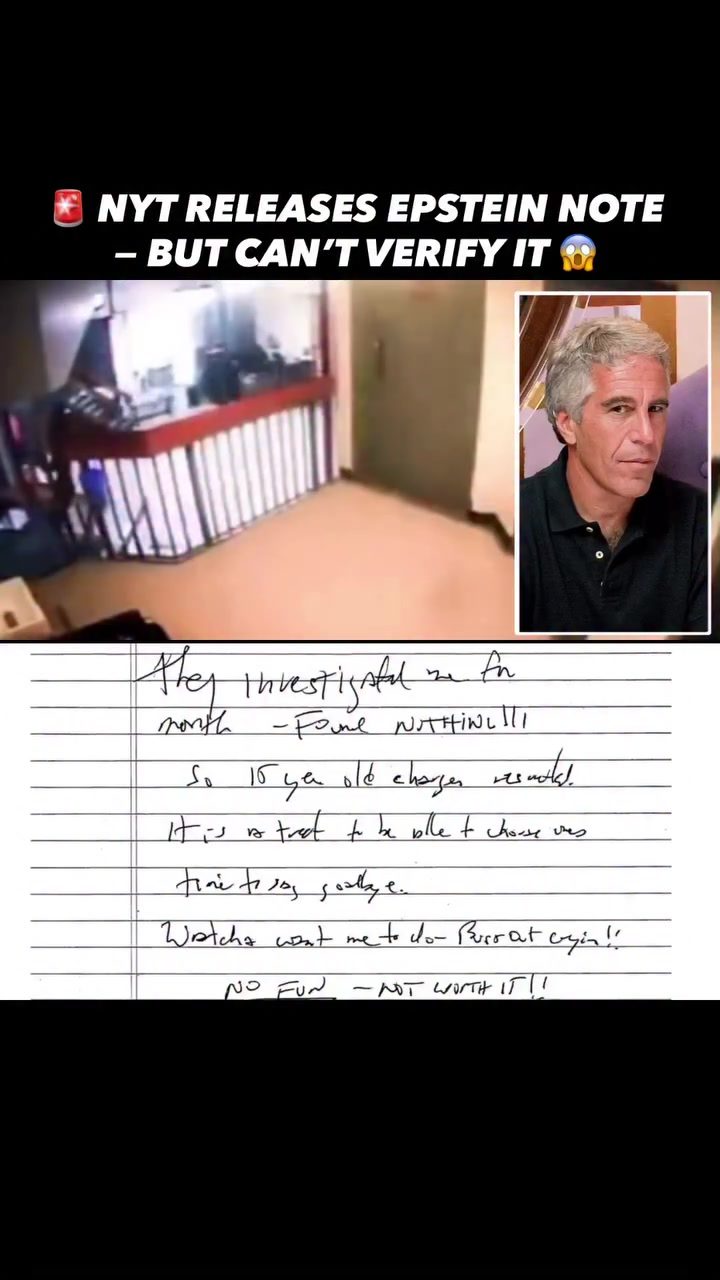
The note supposedly reads:
- "They investigated me for months — Found nothing!!!"
- "It is a treat to be able to choose one’s time to say goodbye."
- "Watcha want me to do — Bust out cryin!!"
- "NO FUN - NOT WORTH IT!!"
These statements, if authentic, would offer a glimpse into Epstein's final thoughts before his death in 2019. However, the NYT's admission that they cannot authenticate the note has cast a shadow of doubt over its authenticity.
Why This Matters
The Epstein case, involving allegations of sex trafficking and abuse, has been a focal point of public and media scrutiny for years. Epstein's death in prison, ruled a suicide, has long been a subject of controversy. The recent release of this note by the NYT has reignited debates about the case, particularly around the authenticity of the document and the implications it could have on ongoing investigations.
The note's content is particularly intriguing. It suggests that Epstein believed he was being unfairly targeted and that the investigations into his activities had yielded no results. This narrative is at odds with the charges he faced and the numerous victims who have come forward. The timing of the note's release, years after Epstein's death, also raises questions about its legitimacy and purpose.
The Handwritten Note: A Closer Look
The note, as described, includes several elements that have sparked debate. The language used is colloquial and somewhat inconsistent, which has led some to speculate that it may not be Epstein's own words. The note's timing, surfacing as it does years after his death and amidst renewed interest in the Epstein case, has also fueled skepticism.
Language and Tone
The note's language is notably informal, using phrases like "Watcha want me to do — Bust out cryin!!" and "NO FUN - NOT WORTH IT!!". This tone is at odds with the formal language often associated with legal documents and last wills. The note's content also seems to suggest a level of resignation and despair, which is consistent with a suicide note but raises questions about its authenticity when coupled with the NYT's inability to verify it.
Context and Timing
The timing of the note's release is another critical factor. The note surfaces years after Epstein's death, at a time when the Epstein files are once again gaining media attention. This has led to speculation that the note may be a fabricated document aimed at influencing public opinion or diverting attention from ongoing investigations.
The note's content, which portrays Epstein as a victim of unfair investigations, also stands in stark contrast to the overwhelming evidence against him. The fact that the note defends Epstein, despite the numerous allegations and legal proceedings, has cast further doubt on its authenticity.
Practical Tips for Evaluating Such Documents
When evaluating the authenticity of a document, especially one as significant as this note, there are several practical tips to keep in mind:
Verify the Source
Always verify the source of the document. In this case, the note was released by the NYT, a reputable source. However, even reputable sources can make mistakes or be misled.
Look for Independent Verification
Independent verification from multiple sources can help establish the authenticity of a document. In this case, the note was released by the NYT, but there is no independent verification of its authenticity.
Consider the Content
The content of the document is also an important factor to consider. The note's language and tone are inconsistent with formal legal documents and raise questions about its authenticity.
Examine the Timing
The timing of the document's release can also provide clues about its authenticity. In this case, the note's release years after Epstein's death and amidst renewed interest in the Epstein case has raised questions about its legitimacy.
Important Takeaways
The authenticity of the alleged suicide note attributed to Jeffrey Epstein remains a subject of intense debate. The note, if genuine, would provide a unique insight into Epstein's final thoughts. However, the NYT's inability to verify the note's authenticity, coupled with its informal language and questionable content, has cast significant doubt on its legitimacy.
Conclusion
The alleged suicide note attributed to Jeffrey Epstein is a complex and controversial document. While it offers a glimpse into Epstein's final thoughts, its authenticity remains in question. The NYT's admission that they cannot verify the note, along with its informal language and questionable content, has fuelled skepticism. As the Epstein case continues to unfold, it is crucial to remain vigilant and critical when evaluating new information.
Watch the Reel
Questions readers ask
Why did the New York Times release Jeffrey Epstein's alleged suicide note if it can't be verified?
The New York Times released the note to spark public discussion and scrutiny. By publishing the note, the NYT encourages experts and the public to examine the handwriting, language, and context to determine its authenticity. The decision to release the note also aims to promote transparency, allowing readers to form their own conclusions.
What does the Epstein note say, and why is it controversial?
The note contains several statements, including claims of innocence and a seemingly defiant tone. The controversy lies in the uncertainty of its authenticity. If genuine, it provides insight into Epstein's final thoughts, but without verification, its legitimacy is questionable and open to interpretation and debate.
How did the public react to the release of the Epstein note?
Reactions have been varied and intense. Some believe the note is authentic and offers a final glimpse into Epstein's mindset, while skeptics argue it could be a hoax or planted evidence. The media has also dissected the note, leading to widespread debate and speculation among the public and experts alike.
What steps are being taken to verify the authenticity of the note?
As of now, no specific verification process has been officially announced. Experts in handwriting analysis and forensic science would typically examine the note. Additionally, comparing the note's content and language with Epstein's known communications and personality traits could provide further clues about its authenticity.
How has the release of the note impacted the public's perception of Epstein's death?
The note has reignited interest and speculation surrounding Epstein's death. While some believe the note supports the official ruling of suicide, others see it as evidence of foul play, further complicating the narrative. The lack of verification adds to the mystery, keeping the public's perception divided and unsettled.
What is the significance of the NYT's admission that the note cannot be authenticated?
The NYT's admission underscores the importance of transparency and caution in journalism and public discourse. By acknowledging the lack of verification, the NYT encourages a critical examination of the note, inviting the public to evaluate the evidence and consider the implications. This approach emphasizes the need for thorough investigation and verification in matters of public interest.
What are the potential ramifications if the note is found to be a forgery?
If proven to be a forgery, the note's release could have serious repercussions. It could damage the credibility of those involved in its dissemination, spark legal and ethical questions, and further erode public trust in institutions. It could also lead to renewed focus on the circumstances surrounding Epstein's death, potentially revealing new evidence or witnesses.
Recent articles
Fresh deep dives from the latest Reels we unpacked.




Comments
Be the first to comment.