English Proficiency Around the World
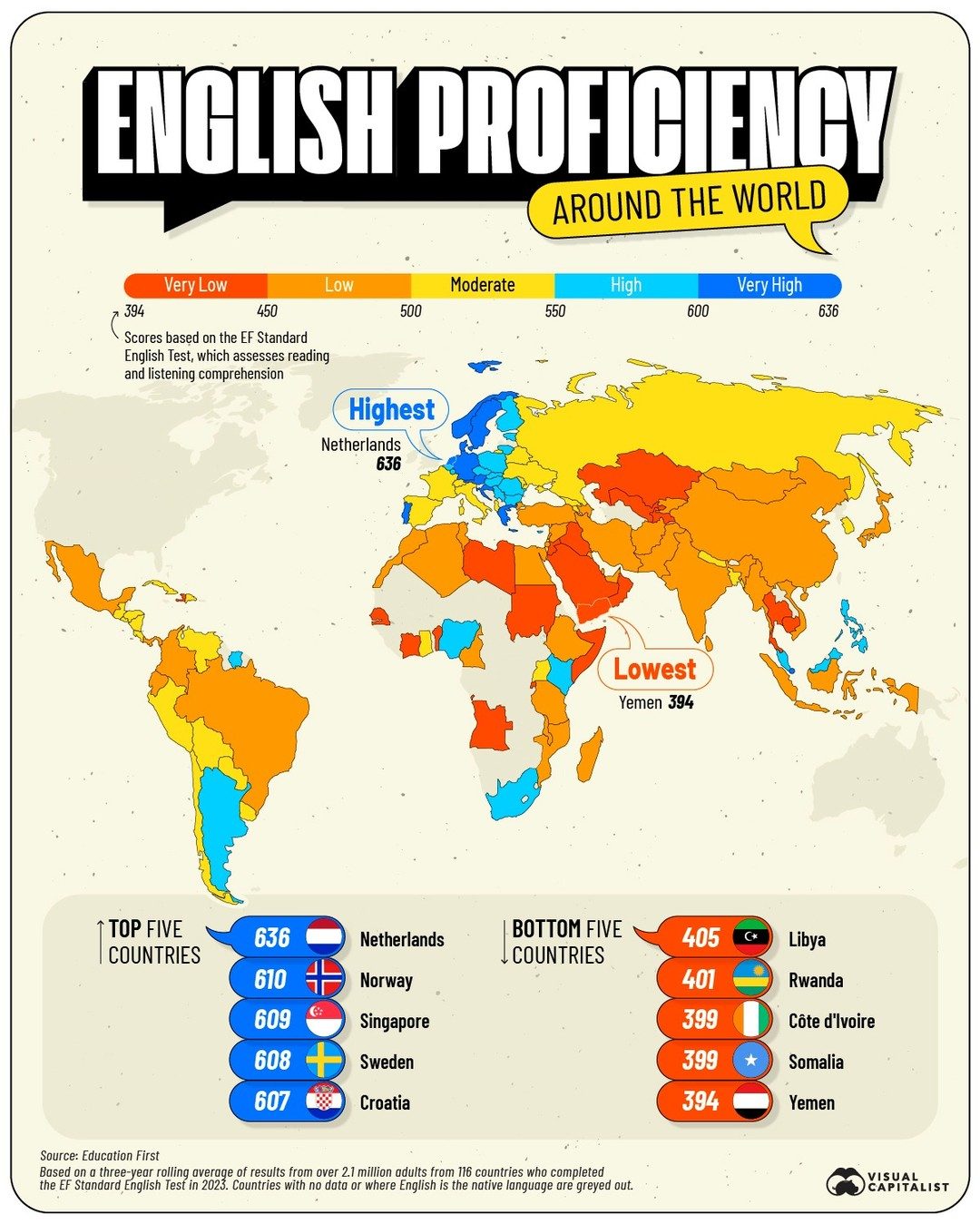
English proficiency varies significantly around the globe, with some countries excelling in language skills while others lag behind. The data, based on the Education First Standard English Test (EF SET), provides a comprehensive look at how well non-native English speakers perform in reading and listening comprehension.
Context / Why this matters
English is the lingua franca of international business, science, and diplomacy. Understanding where English proficiency is strongest and weakest can offer valuable insights into global communication dynamics, trade opportunities, and educational needs.
Main discussion
The Top Performers
The Netherlands tops the list with an impressive score of 636. This high proficiency is likely due to the country's strong emphasis on English education and its integration into daily life, including media and business. Norway follows closely with a score of 610, indicating a robust command of the language. Other top performers include Singapore (609), Croatia (607), and Sweden (608), all of which demonstrate a very high level of English proficiency.
Factors Contributing to High Proficiency
Several factors contribute to the high English proficiency in these countries. These include:
- Educational Policies: The Netherlands, for instance, integrates English into its curriculum at an early age, ensuring that students are well-versed in the language by the time they enter the workforce.
- Media and Entertainment: Access to English-language media, including movies, TV shows, and music, plays a significant role in language acquisition and retention.
- International Business: Countries with strong international business ties often prioritize English proficiency, as it facilitates smoother and more efficient communication with global partners.
The Bottom Performers
At the other end of the spectrum, Yemen has the lowest English proficiency score at 394. Other countries with low proficiency include Côte d'Ivoire (399), Rwanda (401), and Libya (405). These lower scores reflect several challenges, including limited access to quality education, economic constraints, and a lack of exposure to English-language materials.
Challenges in Low-Proficiency Countries
Countries with low English proficiency face several hurdles:
- Economic Constraints: Limited resources often mean that educational systems are underfunded, leading to fewer opportunities for language learning.
- Conflict and Instability: Regions affected by conflict, such as Yemen and Libya, face significant challenges in maintaining and developing educational infrastructure, which includes language education.
- Cultural and Linguistic Isolation: Countries where English is not widely spoken in media, business, or everyday life may find it harder for their citizens to acquire proficiency, especially if there is limited global exposure.
Regional Trends
European countries dominate the top ranks, with all nine countries in the "Very High" proficiency category being European. This trend highlights the continent's strong emphasis on multilingualism and the importance of English as a second language.
Asia and the Pacific
Singapore stands out in the Asian region with a very high proficiency score of 609. This is likely due to Singapore's bilingual education policy and its status as a global financial hub, where English is a critical business language.
Africa
Africa presents a mixed profile, with countries like Rwanda and Côte d'Ivoire struggling with low proficiency scores. However, their scores are not indicative of the continent as a whole, as many African countries are making significant strides in English education.
The Middle East
The Middle East shows a range of proficiency levels, with Yemen at the lowest end. This variability reflects the diverse educational and cultural landscapes within the region, as well as the impact of conflict and instability on educational development.
Practical Tips
For individuals looking to improve their English proficiency, consider the following tips:
- Immerse Yourself: Surround yourself with English. Watch English-language movies and TV shows, read books, and listen to music. This immersion helps accelerate language learning.
- Practice Regularly: Consistent practice is key. Dedicate time each day to speak, read, and write in English.
- Take Classes: Enroll in English language courses to structure your learning and get professional guidance.
- Engage with Native Speakers: Find opportunities to interact with native English speakers. This could be through language exchange programs, online forums, or social groups.
Important Takeaways
Understanding English proficiency around the world provides a snapshot of global communication dynamics. The data highlights the importance of educational policies, cultural exposure, and economic stability in fostering language skills. Whether you're a traveler, a businessperson, or an educator, recognizing these trends can offer valuable insights and opportunities.
Conclusion
English proficiency is a critical skill in today's interconnected world. From the Netherlands' impressive score of 636 to Yemen's lowest at 394, the data underscores the importance of educational policies, economic stability, and cultural exposure in developing language skills. For individuals, organizations, and policymakers, this information offers a roadmap for enhancing English proficiency and leveraging it for personal and professional success.
Watch the Reel
Questions readers ask
Which countries have the highest English proficiency scores worldwide?
The Netherlands leads the world in English proficiency, followed by Norway, Singapore, Croatia, and Sweden. These countries have the highest scores based on reading and listening comprehension among non-native English speakers.
How is the Netherlands able to achieve the highest English proficiency score?
The Netherlands' high English proficiency score can be attributed to several factors, including the country's emphasis on English language instruction, widespread use of English in daily life, media consumption, and the influence of international business.
What are the benefits of having a high English proficiency score?
Countries with high English proficiency scores can benefit from enhanced global communication, improved trade opportunities, and better access to international business. Additionally, strong English skills enable easier access to global media, publications, and academic research.
What are some of the lowest English proficiency countries?
While the article does not specify the lowest scoring countries, the global ranking data reveals significant variations in English proficiency. Typically, countries with low proficiency scores may have limited exposure to English through media, business, or instruction.
What is the difference in English proficiency between the Netherlands and Norway?
Although both the Netherlands and Norway rank high in English proficiency, the Netherlands has a slightly higher score. This difference can be attributed to variations in language policies, cultural exposure, and the integration of English in their respective societies.
Why is English proficiency in Singapore notable?
Singapore's high English proficiency is notable due to its multilingual environment, where English is one of the official languages and widely used in business, education, and daily communication. This makes Singapore a strong performer in global English proficiency rankings.
How is the English proficiency ranking data collected and analyzed?
The English proficiency ranking data is collected through the Education First Standard English Test (EF SET), which evaluates non-native English speakers' reading and listening comprehension skills. The analysis considers these scores to provide a global ranking of countries' proficiency levels.
Related deep dives
Similar reads based on topic and creator.



Recent articles
Fresh deep dives from the latest Reels we unpacked.




Comments
Be the first to comment.