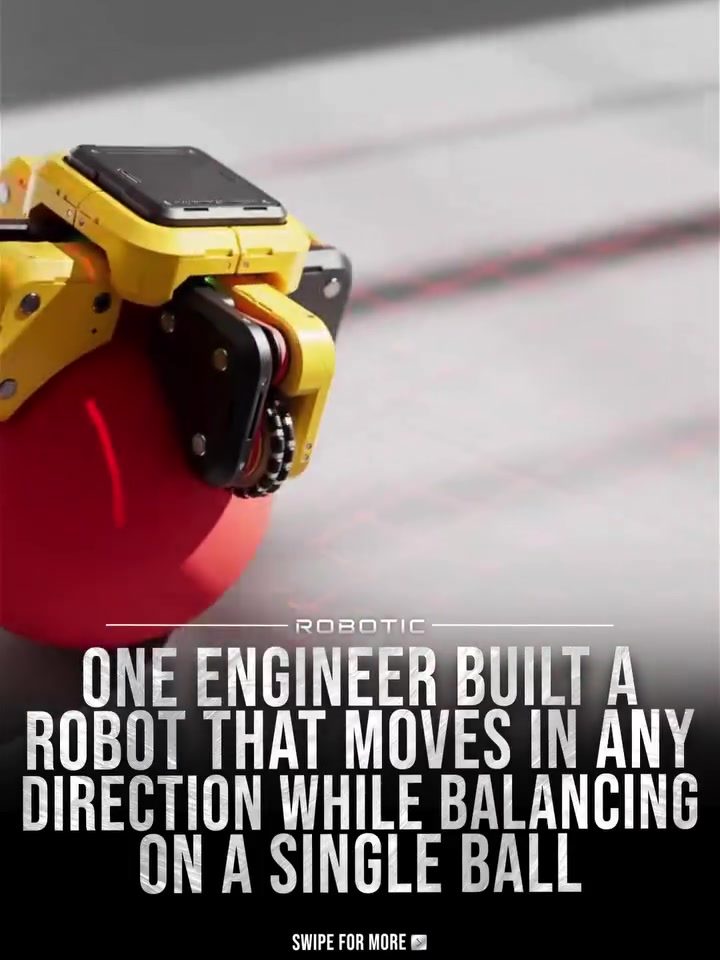
Balancing Robot
The balancing robot, created by engineer Johannes Matsson, redefines mobility for robots. This innovative design replaces traditional wheels and legs with a single balancing sphere, allowing for seamless, omnidirectional movement. The robot, known as roboticRollbot, can move forward, backward, sideways, and diagonally while maintaining stability, thanks to advanced motors, sensors, and dynamic balancing systems.
Context / Why this matters
In the rapidly evolving field of robotics, mobility is a critical aspect that determines a robot's versatility and efficiency. Traditional robots rely on wheels or legs for movement, which often limits their ability to navigate complex environments. The roboticRollbot, with its unique spherical wheel design, opens up new possibilities for robot navigation. By balancing on a single sphere, it can move in any direction without the need to turn first, making it highly maneuverable and adaptable to various terrains.
Main discussion
The Inspiration and Design
The concept behind the roboticRollbot is inspired by James Bruton’s spherical mobility idea. Engineer Johannes Matsson took this inspiration and developed a prototype that demonstrates the potential of unconventional engineering. The robot is primarily built using 3D printed components, which not only makes it cost-effective but also allows for easy customization and modification.
The robot's ability to balance on a single sphere is achieved through a combination of motors, sensors, and a dynamic balancing system. These components work together to maintain the robot's stability while in motion. The spherical wheel design allows for true 360° omnidirectional movement, providing unparalleled flexibility in navigating different environments.
Components and Functionality
Motors and Sensors
The motors in the roboticRollbot are responsible for powering the robot's movement. They provide the necessary torque to drive the spherical wheel, allowing the robot to move in any direction. The sensors, on the other hand, play a crucial role in maintaining the robot's balance. They constantly monitor the robot's orientation and adjust the motors accordingly to keep it stable.
Dynamic Balancing
Dynamic balancing is a key aspect of the roboticRollbot's design. It involves the use of advanced algorithms to calculate the robot's center of mass and make real-time adjustments to maintain balance. This system ensures that the robot can move smoothly and stably, even when navigating uneven surfaces or making sudden changes in direction.
Applications and Potential
The roboticRollbot's unique design and advanced mobility capabilities make it suitable for a wide range of applications. In industrial settings, it can be used for tasks that require precise and flexible navigation, such as inspection, maintenance, and material handling. In research and development, it can serve as a platform for testing new robotic technologies and algorithms.
Moreover, the roboticRollbot's design can inspire new approaches to robot mobility in consumer products. For example, it could be used in home robots for cleaning, entertainment, or even as a companion device. The possibilities are vast, and the roboticRollbot serves as a testament to the potential of innovative engineering in robotics.
Practical tips
Building a balancing robot like the roboticRollbot involves several practical considerations. Here are some tips to help you get started:
Choosing the Right Components
Selecting the right components is crucial for the success of your balancing robot project. Ensure that the motors you choose have sufficient torque to drive the spherical wheel and that the sensors are capable of providing accurate and reliable data. High-quality components will not only improve the robot's performance but also make the development process smoother.
Testing and Iteration
Robotics projects often require extensive testing and iteration. Be prepared to spend a lot of time fine-tuning your design and algorithms. Use simulations and prototyping tools to test different configurations and identify potential issues early in the development process. This will help you save time and resources in the long run.
Leveraging 3D Printing
3D printing can be a game-changer in building a balancing robot. It allows you to create custom components and make modifications quickly and cost-effectively. Consider using 3D printing for parts like the spherical wheel, chassis, and other custom components. This will give you the flexibility to experiment with different designs and optimize your robot's performance.
Community and Collaboration
Engaging with the robotics community can provide valuable insights and support. Join online forums, attend robotics events, and collaborate with other enthusiasts and professionals. Sharing your experiences and learning from others can accelerate your learning curve and help you overcome challenges more effectively.
Important takeaways
The roboticRollbot's innovative design showcases the potential of unconventional engineering in robotics. By replacing traditional wheels and legs with a single balancing sphere, it demonstrates a new way for robots to navigate complex environments. Key takeaways from this groundbreaking design include:
- Omnidirectional Movement: The spherical wheel design allows the robot to move in any direction without needing to turn first, providing unparalleled flexibility and maneuverability.
- Dynamic Balancing: The use of advanced sensors and algorithms ensures that the robot maintains stability while in motion, making it suitable for navigating uneven surfaces and making sudden changes in direction.
- Customizability: 3D printed components enable easy customization and modification, allowing for continuous improvement and optimization of the design.
- Versatility: The roboticRollbot's unique capabilities make it suitable for a wide range of applications, from industrial tasks to consumer products, opening up new possibilities for robotics.
Conclusion
The roboticRollbot, created by engineer Johannes Matsson, represents a significant advancement in robot mobility. Its innovative design, which incorporates a single balancing sphere, allows for true 360° omnidirectional movement and exceptional maneuverability. By leveraging 3D printed components, advanced sensors, and dynamic balancing systems, the roboticRollbot demonstrates the potential of unconventional engineering in unlocking new ways for robots to navigate complex environments. Whether in industrial settings, research, or consumer applications, the roboticRollbot's design opens up exciting possibilities for the future of robotics.
Watch the Reel
Questions readers ask
What makes the roboticRollbot unique among other robots?
The roboticRollbot stands out due to its innovative design featuring a single spherical wheel. This allows it to move in any direction seamlessly, unlike traditional robots that rely on multiple wheels or legs, providing enhanced adaptability and versatility in complex environments.
How does the roboticRollbot maintain stability while moving?
The roboticRollbot achieves stability through a combination of advanced motors, sensors, and dynamic balancing systems. These components work together to keep the robot balanced and upright, enabling smooth and controlled movements in all directions.
What are the advantages of omnidirectional movement in a robot?
Omnidirectional movement allows the roboticRollbot to move forward, backward, sideways, and diagonally, which greatly enhances its ability to navigate intricate spaces. This capability makes the robot more efficient and effective in various tasks and environments.
What inspired engineer Johannes Matsson to create the roboticRollbot?
Johannes Matsson aimed to redefine robot mobility by addressing the limitations of traditional wheel and leg designs. By innovating the single spherical wheel concept, Matsson sought to create a robot that could effortlessly navigate complex environments and perform a wide range of tasks.
What kind of environments can the roboticRollbot navigate effectively?
The roboticRollbot is designed to handle complex environments with ease. Its spherical wheel and omnidirectional movement capabilities allow it to maneuver through tight spaces, negotiate obstacles, and adapt to various terrains, making it suitable for a wide range of applications.
What are the potential applications of the roboticRollbot in the future?
The roboticRollbot's advanced mobility and adaptability open up numerous possibilities. It could be used in search and rescue missions, exploration in difficult terrains, and in industrial settings where precise and agile navigation is required. Its design also lends itself to potential uses in entertainment and personal assistance roles.
Related deep dives
Similar reads based on topic and creator.


Recent articles
Fresh deep dives from the latest Reels we unpacked.




Comments
Be the first to comment.