Rocket Launches and Vortex Cannons: The Engineering Behind Powerful Blasts
Rocket launches and vortex cannons are both fascinating demonstrations of engineering and physics. Though different in design and function, both produce powerful, audible effects that have captivated audiences for decades. Here, we'll explore the mechanics behind rocket launches, delve into the intriguing world of vortex cannons, and discuss the innovative observation equipment used in these demonstrations.
Context and Why This Matters
Engineering demonstrations like rocket launches and vortex cannons offer a vivid display of the power of physics and engineering. Understanding the forces and techniques behind these displays can inspire curiosity and appreciation for the scientific principles at work. Vortex cannons, in particular, use compressed air to create a powerful vortex that breaks the sound barrier, producing a sonic boom. Rocket launches, on the other hand, harness the power of controlled explosions to propel vehicles into space. Both phenomena are captivating and highlight the ingenuity of human engineering.
Engineering Demonstrations: The Rocket Launch
The Basics of Rocket Propulsion
Rocket launches involve the controlled release of energy to propel a vehicle through the atmosphere and into space. This process relies on Newton's Third Law of Motion, which states that for every action, there is an equal and opposite reaction. In the case of a rocket, the action is the expulsion of hot gases from the engine, and the reaction is the upward thrust that lifts the rocket.
Launch Environment and Setup
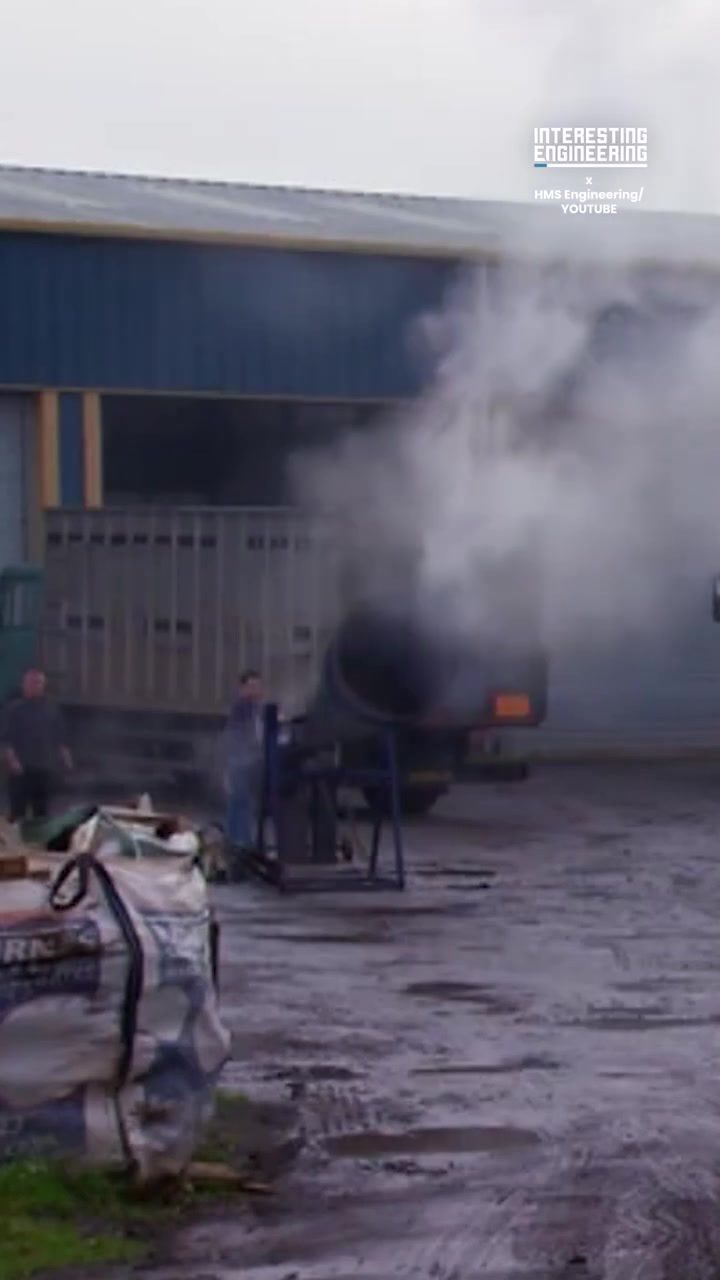
Launching a rocket requires careful preparation and a controlled environment. The outdoor setting near a building in the demonstration provides a safe and open space for the launch. The grassy area ensures that the rocket has a stable base for takeoff, while the building can serve as a visual reference point for observation.
Observation and Monitoring
During a rocket launch, it is crucial to observe and monitor various aspects of the process. Microphones are used to capture the audio data, which can provide insights into the rocket's performance and the dynamics of the launch. Additionally, telescopes and other observation equipment help track the rocket's trajectory and collect visual data for analysis. This comprehensive monitoring ensures that the launch proceeds smoothly and that any issues are promptly addressed.
Vortex Cannons: The Physics of Sonic Booms
Mechanism and Function
Vortex cannons operate on a different principle. Rather than using controlled explosions, these devices employ compressed air to create a powerful vortex of air. Inside the cannon, a burst of compressed air is released, forming a tight, spinning column of air that moves outward at a high velocity — up to 185 mph in some cases. When this air moves faster than the speed of sound, it creates a sonic boom, which can be heard for miles around.
Sonic Boom Characteristics
A sonic boom is a powerful, sharp sound caused by the sudden release of energy as an object, in this case, a vortex of air, moves faster than sound. These booms are often described as explosive or thunder-like and can be both startling and fascinating for those who experience them. Sonic booms can generate both environmental and structural effects, especially when produced by larger and faster-moving objects, such as supersonic aircraft or the vortex cannons.
Safety and Observation
While vortex cannons are an impressive display of physics and engineering, it is important to consider safety measures. The sonic boom produced by the cannon can be loud and potentially damaging to hearing if not properly managed. Ensuring that observers are at a safe distance and wearing appropriate protective gear is essential. Additionally, using observation equipment can help monitor the launch and ensure that all safety protocols are followed.
Practical Tips for Safely Enjoying Engineering Demonstrations
Protective Gear
When observing loud, high-energy demonstrations, such as rocket launches or vortex cannons, always wear appropriate protective gear. This includes ear protection like earmuffs or earplugs to shield your hearing from the powerful sounds produced. Additionally, safety goggles can protect your eyes from any debris or unexpected particles.
Safe Distances
Maintain a safe distance from the launch site. For rocket launches, this can mean being several hundred meters or even kilometers away, depending on the size and type of rocket. For vortex cannons, ensure that you are far enough away to avoid any potential hazards but close enough to observe the effects safely.
Equipment for Observation
Expert observation often involves specialized equipment. Microphones and telescopes, as seen in the rocket launch demonstration, can enhance the viewing experience. High-quality cameras and video equipment can capture the details of the launch, allowing for in-depth analysis and shared enjoyment.
Learning and Engagement
Attending or observing demonstrations can be a fantastic opportunity to learn. Whether you're a student, a hobbyist, or simply curious, taking notes and asking questions can deepen your understanding. Engage with the experts on-site and ask about the science and engineering principles behind the demonstration.
Important Takeaways
Engineering demonstrations like rocket launches and vortex cannons provide unique opportunities to witness the power of physics and engineering. These demonstrations not only capture our attention but also inspire curiosity and appreciation for scientific principles. By understanding the mechanisms behind these powerful blasts, we can better appreciate the ingenuity and precision required to achieve them.
Conclusion
The engineering behind rocket launches and vortex cannons showcases the incredible power of physics and technology. From the careful preparation and observation of rocket launches to the physics behind the sonic booms produced by vortex cannons, these demonstrations offer a vivid display of human ingenuity. Whether you're a seasoned engineer or simply curious about the world, these events provide a thrilling and educational experience. Always remember to prioritize safety when observing these powerful demonstrations, ensuring a rewarding and safe experience.
Watch the Reel
Questions readers ask
What is a vortex cannon and how does it work?
A vortex cannon is a device that uses compressed air to create a visible ring of air, known as a vortex. When the air is released from the cannon, it forms a doughnut-like shape that travels through the air, demonstrating principles of fluid dynamics and creating a unique visual effect. The process involves a controlled release of air that creates a powerful, audible sound as the vortex moves through the atmosphere.
How fast can rockets travel in these demonstrations?
Rockets used in outdoor engineering demonstrations can reach high speeds. For instance, a rocket launched during such events can accelerate to approximately 185 miles per hour (mph). These impressive velocities showcase the power of rocket propulsion and the forces involved in launching a projectile into the air.
What causes the sonic boom sound in these demonstrations?
The sonic boom sound is generated when an object, such as a rocket or the vortex from a vortex cannon, exceeds the speed of sound. This sudden change in air pressure creates a powerful shockwave that produces a loud, distinctive noise. The sonic boom is a clear indication of the incredible forces at play in these engineering demonstrations.
What types of rocket launches are typically showcased in these events?
In engineering outdoor events, various types of rocket launches can be showcased. These can range from smaller, compressed air rockets that use pressurized air to propel themselves, to larger rockets that use controlled explosions of fuel to generate thrust. These demonstrations often highlight the different propulsion methods and the underlying physics involved in launching a rocket.
What safety measures are taken during these outdoor events?
Safety is a top priority during engineering outdoor events. Typically, events like these are conducted in controlled environments with clear safety protocols. Spectators are kept at a safe distance from the launch sites, and safety barriers are often used to prevent any potential hazards. Additionally, trained professionals oversee the demonstrations to ensure all safety guidelines are followed.
Why do engineers use compressed air in some rocket demonstrations?
Engineers use compressed air in some rocket demonstrations to simulate the basic principles of propulsion without the complexity of chemical reactions. Compressed air rockets use the release of pressurized air to create thrust, which propels the rocket forward. This method allows for a clear, visible display of Newton's Third Law of Motion, showing how the force of the expelled air pushes the rocket in the opposite direction.
What kind of observation equipment is used in these demonstrations?
In these demonstrations, various observation equipment is used to enhance the viewing experience and capture precise data. High-speed cameras are often employed to record the launches in slow motion, allowing viewers to observe the details of the rocket's trajectory and the vortex cannon's ring formation. Additionally, microphones and other sensors may be used to measure and analyze the sonic booms produced during these events.
Related deep dives
Similar reads based on topic and creator.



Recent articles
Fresh deep dives from the latest Reels we unpacked.




Comments
Be the first to comment.