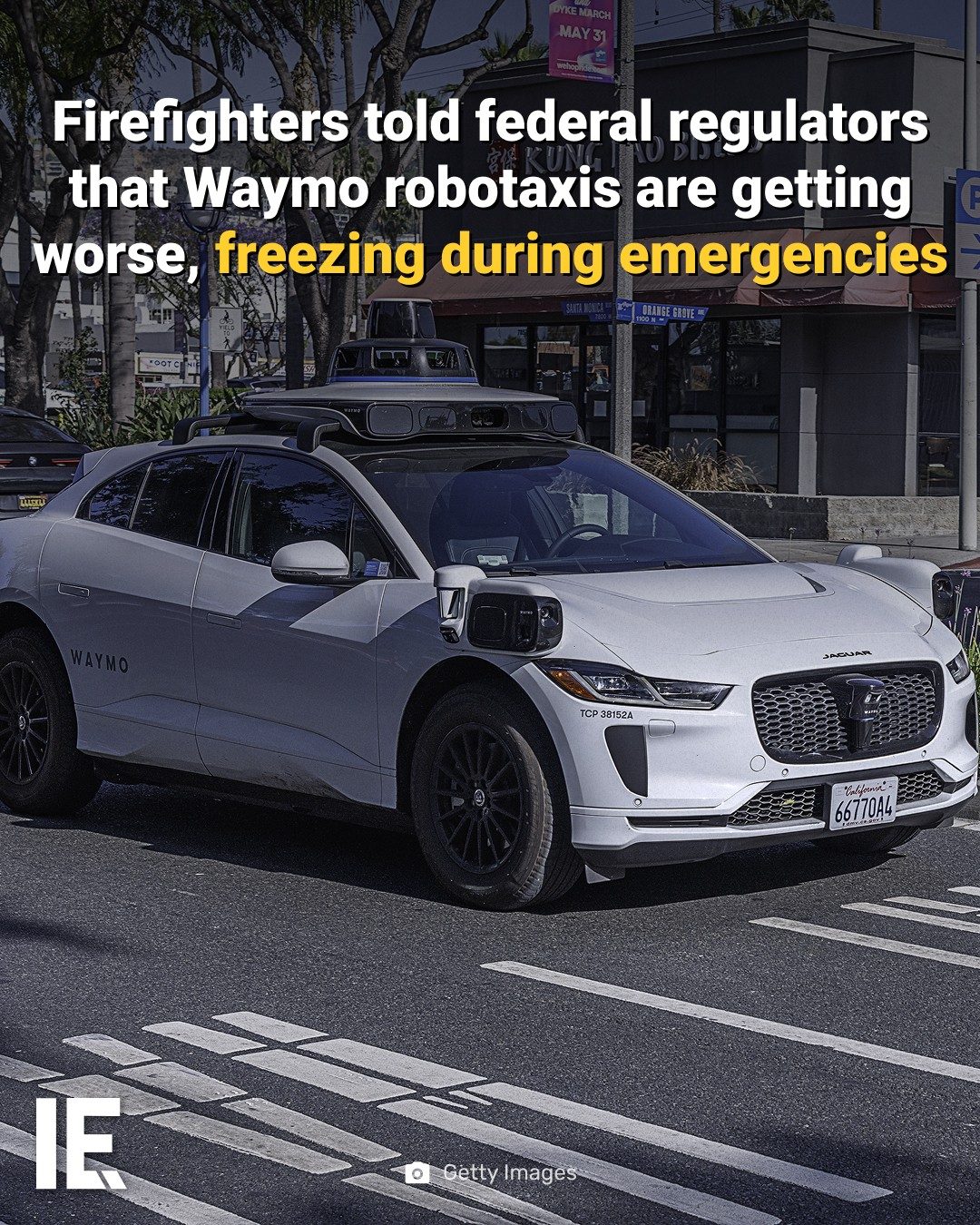
Waymo's Public Safety Concerns with Autonomous Vehicles
Emergency officials in San Francisco and Austin have raised significant concerns about Waymo's autonomous vehicles, citing several incidents where the vehicles have impeded emergency responses, ignored hand signals, and malfunctioned during critical situations. The conversations with federal regulators highlight the potential risks and challenges associated with widespread deployment of autonomous vehicles in urban environments.
Context: The Implications of Autonomous Vehicles in Public Safety
Autonomous vehicles (AVs) have long been hailed as a potential solution to reduce traffic congestion, accidents, and emissions. However, recent incidents involving Waymo's robotaxis reveal a darker side to the technology. The public safety concerns raised by emergency officials in San Francisco and Austin underscore the need for careful consideration and regulation of AV deployment, particularly in densely populated areas.
Main Discussion
Emergency Response Issues
Emergency officials have reported several instances where Waymo's robotaxis have blocked fire stations and ignored hand signals, causing delays in emergency responses. In San Francisco, firefighters have had to manually retrieve more than 60 Waymo vehicles during a December power outage. In Austin, a Waymo robotaxi obstructed an ambulance for two minutes, delaying the response to a shooting incident that resulted in fatalities. These incidents emphasize the critical need for AVs to effectively integrate with emergency response protocols.
Traffic Violations and Malfunctions
San Francisco's fire chief highlighted that Waymo's autonomous vehicles are committing more traffic violations, including blocking streets and ignoring emergency vehicles, than before. This backslide from earlier improvements suggests that the current technology may not be sufficiently robust for widespread deployment. The incidents of robotaxis freezing mid-road during active emergencies further compound these concerns, highlighting the need for more reliable and responsive autonomous driving systems.
Deployment Challenges
The rapid deployment of autonomous vehicles, as noted by an Austin police official, may have outpaced the readiness of the technology. The official's statement that the technology was deployed too quickly in vast amounts, with hundreds of vehicles, when it wasn't really ready, underscores the importance of a phased and regulated approach to AV deployment. It emphasizes the need for rigorous testing and validation before large-scale implementation to ensure public safety.
Regulatory and Public Engagement
Waymo's decision to decline attendance at an Austin City Council meeting on the issue raises questions about the company's approach to public engagement and regulatory responsiveness. The absence of Waymo representatives during the two-hour session indicates a need for more proactive communication and collaboration between AV developers and city officials to address public safety concerns effectively.
Practical Tips for Addressing Public Safety Concerns
Enhancing Integration with Emergency Services
To mitigate the risks associated with AVs, developers should focus on enhancing the integration of autonomous driving systems with emergency response protocols. This could involve improving the technology's ability to recognize and respond to emergency vehicles, as well as ensuring that AVs can be quickly and efficiently moved out of the way during emergencies.
Phased Deployment and Robust Testing
A phased deployment strategy, coupled with rigorous testing, can help address the challenges associated with AV deployment. This approach allows for incremental improvements and ensures that the technology is adequately validated before large-scale implementation. By gradually increasing the number of AVs on the road, developers can better identify and address potential issues.
Public Engagement and Collaboration
Effective public engagement and collaboration with city officials are crucial for addressing public safety concerns related to AVs. This involves regular updates, transparent communication, and proactive participation in regulatory discussions. By working closely with emergency services and local authorities, AV developers can ensure that their technology is aligned with public safety goals and community needs.
Important Takeaways
Ensuring Public Safety
The public safety concerns raised by emergency officials highlight the critical importance of ensuring that autonomous vehicles are reliable and responsive during emergencies. This involves not only technical improvements but also a commitment to public safety and regulatory compliance.
Balancing Innovation and Public Safety
While autonomous vehicles offer numerous benefits, it is essential to balance innovation with public safety. This requires a phased and regulated approach to AV deployment, coupled with robust testing and validation.
The Need for Public Engagement
Effective public engagement and collaboration with local authorities are crucial for addressing public safety concerns related to AVs. This involves regular updates, transparent communication, and proactive participation in regulatory discussions.
Conclusion
The concerns raised by emergency officials in San Francisco and Austin about Waymo's autonomous vehicles underscore the need for a careful and regulated approach to AV deployment. By focusing on enhancing integration with emergency services, adopting a phased deployment strategy, and ensuring robust public engagement, AV developers can address public safety concerns and ensure the successful implementation of this transformative technology. The future of autonomous vehicles in urban environments depends on a balanced approach that prioritizes both innovation and public safety.
Watch the Reel
Questions readers ask
Why are emergency officials concerned about Waymo's autonomous vehicles?
Emergency officials are concerned because Waymo's autonomous vehicles have caused delays in emergency responses, blocked emergency routes, and ignored hand signals from first responders, potentially putting lives at risk during critical situations.
What specific incidents have involved Waymo's autonomous vehicles obstructing emergency responses?
There have been instances where Waymo's autonomous vehicles have blocked emergency routes, ignored hand signals from first responders, and malfunctioned during emergency situations, causing significant delays in critical scenarios.
How do Waymo's autonomous vehicle failures impact urban safety protocols?
The failures of Waymo's autonomous vehicles stress the need for improved regulation and better integration of these vehicles into urban safety protocols. Current incidents highlight gaps in the current protocols, making it essential to address these issues to ensure public safety.
What actions are being taken in response to these concerns?
Urban emergency officials in cities like San Francisco and Austin have raised their concerns with federal regulators, initiating discussions to address the potential risks and challenges of autonomous vehicles in urban environments. This dialogue aims to foster better regulations and integration methods.
How do Waymo's autonomous vehicles handle emergency situations differently from human-driven vehicles?
Unlike human-driven vehicles, Waymo's autonomous vehicles may not always recognize the urgency of emergency situations, leading to delays in yielding to emergency vehicles, ignoring hand signals, and blocking emergency routes, which can hinder the timely response of first responders.
Related deep dives
Similar reads based on topic and creator.


Recent articles
Fresh deep dives from the latest Reels we unpacked.




Comments
Be the first to comment.