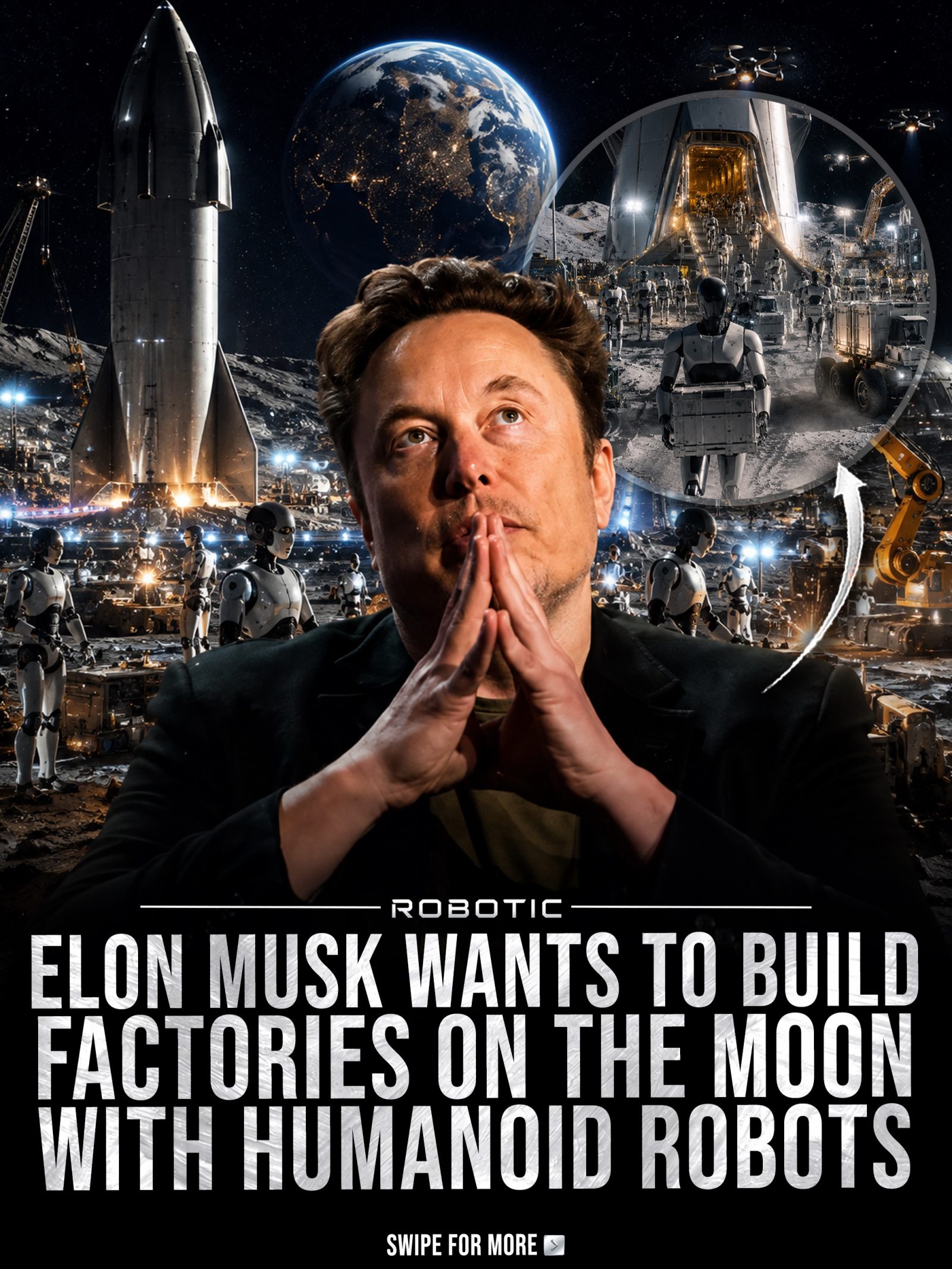
Space Factories on the Moon: The Future of Lunar Manufacturing
The concept of establishing factories on the Moon, constructed and operated by humanoid robots, is no longer just a figment of science fiction. Elon Musk, the visionary behind SpaceX, has shared his ambitious plans for lunar factories that could revolutionize how we approach space exploration and resource management.
Context / Why this matters
The Moon's proximity to Earth and its rich reserves of critical materials make it an ideal location for off-world manufacturing. By building factories on the Moon, we can significantly reduce the cost and logistical challenges of launching everything from Earth. This shift towards in-situ resource utilization (ISRU) is crucial for sustainable space exploration and the establishment of a self-sustaining lunar base. With a lunar mass accelerator, the Moon could become a launchpad for missions deeper into the solar system, reducing the need for Earth's resources and infrastructure.
Main discussion
Humanoid Robots: The Key to Lunar Factories
Humanoid robots are at the heart of SpaceX's lunar factory plans. These advanced machines would be responsible for constructing and maintaining the lunar factories. By using robots, SpaceX aims to overcome the challenges posed by the harsh lunar environment, which includes extreme temperature fluctuations, vacuum conditions, and abundant micro-meteoroids. Robots can operate in these harsh conditions without the need for life support systems, making them an ideal choice for initial lunar construction projects.
The Long-Term Goal: A Lunar Mass Accelerator
One of the most ambitious aspects of SpaceX's lunar factory plan is the long-term goal of building a lunar mass accelerator. This device would use electromagnetic energy to launch materials from the Moon's surface into space. The lunar mass accelerator would enable the efficient transportation of materials to other destinations in the solar system, such as Mars or asteroid belts. This project could revolutionize space exploration by making it more affordable and accessible.
Spacecraft and Lunar Factories
The idea of establishing a spacecraft factory on the Moon is a fascinating concept. By manufacturing spacecraft in space, we can take advantage of the Moon's lower gravity, which would make it easier to launch vehicles into space. Additionally, producing spacecraft in space could reduce the need for expensive and risky launches from Earth. The lunar factories could also manufacture other critical infrastructure, such as solar panels, radiators, and habitable structures, directly on the Moon. This would make future lunar operations more sustainable and self-sufficient.
The Importance of Solar Panels and Radiators
Solar panels and radiators are essential components for any lunar factory or habitat. Solar panels would provide the necessary energy to power the factories and habitats, while radiators would help regulate the temperature inside the structures. By manufacturing these components on the Moon, we can reduce the need to launch them from Earth, making future lunar operations more sustainable and cost-effective.
Practical tips
While the concept of lunar factories and humanoid robots is still in its early stages, there are several practical tips to consider:
- Stay Informed: Keep up-to-date with the latest developments in space exploration and robotics. Follow SpaceX and other aerospace companies to learn about new technologies and innovations.
- Support Research and Development: Encourage investment in research and development for space exploration and robotics. This could include supporting educational programs, research grants, and initiatives aimed at advancing space technology.
- Consider the Environmental Impact: When thinking about space exploration, it's essential to consider the environmental impact on both Earth and the Moon. Sustainable practices should be at the forefront of any space exploration initiatives.
Important takeaways
The concept of lunar factories and humanoid robots is an exciting and ambitious project. By building factories on the Moon and using robots to construct and maintain them, we can make significant strides toward sustainable space exploration. The long-term goal of a lunar mass accelerator is a bold vision that could revolutionize how we explore and utilize space. This project has the potential to make space exploration more affordable, accessible, and sustainable, paving the way for future missions deeper into the solar system.
Conclusion
The future of lunar manufacturing is an exciting prospect that could revolutionize how we approach space exploration. By leveraging the advantages of the lunar environment and utilizing advanced robotics, we can make significant strides toward sustainable and self-sufficient space operations. The concept of a lunar mass accelerator is a bold vision that could transform space exploration and enable us to explore deeper into the solar system. With continued innovation and investment in space technology, the dream of lunar factories and humanoid robots could soon become a reality.
Watch the Reel
Questions readers ask
What are the primary benefits of building factories on the Moon?
The primary benefits include reduced launch costs from Earth, easier access to lunar resources, and the ability to create a launchpad for deeper space missions. By leveraging the Moon's resources, we can also decrease our dependence on Earth's supplies.
How do humanoid robots fit into Elon Musk's lunar factory plans?
Humanoid robots are essential for constructing and operating lunar factories. They can withstand the harsh lunar environment, perform complex tasks, and reduce the need for human presence, thereby enhancing safety and efficiency.
What specific materials can be sourced from the Moon for manufacturing?
The Moon is rich in resources such as helium-3, a potential fuel for future nuclear fusion reactors, as well as water ice, which can be converted into rocket fuel and used for life support systems. Additionally, lunar regolith can be used for construction materials.
How does building lunar factories help long-term space exploration goals?
Lunar factories can serve as a crucial stepping stone for deeper space missions by providing a closer and more efficient launchpad. They can also produce essential supplies and components in space, reducing the logistical strain on Earth's resources.
What is in-situ resource utilization (ISRU) and why is it important for lunar factories?
ISRU is the practice of using local resources to meet human needs or operational requirements. For lunar factories, it means using materials found on the Moon to build and operate the facilities, which reduces the need for costly Earth-based supplies and supports sustainability.
What are the key challenges in constructing lunar factories?
Key challenges include the harsh lunar environment, the complexity of robotic construction, and the need for reliable and efficient power sources. Additionally, coordinating and managing operations from Earth poses significant communication and control hurdles.
What role does SpaceX play in Elon Musk's vision for lunar factories?
SpaceX is central to Elon Musk's vision, as the company is developing the technology and infrastructure needed to transport materials and robots to the Moon. SpaceX's Starship is a key component in achieving the goals of lunar factory construction and operation.
Related deep dives
Similar reads based on topic and creator.

Recent articles
Fresh deep dives from the latest Reels we unpacked.




Comments
Be the first to comment.