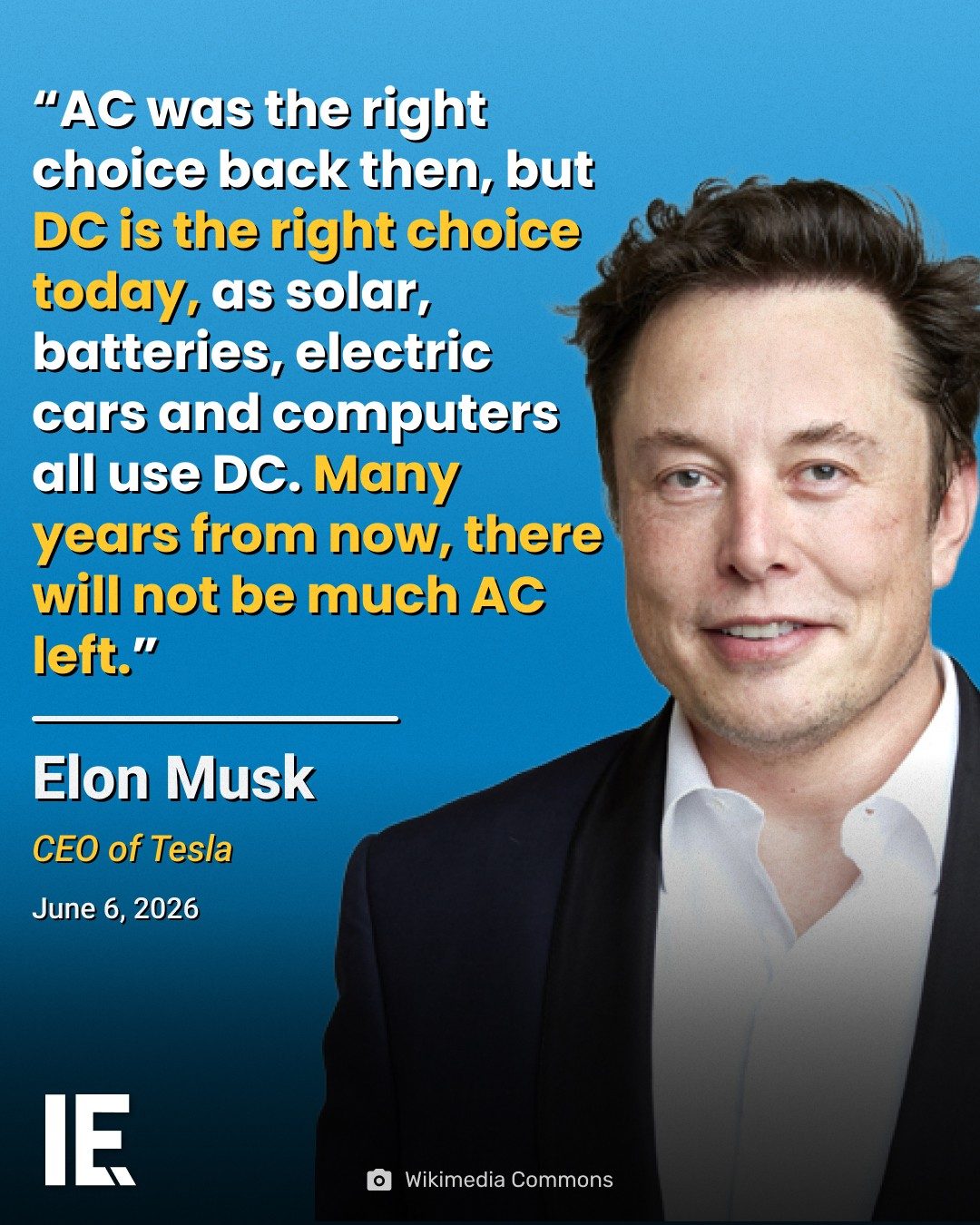
The future of electricity is increasingly shifting towards direct current (DC) power, a shift that Elon Musk, CEO of Tesla, predicts will become even more pronounced in the coming years.
Context / Why This Matters
The debate between alternating current (AC) and direct current (DC) has been a longstanding one in the world of electrical engineering. AC, which oscillates periodically, has been the standard for power transmission and distribution since the late 19th century. However, advancements in technology and increasing reliance on renewable energy sources and battery storage are driving a shift towards DC power.
Understanding AC and DC Power
What is AC Power?
AC power is characterized by its periodic reversal in direction. This type of current is what powers most homes and businesses, transmitted over long distances through power lines. AC is preferred for high-voltage transmission because it can be easily stepped up or down using transformers, making it efficient for long-distance transmission.
What is DC Power?
DC power, on the other hand, flows in one direction and is the type of current produced by batteries, solar panels, and fuel cells. DC is used in many electronic devices, including computers, smartphones, and electric vehicles (EVs), because these devices require stable, unidirectional current to function properly.
The Shift to DC Power
Solar and Batteries
Technologies such as solar panels and batteries inherently produce and store DC power. As renewable energy sources become more prevalent, the need for efficient DC-to-DC conversion and storage solutions is growing. Solar panels, for example, generate DC power, which is then stored in batteries. This stored energy can be used directly by DC-powered devices, reducing the need for conversion to AC.
Electric Vehicles (EVs)
EVs are another significant driver of the shift towards DC power. Electric cars, like those produced by Tesla, operate on DC power. As the adoption of EVs increases, so does the demand for DC charging stations and infrastructure. Many EVs use high-voltage DC power for charging, which allows for faster charging times compared to AC.
Computers and Electronic Devices
Most modern electronic devices, including computers and smartphones, rely on DC power. These devices use batteries that provide a steady flow of DC power, ensuring stable performance. As the demand for portable and efficient electronic devices grows, so does the need for reliable DC power sources.
The Tesla Perspective
Elon Musk, CEO of Tesla, has been a vocal proponent of the shift towards DC power. He argues that as technologies like solar panels, batteries, and electric vehicles become more prevalent, DC power will become the standard. Tesla's focus on DC power is evident in its products, from solar panels and battery storage systems to electric vehicles. The company's strategy emphasizes the benefits of DC power, including efficiency, reliability, and sustainability.
The Future Landscape
Musk predicts that in the not-too-distant future, there will be significantly less reliance on AC power. This shift will necessitate a transformation in power infrastructure, with a greater emphasis on DC distribution and storage. As more homes and businesses adopt renewable energy sources and battery storage systems, the demand for DC power will continue to rise.
Practical Tips for Embracing DC Power
For Homeowners
If you're considering installing solar panels or battery storage systems, it's essential to understand the benefits of DC power. Look for systems that maximize DC-to-DC efficiency, as this will help you make the most of the energy generated by your solar panels.
For Businesses
Businesses can benefit from DC power by investing in energy-efficient appliances and devices. Switching to DC-powered equipment can reduce energy costs and enhance sustainability. Additionally, consider installing DC charging stations for electric vehicles to support your employees or customers who drive EVs.
For Electric Vehicle Owners
Electric vehicle owners should be aware of the benefits of DC fast charging. Investing in a DC fast charger can significantly reduce charging times, making it more convenient to use your electric vehicle for daily commuting and long-distance travel.
Important Takeaways
The shift from AC to DC power is driven by advancements in renewable energy, battery storage, and electric vehicles. As technologies like solar panels and EVs become more common, so will the demand for DC power. Investing in DC-powered solutions can enhance efficiency, reliability, and sustainability.
Conclusion
The future of electricity is increasingly moving towards direct current (DC) power. As the world shifts towards renewable energy and electric vehicles, the need for efficient DC power solutions will only grow. Understanding the benefits of DC power and embracing it in our homes, businesses, and vehicles can help create a more sustainable and efficient energy landscape. By adopting DC-powered technologies, we can pave the way for a future where electricity is clean, reliable, and efficient.
Watch the Reel
Questions readers ask
Why does Elon Musk believe DC power will dominate the future?
Elon Musk predicts that DC power will dominate in the future because it is better suited for renewable energy and electric vehicles. These technologies require stable, unidirectional electricity, which DC power provides more efficiently than the traditional AC power.
What are the main differences between AC and DC power?
AC power periodically reverses direction, which is suitable for long-distance transmission, while DC power flows in a single direction, making it more efficient for storing and using energy in devices and battery systems.
How will the shift to DC power affect electricity transmission?
The shift to DC power could revolutionize how electricity is transmitted by making it more efficient and reducing losses that occur during transmission. This is particularly beneficial for integrating renewable energy sources into the grid.
Why are electric vehicles and renewable energy sources driving the shift to DC power?
Electric vehicles and renewable energy sources, such as solar and wind, naturally produce DC power. Using DC power directly from these sources can eliminate the need for conversion, making the system more efficient and reducing energy loss.
What role does Tesla play in the future of DC power?
Tesla, under Elon Musk's leadership, is at the forefront of developing technologies that leverage DC power, including advanced battery systems and electric vehicles. These innovations are helping to drive the adoption of DC power in homes, businesses, and the broader power grid.
What are the advantages of using DC power in homes and businesses?
DC power can simplify the electrical infrastructure in homes and businesses by reducing the need for AC-to-DC conversion, which can improve energy efficiency and lower electricity costs. It also aligns well with the increasing use of electronic devices that rely on DC power.
How might the future of DC power technologies influence everyday life?
As DC power technologies advance, we can expect more efficient and reliable power systems. This could mean lower energy bills, reduced environmental impact from energy production, and more seamless integration of renewable energy sources into our daily power consumption.
Related deep dives
Similar reads based on topic and creator.


Recent articles
Fresh deep dives from the latest Reels we unpacked.




Comments
Be the first to comment.