AI and Superhuman Capabilities
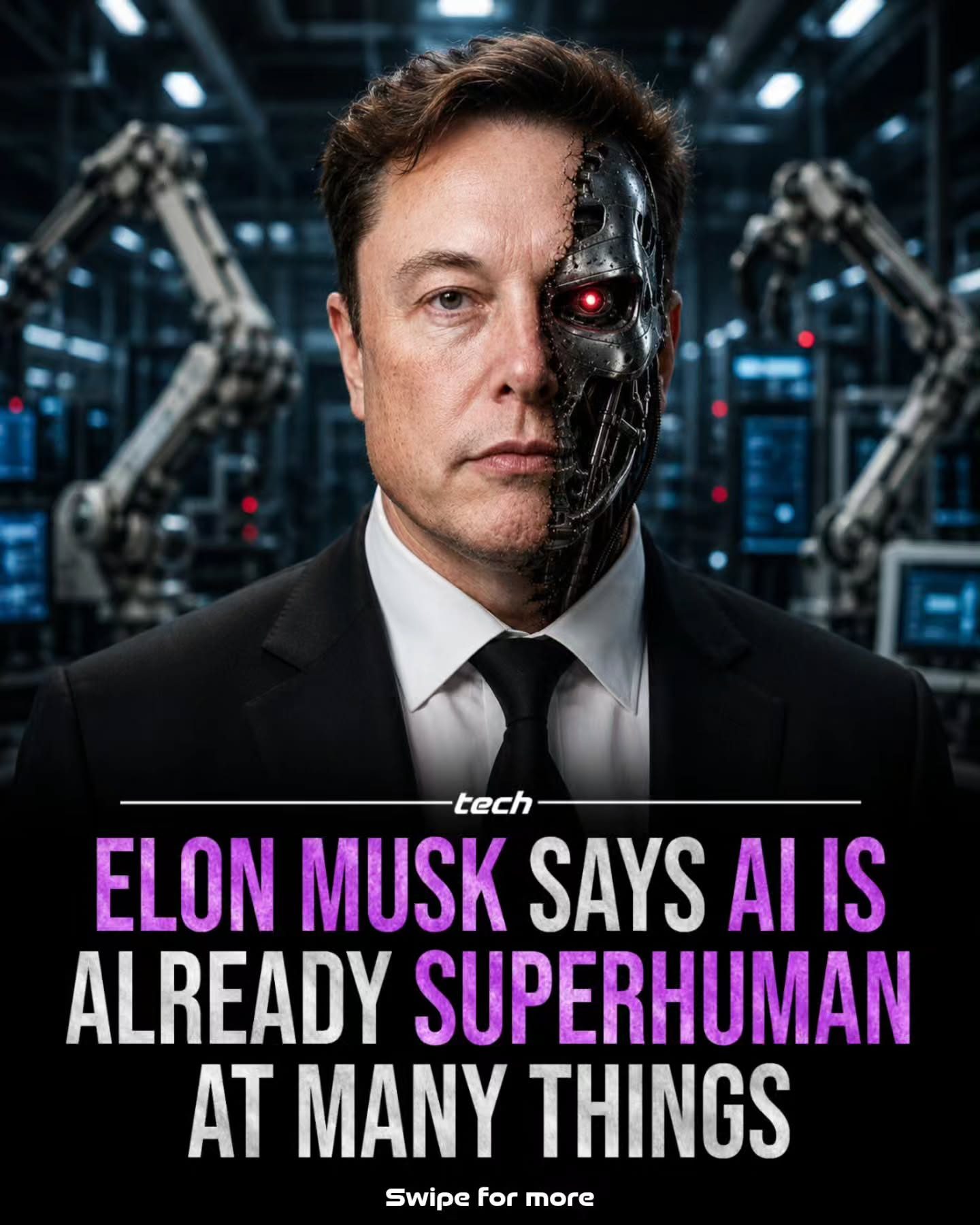
Artificial Intelligence (AI) has made astounding strides, surpassing human performance in many specific tasks. Among the leading voices discussing this phenomenon is Elon Musk, who believes that AI is already superhuman at many things and that we are in the singularity.
Why this matters
The remarkable advancements in AI capabilities have significant implications for various industries and our daily lives. Understanding where AI excels and where it still falls short is crucial for leveraging its potential while mitigating risks. AI's superhuman abilities in specific tasks have already started transforming sectors like software engineering, mathematics, and scientific research. The concept of the singularity, where AI improves itself faster than humans can understand or control, adds another layer of complexity to the discussion. Whether we are truly in the singularity or not, the rapid pace of AI development underscores the need for continued dialogue and responsible innovation.
AI's Superhuman Capabilities
Areas of Superior Performance
AI models have demonstrated superhuman performance in several domains. These include:
- Coding: AI can generate code, debug, and even optimize software at a level that often surpasses human capabilities. Tools like GitHub's Copilot and DeepMind's AlphaCode are prime examples of AI's prowess in this area.
- Mathematics: AI has shown remarkable proficiency in solving complex mathematical problems. For instance, AlphaTensor by DeepMind has found new, more efficient ways to multiply large matrices, outperforming traditional methods.
- Scientific Reasoning: AI is increasingly capable of making scientific discoveries and generating hypotheses. For example, AI models have been used to predict new materials and drugs, accelerating scientific research.
- Translation: AI-powered translation tools like Google Translate and DeepL can handle complex linguistic nuances, often outperforming human translators in terms of speed and accuracy.
- Information Retrieval: AI excels at searching vast amounts of data to retrieve relevant information quickly. This is evident in search engines and data analytics tools that use AI to provide insights from large datasets.
AI's Limitations
Despite these impressive capabilities, AI still has significant limitations:
- Reliability: AI models can sometimes produce inconsistent or incorrect results, especially in unfamiliar or unpredictable scenarios. Ensuring reliability remains a challenge.
- Long-term Planning: AI struggles with tasks that require long-term planning and goal-directed behavior. This is particularly evident in domains like strategic planning and project management.
- Real-world Robotics: While AI has made progress in robotics, integrating AI with physical robots to perform complex tasks in real-world environments remains challenging. Issues with perception, manipulation, and interaction with humans and the environment need further advancements.
- Factual Consistency: AI models can sometimes generate false or misleading information, a problem known as "hallucination." Ensuring factual consistency in AI outputs is an ongoing challenge.
The Singularity
Musk's claim that we are in the singularity refers to a hypothetical point where AI becomes capable of improving itself faster than humans can understand or control. This concept, first coined by mathematician John von Neumann and popularized by science fiction writer Vernor Vinge, suggests a future where AI-driven technological acceleration leads to rapid, unpredictable changes. While Musk believes we have already reached this phase, many AI researchers consider this claim more of a philosophical interpretation than an established scientific fact.
Practical Tips
Leveraging AI in Daily Life
- Productivity Tools: Use AI-powered tools for coding, writing, and data analysis to boost productivity. These tools can automate repetitive tasks, provide suggestions, and help you work more efficiently.
- Learning and Skill Development: AI can personalize learning experiences, making it easier to acquire new skills and knowledge. Use AI-driven educational platforms and apps to enhance your learning journey.
- Health and Wellness: AI is transforming healthcare with applications in diagnostics, treatment, and patient monitoring. AI-powered health apps can help you track your fitness goals, monitor your health, and provide personalized recommendations.
Ethical Considerations
- Privacy and Security: Be mindful of privacy and security when using AI tools. Ensure that the data you share is protected and that you understand the privacy policies of the platforms you use.
- Bias and Fairness: Recognize that AI models can inherit and amplify biases present in their training data. Advocate for transparency and fairness in AI development to mitigate these risks.
- Accountability: Hold AI developers and organizations accountable for the ethical use of AI. Encourage open dialogue and collaboration to address the challenges and opportunities presented by AI.
Important Takeaways
- AI has surpassed human performance in many specific tasks, including coding, mathematics, scientific reasoning, translation, and information retrieval.
- While AI excels in these areas, it still faces challenges with reliability, long-term planning, real-world robotics, and factual consistency.
- The concept of the singularity, where AI improves itself faster than humans can understand or control, remains a topic of debate among AI researchers.
- Leveraging AI in daily life can enhance productivity, learning, and health, but it's essential to consider privacy, bias, and accountability.
Conclusion
AI's superhuman capabilities in specific tasks have already started transforming various industries and aspects of our daily lives. While there is debates around whether we have entered the singularity, the rapid pace of AI development underscores the need for responsible innovation and continued dialogue. By understanding AI's strengths and limitations, we can harness its potential while addressing the challenges it presents. The future of AI is both exciting and complex, and navigating this landscape responsibly will be key to maximizing its benefits.
Watch the Reel
Questions readers ask
What specific tasks has AI surpassed human performance in, according to Elon Musk?
Elon Musk has highlighted several areas where AI has surpassed human abilities, including coding, mathematics, and scientific reasoning. These advancements are crucial in understanding the current capabilities and potential of AI.
How does AI surpassing human intelligence relate to the singularity?
The singularity refers to a hypothetical future point in time when AI surpasses human intelligence and begins to improve itself at an exponential rate. Elon Musk's belief that AI already has superhuman abilities in many areas suggests that we might be approaching or already in the early stages of this singularity.
What are the implications of AI's superhuman abilities for various industries?
AI's superhuman capabilities in tasks like coding, mathematics, and scientific reasoning are already transforming industries such as software engineering, finance, and research. These advancements can lead to increased efficiency, innovation, and new solutions to complex problems, but they also raise important questions about job displacement, ethics, and safety.
What is the significance of Elon Musk's comments on AI?
Elon Musk is a prominent figure in the AI debate, and his insights provide valuable perspectives on the potential and risks of advanced AI. His comments often spark important discussions about the future of AI and its impact on society, encouraging both optimism and caution.
Why is it important to understand where AI excels and where it falls short?
Understanding AI's strengths and limitations is vital for leveraging its benefits while mitigating risks. By identifying where AI excels, we can apply it to tasks where it can make a significant impact. Conversely, recognizing its limitations helps us avoid over-reliance on AI and ensures that human oversight and intervention remain essential.
How does AI improve itself, and why is this concerning?
AI can improve itself through processes like machine learning, where it analyzes data, identifies patterns, and adjusts its algorithms to enhance performance. This self-improvement can lead to rapid advancements, but it also raises concerns about control and potential unintended consequences, especially if AI surpasses human intelligence.
What are some of the potential risks associated with AI's superhuman abilities?
While AI's superhuman abilities offer numerous benefits, they also present risks such as job displacement, autonomous weaponry, and existential threats. As AI continues to advance, it is crucial to address these challenges through responsible development, regulation, and ethical considerations.
Related deep dives
Similar reads based on topic and creator.


Recent articles
Fresh deep dives from the latest Reels we unpacked.




Comments
Be the first to comment.