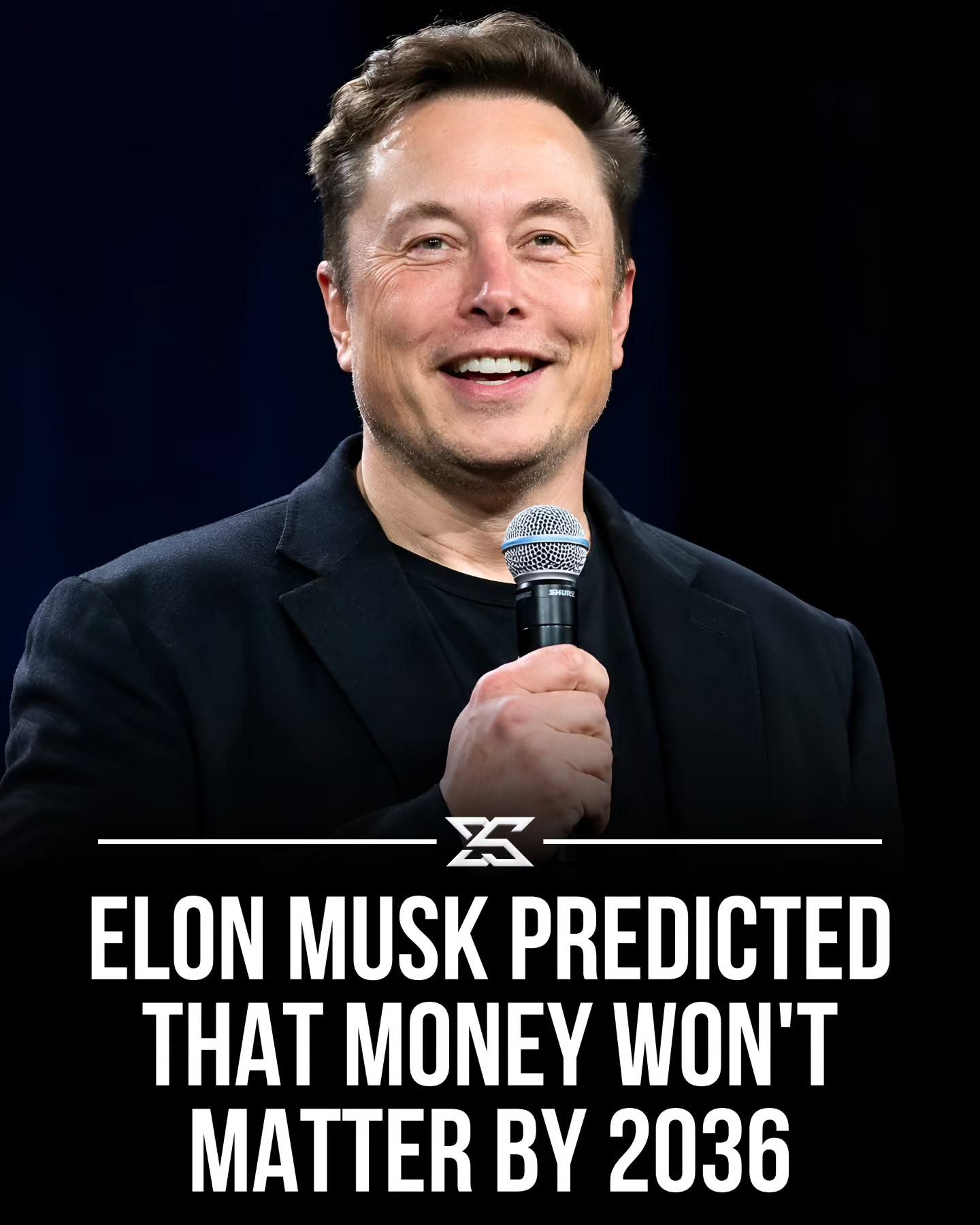
Elon Musk's 2036 Prediction: A World Without Money
Elon Musk has shared a profound prediction about the future of money. He envisions a world by 2036 where the significance of money could be vastly diminished. This vision is rooted in a future driven by artificial intelligence (AI) and humanoid robots, which could perform so much work that the cost of goods and services becomes exceptionally low, potentially even free. Let’s delve into the details.
Context / Why this matters
This prediction stems from Musk's broader vision of a world where machines handle many human jobs more efficiently and at a lower cost. Robots like Tesla's Optimus, which are designed to perform a wide range of tasks, could revolutionize industries by producing food, clothing, and transportation at minimal costs. If machines can produce enough for everyone, the traditional role of money could shift significantly, as people would not need to pay much for their daily necessities.
Main discussion
AI and Robotics in Daily Life
Musk's vision hinges on a future where AI and robots are pervasive in everyday life, doing most of the work. The efficiency and cost-effectiveness of these machines could lead to an abundance of goods and services. For instance, robots could harvest crops, manufacture clothing, and transport goods more efficiently than humans, making these essentials more affordable.
Food Production
Automated farming techniques already exist, and advancements in AI could optimize these systems further. Robots can plant, harvest, and package crops more efficiently, reducing waste and labor costs. This could make fresh produce and other food items more accessible and affordable for everyone.
Clothing and Goods
The manufacturing sector is another area where AI and robotics could have a significant impact. Automated factories can work continuously without the need for breaks, leading to higher production rates and lower costs. Clothing, electronics, and other consumer goods could be produced in such quantities that prices drop dramatically.
Transportation
Autonomous vehicles and drones could revolutionize transportation, making it more efficient and cost-effective. Passengers and goods could be transported quickly and safely, reducing the need for traditional fuel-based vehicles and lowering transportation costs.
The Abundance Economy
The idea of an abundance economy, where resources are plentiful and costs are low, could fundamentally change how society functions. In such a world, people might not need to work as much, or at all, to meet their basic needs. This could lead to a shift in societal values, with more focus on personal fulfillment and community engagement.
However, this vision is not without its critics. Many experts argue that certain resources will always be limited, such as land, energy, raw materials, and human attention. These scarcity points could prevent a completely free economy, as some goods and services will inherently be valuable due to their limited availability.
Land and Resources
Land, for example, is a finite resource. Even with advanced technology, the amount of land available for housing, agriculture, and other uses will remain constant. This means that land values could continue to be a significant factor in the economy.
Human Attention and Care
Certain services, like healthcare and personal care, require human interaction. While robots can assist in many tasks, they cannot fully replace the personal touch and empathy that humans provide. This means that some services will always be valuable and could command higher prices.
Economic Contradictions
Some economists point out a contradiction in Musk's idea. While he envisions a future where money may not matter, he continues to build and invest in businesses focused on value and profit. This suggests that, at least for the foreseeable future, traditional economic principles will still apply.
Moreover, Musk has made big automation predictions before that did not happen on time. This raises questions about the feasibility of his 2036 timeline. While his vision is compelling, achieving it will require significant technological advancements and societal shifts.
Practical Tips
If we are to move towards a future where money matters less, there are certain steps we can take:
Adopt and Advocate for Automation
Supporting and advocating for the adoption of AI and robotics in various industries can help drive down costs and increase efficiency. This includes encouraging businesses to invest in automated systems and advocating for policies that promote technological innovation.
Invest in Renewable Energy
Reducing our reliance on finite resources, such as fossil fuels, can help create a more sustainable future. Investing in renewable energy sources, like solar, wind, and hydro power, can help ensure that we have enough energy to power our future technologies.
Encourage Circular Economies
A circular economy, where waste is minimized and resources are reused, can help create a more abundant world. Supporting businesses that focus on sustainability and waste reduction can help achieve this goal.
Foster a Culture of Abundance
Encouraging a culture that values abundance over scarcity can help us move towards a future where money matters less. This includes promoting values like sharing, collaboration, and community engagement.
Important Takeaways
Elon Musk's prediction of a world without money by 2036 is based on a future where AI and robotics play a significant role in production and daily life. While this vision is compelling, it is not without its challenges and contradictions. Achieving such a future will require significant technological advancements, societal shifts, and a focus on abundance over scarcity.
Conclusion
The idea of a world where money doesn't matter is both intriguing and challenging. While the technological advancements needed to achieve this future are promising, they are also fraught with obstacles. Achieving a world of abundance, where basic needs are met without the need for traditional money, will require collaboration, innovation, and a shift in societal values.
Watch the Reel
Questions readers ask
What is the main idea behind Elon Musk's 2036 prediction about money?
Elon Musk predicts that by 2036, the role of money in society could be greatly reduced. He believes that advancements in artificial intelligence and robotics will lead to a world where goods and services are produced at extremely low costs, potentially even free, making money less central to daily life.
How do AI and robots factor into Musk's vision for a world without money?
Musk envisions a future where AI and robots perform tasks efficiently and at a low cost, reducing the need for human labor. This increased productivity could lead to an abundance of goods and services, which in turn could make them very affordable or even free, diminishing the importance of money.
What kind of tasks could robots like Tesla's Optimus perform in this future?
Robots like Tesla's Optimus are designed to handle a wide range of tasks, including producing food, clothing, and managing transportation. By taking on these roles, robots could significantly reduce the cost of these essential services, contributing to a world where money may no longer be the primary means of exchange.
How might the role of humans change in a world where robots perform most tasks?
In this future, humans might shift from performing labor-intensive tasks to focusing on creative, strategic, or innovative roles. The abundance of goods and services could also lead to a re-evaluation of how society organizes work and leisure, with less emphasis on traditional employment.
What are the potential benefits of a world where goods and services are free or very cheap?
A world where goods and services are free or very cheap could lead to a significant reduction in economic inequality. By providing everyone with access to essential goods and services, society could move towards a more equitable distribution of resources, improving overall well-being and quality of life.
What challenges might arise in a transition to a world without money?
Transitioning to a world without money presents several challenges. These include addressing potential job displacement, ensuring that automation benefits everyone, and managing the ethical implications of AI and robotics. Additionally, society would need to develop new systems for resource allocation and decision-making in the absence of traditional currency.
Related deep dives
Similar reads based on topic and creator.


Recent articles
Fresh deep dives from the latest Reels we unpacked.




Comments
Be the first to comment.