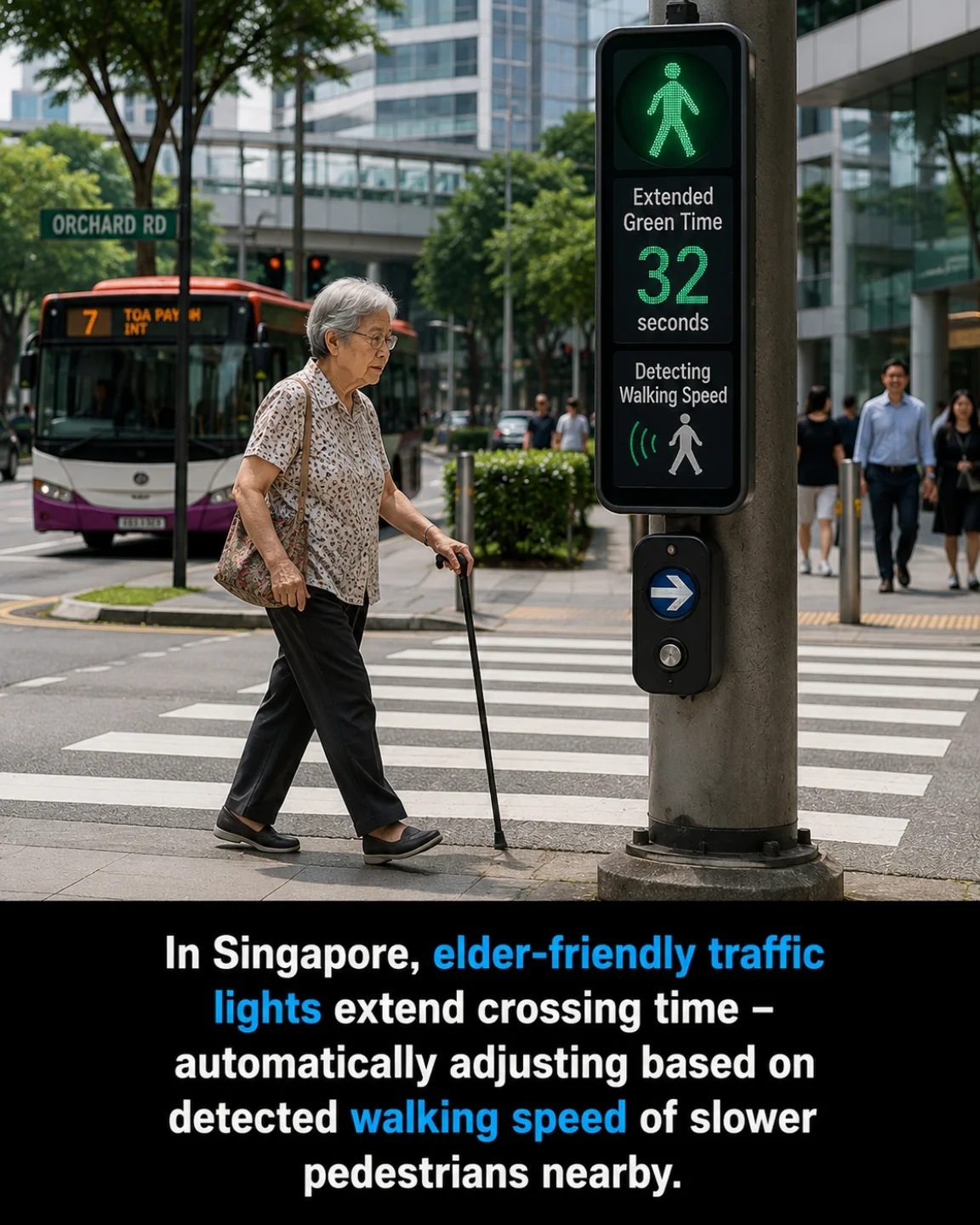
Elder-Friendly Traffic Lights in Singapore
Singapore has implemented a innovative traffic light system designed to aid elderly pedestrians. These traffic lights automatically adjust the crossing time based on the detected walking speed of slower individuals. This system is particularly beneficial for those who may need extra time to cross the street safely.
Why This Matters
As populations age, urban planners face the challenge of creating environments that are safe and accessible for all pedestrians, regardless of age or mobility. Elder-friendly traffic lights are a proactive step towards making city streets more navigable for the elderly, reducing the risk of accidents and promoting independence.
Main Discussion
The Technology Behind Elder-Friendly Traffic Lights
The traffic light system in Singapore utilizes advanced sensors and algorithms to detect the walking speed of pedestrians. When a slower pedestrian is detected, the system extends the green light duration, providing ample time to cross the street safely. This technology is particularly evident at busy intersections, such as the one on Orchard Road, a major thoroughfare in Singapore.
How It Works
The process is straightforward yet sophisticated. As a pedestrian approaches the intersection, sensors embedded in the traffic light system detect their walking speed. If the pedestrian is moving slower than a predefined threshold, the system automatically extends the green light duration, ensuring the pedestrian has enough time to cross the street. Once the pedestrian has safely crossed, the light cycle resumes its normal timing.
The on-screen text "Extended Green Time" and "32 seconds" highlight the extended crossing time, which is specifically designed to accommodate slower pedestrians. These features are essential for creating a more inclusive urban environment, especially for the elderly.
Benefits for Elderly Pedestrians
For elderly pedestrians, the extended crossing time is a game-changer. It reduces the stress and anxiety associated with navigating busy intersections, especially for those using mobility aids like canes or walkers. The system's ability to automatically adjust based on individual walking speeds ensures that everyone can cross the street safely, regardless of their pace.
The woman shown crossing the street with a cane is a poignant example of how this system can make a real difference in people's lives. By providing extra time, the traffic light system empowers elderly individuals to maintain their independence and navigate the city with confidence.
The Role of Urban Planning
Urban planning plays a crucial role in integrating such technologies into the cityscape. In Singapore, the implementation of elder-friendly traffic lights is part of a broader initiative to create an age-friendly city. This includes not only traffic lights but also other infrastructure improvements, such as wider sidewalks, accessible public transportation, and well-designed pedestrian crossings.
Real-World Application
The intersection on Orchard Road, near the Toa Payoh Interchange (TOA PAY INT), is a prime example of where this technology is in use. The on-screen text "ORCHARD RD" and "TOA PAY INT" indicate the location, which is a bustling area with a high volume of pedestrian traffic. The successful deployment of this system in such a dynamic environment underscores its effectiveness and reliability.
Practical Tips
If you are an urban planner or city official considering implementing a similar system, here are some practical tips to keep in mind:
1. Conduct a Thorough Assessment
Before implementing the system, conduct a thorough assessment of the areas with high pedestrian traffic, especially those with significant elderly populations. Identify intersections where the system could have the most significant impact.
2. Engage with the Community
Engage with the local community, including elderly residents, to understand their needs and concerns. This feedback is invaluable in fine-tuning the system to meet the specific requirements of the community.
3. Ensure Smooth Integration
Ensure that the system integrates smoothly with existing infrastructure. This includes not only the traffic light system but also other urban amenities, such as pedestrian crossings and public transportation.
4. Monitor and Adjust
Continuously monitor the system's performance and make necessary adjustments based on feedback and data. This ongoing evaluation ensures that the system remains effective and responsive to the changing needs of the community.
Important Takeaways
The implementation of elder-friendly traffic lights in Singapore is a powerful example of how technology can be used to create more inclusive and accessible urban environments. By extending crossing times based on detected walking speeds, these traffic lights significantly enhance the safety and independence of elderly pedestrians. This initiative underscores the importance of proactive urban planning in addressing the needs of an aging population.
Conclusion
Elder-friendly traffic lights in Singapore are a testament to the city's commitment to creating an inclusive and age-friendly urban environment. By leveraging advanced technology to extend crossing times for slower pedestrians, these traffic lights ensure that everyone can navigate the city safely and independently. As urban planners around the world grapple with the challenges of an aging population, initiatives like these offer valuable insights and practical solutions. By prioritizing the needs of elderly pedestrians, cities can foster more vibrant, inclusive, and accessible communities for all.
Watch the Reel
Questions readers ask
How do the elder-friendly traffic lights in Singapore work?
These traffic lights use advanced sensors and algorithms to detect the walking speed of pedestrians. When a slower pedestrian, such as an elderly person, is detected, the system automatically extends the crossing time to ensure they have enough time to cross the street safely.
What is the primary benefit of these traffic lights for the elderly?
The primary benefit is enhanced safety and independence. By providing ample time to cross the street, these traffic lights reduce the risk of accidents and allow elderly pedestrians to navigate city streets with greater confidence.
Are these traffic lights only useful for the elderly?
While the primary beneficiaries are elderly pedestrians, these traffic lights can also assist other individuals with mobility challenges, such as those using wheelchairs, walking aids, or those with temporary injuries.
How do the traffic lights detect slower pedestrians?
The traffic lights are equipped with sensors that monitor the walking speed of individuals approaching the crossing. When a slower walking speed is detected, the system triggers an automatic adjustment to the crossing time.
Can the crossing time be adjusted manually if needed?
As of now, the system is designed to automatically adjust the crossing time based on detected walking speeds. However, there is no information indicating that manual adjustments are available for pedestrians or traffic authorities.
Are there any other benefits to this system for the community?
Yes, this system contributes to a more inclusive urban environment, promoting safer streets for all pedestrians. It encourages active aging by allowing elderly individuals to maintain their independence and engage in daily activities.
Related deep dives
Similar reads based on topic and creator.

Recent articles
Fresh deep dives from the latest Reels we unpacked.




Comments
Be the first to comment.