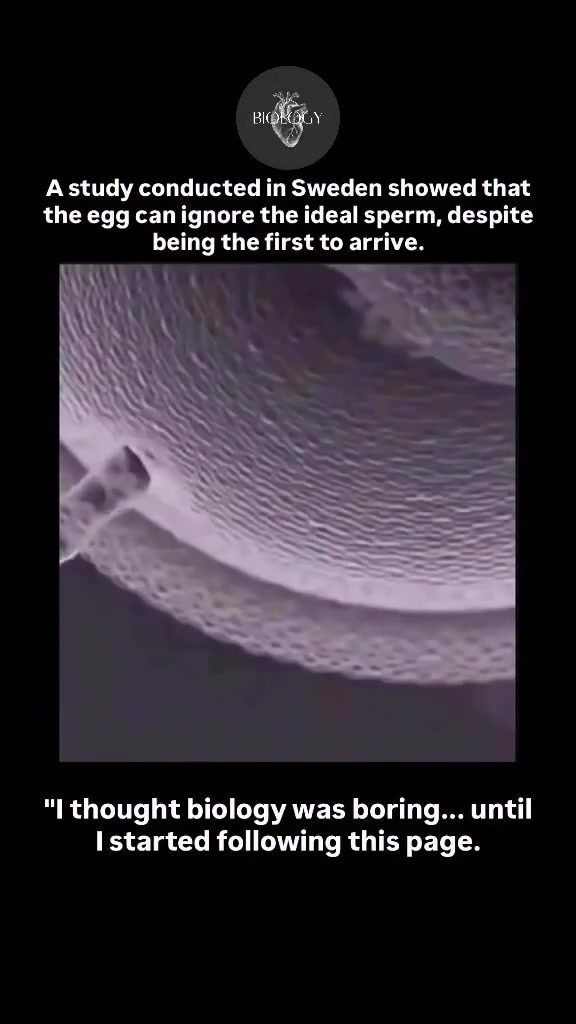
EGG SELECTION: The Complex Biology Behind Fertilization
The traditional view of fertilization as a simple race to the finish line, where the fastest sperm wins, has been challenged by recent scientific findings. It turns out that the egg plays a far more dynamic and selective role in the fertilization process than previously thought. This intricate dance between sperm and egg, guided by chemical signals and biological filters, reveals a level of sophistication that was long overlooked.
Context / Why This Matters
Understanding the complexities of fertilization is crucial for advancing reproductive health. For couples experiencing infertility, traditional treatments focus on enhancing sperm speed and quantity. However, these approaches may fall short if the underlying issue involves the egg's ability to selectively engage with sperm.
Egg Selection: A Microscopic Dance
Fertilization is far from a straightforward race. Recent research from Sweden has shed light on the egg's active role in this process. Rather than being a passive participant, the egg uses chemical signals to guide and even reject sperm. This selective behavior can influence which sperm have the greatest chances of reaching and fertilizing the egg. These signals function like an invisible trail, guiding some sperm while diverting others. This process highlights the egg's role as a true biological filter, actively influencing the outcome of fertilization.
Selective Guidance
The egg employs chemical signals that act as a kind of microscopic navigation system. These signals guide sperm through the complex environment of the female reproductive tract. This guidance is not random; it is believed to be related to genetic compatibility. The egg can favor sperm from certain partners, even when there are no obvious external differences. This means that the selection process occurs at an entirely invisible yet highly sophisticated level.
Genetic Compatibility
Research suggests that the egg can discriminate between sperm based on genetic compatibility. This discrimination is crucial for increasing the chances of a successful and healthy pregnancy. Certain chemical signals emitted by the egg can reduce the effectiveness of sperm that are considered less compatible. This process creates a natural selection mechanism that enhances the likelihood of a more favorable genetic combination.
Natural Selection at Work
The egg's ability to reject sperm is a fascinating aspect of this biological process. Certain chemical signals can inhibit the effectiveness of sperm that are not well-suited for fertilization. This rejection mechanism ensures that only the most compatible sperm have a chance to fertilize the egg. This natural selection process helps explain cases where everything appears normal, yet compatibility does not occur.
Silent Communication
The interaction between sperm and egg involves a silent communication system. The egg uses chemical signals to communicate with sperm, guiding them through the intricate environment of the female reproductive tract. This communication is silent but highly effective, influencing which sperm are most likely to reach the egg and fertilize it.
Human Reproduction and Infertility
The discovery of the egg's active role in fertilization has significant implications for our understanding of human reproduction. This knowledge can help explain cases of infertility where traditional methods fail to yield results. By understanding the complex interplay between sperm and egg, researchers and clinicians can develop more targeted and effective treatments for infertility.
The Role of Invisible Signals
The chemical signals involved in the fertilization process are invisible to the naked eye but play a crucial role in guiding and selecting sperm. These signals create a kind of “invisible trail” that guides sperm through the reproductive environment. This trail is not just a physical path but a biochemical one, influenced by the egg's selective filters and the sperm's genetic makeup.
Practical Tips
If you are interested in understanding more about fertility and the role of chemical signals in reproduction, consider the following tips:
Educate Yourself
Learning about the latest research in reproductive biology can provide valuable insights. Books, articles, and online resources from reputable sources can offer a deeper understanding of the complex processes involved in fertilization.
Consult Professionals
If you are experiencing fertility issues, consult with a reproductive health specialist. They can provide guidance and treatments tailored to your specific needs, taking into account the latest scientific findings.
Healthy Lifestyle
Maintaining a healthy lifestyle can also improve fertility. Regular exercise, a balanced diet, and avoiding harmful substances can enhance overall reproductive health and increase the chances of successful fertilization.
Key Takeaways
The egg's active role in fertilization challenges the traditional view of the process as a simple race. Chemical signals and biological filters guide and select sperm, ensuring that only the most compatible sperm have a chance to fertilize the egg. This selective process involves a complex interplay of genetic compatibility and natural selection, highlighting the sophisticated nature of human reproduction.
Conclusion
The idea that the fastest sperm wins the race is far from the whole story. The egg plays a crucial and active role in fertilization, using chemical signals to guide and select sperm. This selective process ensures genetic compatibility and increases the chances of a successful pregnancy. Understanding these biological mechanisms can provide valuable insights into human reproduction and help address issues related to infertility.
Watch the Reel
Questions readers ask
How does the egg guide sperm during fertilization?
The egg releases chemical signals that create a path for sperm to follow. These signals not only attract sperm but also help filter out those that are less viable or genetically incompatible, ensuring that only the most suitable sperm reach the egg.
What role do chemical signals play in the fertilization process?
Chemical signals emitted by the egg are crucial for communication with sperm. They help direct sperm towards the egg and facilitate the selection process, ensuring that the egg chooses the most compatible sperm for fertilization.
What did the recent Swedish research reveal about the egg's role in fertilization?
The Swedish research highlighted that the egg is not a passive participant in fertilization. Instead, it actively participates by selecting sperm based on compatibility and viability, challenging the traditional view of fertilization as a simple race.
Why is understanding the egg's role in fertilization important for reproductive health?
Understanding the egg's active role in fertilization can lead to more effective treatments for infertility. By focusing on the egg's selection process and the biological mechanisms involved, new approaches can be developed to enhance fertility and improve reproductive outcomes.
How does the egg influence genetic compatibility during fertilization?
The egg uses invisible chemical signals to interact with sperm, influencing which sperm can reach and fertilize it. This process ensures that the sperm selected for fertilization is genetically compatible, enhancing the chances of successful conception and healthy offspring.
What are the key differences between the traditional view and the new understanding of fertilization?
Traditionally, fertilization was seen as a race where the fastest sperm wins. However, new insights reveal a more complex process where the egg actively guides and selects sperm using chemical signals, ensuring only the most compatible sperm can fertilize it.
What are the implications of the egg's active role in conception for fertility treatments?
Recognizing the egg's active role in conception can lead to more targeted fertility treatments. By focusing on the egg's selection process and the biological mechanisms involved, new approaches can be developed to enhance fertility and improve reproductive outcomes for couples experiencing infertility.
Related deep dives
Similar reads based on topic and creator.



Recent articles
Fresh deep dives from the latest Reels we unpacked.




Comments
Be the first to comment.