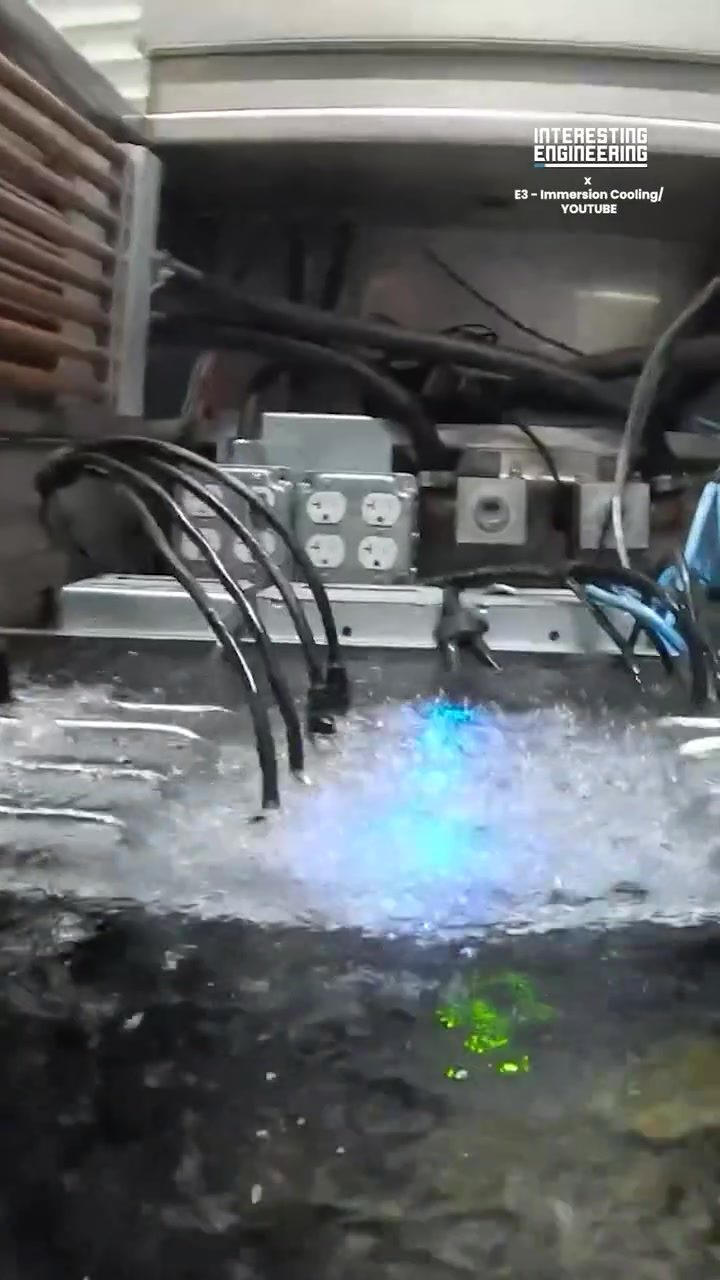
Immersion Cooling for Computers
Immersion cooling is a cutting-edge technology that offers a unique and efficient way to manage heat dissipation in computers. Unlike traditional air or liquid cooling methods, immersion cooling involves submerging computer components in a dielectric liquid. This liquid absorbs heat through a phase change, converting from liquid to vapor, and then back again, creating a continuous cooling cycle.
Why This Matters
Efficient cooling is crucial for the performance and longevity of computers, especially high-performance systems used in gaming, data centers, and cryptocurrency mining. Traditional cooling methods, such as air cooling and liquid cooling with pumps and radiators, have their limitations. Air cooling can be noisy and less effective in high-heat environments, while liquid cooling systems can be complex and prone to leaks. Immersion cooling addresses these issues by providing a simpler, more efficient cooling solution.
Main Discussion
How Immersion Cooling Works
Immersion cooling uses a dielectric liquid, which is a non-conductive fluid specifically designed to absorb heat from electronic components. The liquid is kept in a sealed container where the computer components are submerged. When the components generate heat, the liquid around them absorbs this heat, causing it to evaporate. As the vapor rises, it comes into contact with a heat exchanger or condenser, where it condenses back into a liquid and drips back down into the container. This cycle repeats continuously, providing a constant and efficient cooling mechanism. The dielectric properties of the liquid ensure that the electrical components remain safe and functional.
Benefits of Immersion Cooling
One of the primary benefits of immersion cooling is its simplicity. The system requires fewer moving parts compared to traditional liquid cooling setups, which means there are fewer points of failure. This simplicity also translates to lower maintenance requirements and reduced noise levels, making it an attractive option for environments where silence is crucial, such as home offices or media production studios.
Additionally, immersion cooling is highly effective. The direct contact between the liquid and the components ensures that heat is dissipated quickly and efficiently. This can lead to improved performance, especially in high-demand applications where over-heating can cause throttling or crashes. For example, in data centers, immersion cooling can help maintain optimal performance levels for servers, reducing downtime and increasing operational efficiency.
Types of Immersion Cooling Systems
There are several types of immersion cooling systems available, each with its own advantages and use cases. Single-phase immersion cooling systems use a liquid that remains in a liquid state throughout the cooling process. This type of system is simple and effective for many applications but may not be as efficient in very high-heat situations.
Two-phase immersion cooling systems, on the other hand, involve a liquid that changes from a liquid to a vapor phase as it absorbs heat. This phase change allows for more efficient heat transfer and is suitable for high-performance applications. The liquid used in these systems is typically a specialty dielectric fluid designed to withstand the heat and electrical properties required for electronic cooling.
Practical Tips
Choosing the Right Liquid
When setting up an immersion cooling system, selecting the right dielectric liquid is crucial. The liquid must be non-conductive to prevent electrical shorts and must have a high boiling point to handle the heat generated by the components. Popular choices include 3M Novec and other specialized fluids designed for immersion cooling. It's essential to follow the manufacturer's recommendations for compatibility and safety.
Ensuring Proper Sealing
Proper sealing is vital for an immersion cooling setup. The container holding the liquid and components must be airtight to prevent spills and ensure that the liquid remains in contact with the components. Leaks can cause damage to the equipment and render the cooling system ineffective. Using high-quality seals and regularly inspecting the setup can help maintain its integrity.
Monitoring and Maintenance
Regular monitoring and maintenance are essential for the longevity of an immersion cooling system. Keep an eye on the liquid level and replace it as needed. The liquid does not degrade over time, but it may become contaminated or evaporate, requiring periodic top-ups. Additionally, ensure that the heat exchanger or condenser is clean and free of debris to maintain efficient cooling.
Important Takeaways
Immersion cooling offers a unique and efficient approach to managing heat in computers, making it an attractive option for performance-intensive applications. Whether you're a gamer, a data center manager, or a cryptocurrency miner, immersion cooling can provide the cooling performance you need while simplifying maintenance and reducing noise levels. By choosing the right liquid, ensuring proper sealing, and maintaining the system, you can enjoy the benefits of immersion cooling for years to come.
Conclusion
Immersion cooling represents a significant advancement in heat management technology for computers. Its simplicity, efficiency, and effectiveness make it a viable option for various applications, from high-performance gaming rigs to large-scale data centers. By understanding how immersion cooling works, choosing the right components, and maintaining the system properly, you can harness the power of this technology to enhance the performance and longevity of your computer systems.
Watch the Reel
Questions readers ask
What is a dielectric liquid and why is it used in immersion cooling for PCs?
A dielectric liquid is a non-conductive fluid that can absorb heat without damaging electrical components. In immersion cooling, it is used to submerge PC hardware, facilitating efficient heat transfer and preventing short circuits. Dielectric liquids are safe and effective because they don't conduct electricity, making them ideal for cooling high-performance systems.
How does immersion cooling improve performance in high-demand tasks like gaming or cryptocurrency mining?
Immersion cooling enhances performance by maintaining lower and more stable temperatures, allowing components to run at higher speeds for longer periods. This is crucial for tasks that demand high computational power, such as gaming or cryptocurrency mining, where consistent performance is key.
What are the main benefits of using immersion cooling over traditional air or liquid cooling methods?
Immersion cooling offers several advantages, including quieter operation due to the lack of fans, more effective heat dissipation, and lower maintenance requirements. Traditional methods often suffer from noise issues and require regular maintenance, such as cleaning dust from fans or flushing liquid cooling systems.
Can immersion cooling be used for all types of PC hardware, or are there specific components it's better suited for?
Immersion cooling is generally suitable for most PC hardware, including CPUs, GPUs, and even entire motherboards. However, it's essential to ensure that all components are fully compatible with the dielectric liquid being used, as some materials may degrade or react adversely over time.
What is vapor phase cooling and how does it relate to immersion cooling?
Vapor phase cooling is a process where a liquid absorbs heat and converts to vapor, carrying heat away from the source. This process is integral to immersion cooling, as the dielectric liquid used in immersion cooling systems operates on this principle, creating a continuous cooling cycle that efficiently dissipates heat from PC components.
How does the maintenance of an immersion cooling system compare to traditional cooling systems?
Immersion cooling systems typically require less frequent maintenance compared to traditional systems. Unlike air cooling, which needs regular dust cleaning, or liquid cooling, which may require periodic flushing and refilling, immersion cooling systems mainly need occasional liquid checks and component inspections.
Is immersion cooling suitable for building a custom PC, or is it more applicable for pre-built high-performance systems?
Immersion cooling can be suitable for both custom-built and pre-built high-performance systems. However, it may require specific considerations and compatible components. Building a custom PC with immersion cooling might be more challenging but can offer tailored performance benefits, while pre-built systems can provide a more straightforward, ready-to-use solution.
Related deep dives
Similar reads based on topic and creator.


Recent articles
Fresh deep dives from the latest Reels we unpacked.




Comments
Be the first to comment.