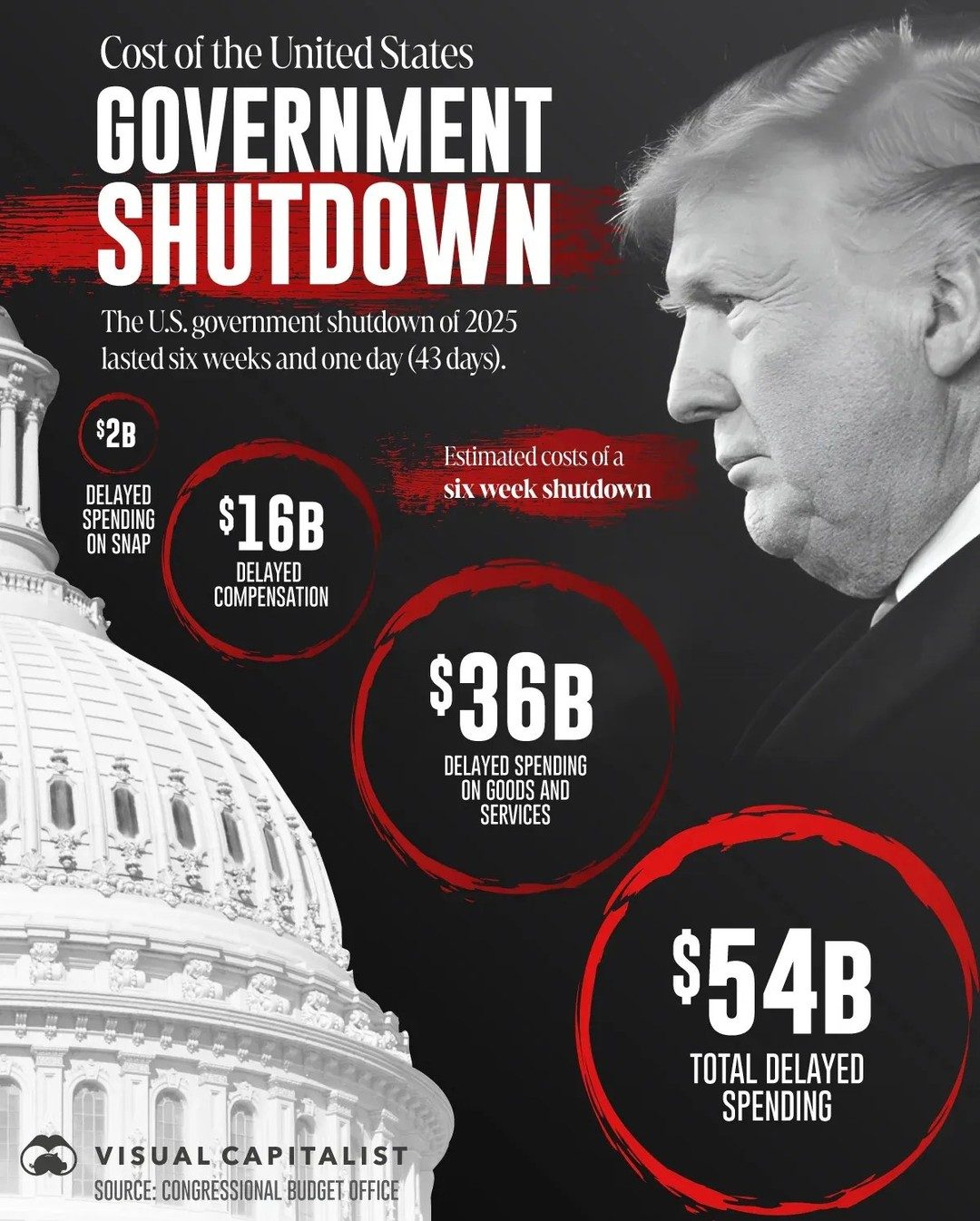
Government Shutdown Costs
The 2015 United States government shutdown lasted 43 days, impacting 1.4 million federal workers and leading to significant economic consequences. In total, an estimated $54 billion in federal spending was delayed. This shutdown affected more than 40 million people, particularly those relying on food stamps, and resulted in billions in economic losses. Understanding the extent of these impacts provides valuable insights into the real-world effects of government shutdowns.
Why This Matters
Government shutdowns are not just political events; they have tangible economic and social repercussions. The 2015 shutdown serves as a stark reminder of how federal funding delays can ripple through the economy, affecting millions of lives. By examining the specific areas of delayed spending—such as compensation, goods and services, and SNAP—we can better understand where the most significant economic impacts occur and how these delays can be mitigated in the future.
Main Discussion
The Scope of the Shutdown
The 2015 U.S. government shutdown, lasting 43 days, was a prolonged period of disruption. This shutdown impacted 1.4 million federal workers, with 730,000 working without pay and 670,000 furloughed. The delayed spending of $54 billion was broken down into several key areas: SNAP (Supplemental Nutrition Assistance Program), compensation, and goods and services.
Delayed Spending on SNAP
One of the most critical areas of delayed spending was SNAP, with $2 billion in delays. SNAP is a vital program for food assistance, supporting millions of Americans. The delay in SNAP spending meant that 40 million people faced uncertainty in accessing food. This delay highlights the fragility of social safety nets and the need for timely federal spending to ensure these programs remain effective.
Delayed Compensation
Delayed compensation amounted to $16 billion. This figure represents the wages and benefits of federal employees who were either working without pay or furloughed. The impact on these workers was immediate and severe, affecting their ability to meet financial obligations and plan for the future. The delayed compensation underscores the economic strain experienced by federal employees during a shutdown.
Delayed Spending on Goods and Services
Goods and services saw the largest delay, totaling $36 billion. This category includes a wide range of federal expenditures, from facility maintenance to procurement of goods and services. The delay in these expenditures can ripple through the economy, affecting suppliers, contractors, and other businesses that rely on federal spending. This disruption can lead to job losses, reduced economic activity, and other negative consequences.
Total Delayed Spending
The total delayed spending of $54 billion is a staggering figure. This amount represents a significant economic loss, affecting not just federal workers but the broader economy. The Congressional Budget Office (CBO) analysis underscores the far-reaching impacts of a government shutdown, highlighting the need for timely federal spending to avoid such economic disruptions.
Practical Tips
Navigating the economic impacts of a government shutdown requires preparedness and resilience. For federal employees, it is crucial to have an emergency fund to cover living expenses during a furlough or period of working without pay. Additionally, understanding the benefits and resources available can help mitigate financial strain. For businesses, diversifying revenue streams and maintaining a financial buffer can help weather the economic downturns associated with shutdowns.
Important Takeaways
The 2015 U.S. government shutdown had profound economic and social impacts. Key takeaways include:
- Economic Impact: The $54 billion in delayed spending affected millions of people and various sectors of the economy.
- Social Safety Nets: Programs like SNAP are particularly vulnerable to delays, highlighting the need for timely federal spending.
- Worker Impact: Federal employees experienced significant financial strain, emphasizing the importance of emergency preparedness.
Conclusion
The 2015 U.S. government shutdown underscores the significant economic and social costs associated with federal funding delays. By examining the specific areas of delayed spending, we gain a clearer understanding of the far-reaching impacts of such events. Preparedness and policy changes can help mitigate these impacts, ensuring a more resilient economy and social safety net for all.
Watch the Reel
Questions readers ask
What was the duration of the 2015 U.S. government shutdown and how many federal workers were affected?
The 2015 U.S. government shutdown lasted for 43 days and affected 1.4 million federal workers. This prolonged disruption led to significant delays in federal services and spending.
How did the 2015 government shutdown impact the SNAP program?
The 2015 government shutdown caused delays in the SNAP program, which provides food assistance to millions of Americans, leading to increased hardship for those relying on this support.
What was the estimated economic loss due to the 2015 U.S. government shutdown?
The 2015 U.S. government shutdown resulted in billions of dollars in economic losses, with an estimated $54 billion in federal spending delayed. This disruption affected various sectors of the economy, leading to widespread repercussions.
How many people were impacted by the 2015 government shutdown?
The 2015 government shutdown affected more than 40 million people. This included federal workers, those relying on government programs like SNAP, and individuals and businesses impacted by delayed federal spending.
What was the Congressional Budget Office's (CBO) role in analyzing the 2015 government shutdown?
The Congressional Budget Office (CBO) likely played a crucial role in analyzing the costs and economic impacts of the 2015 government shutdown. The CBO provides detailed analyses of budgetary and economic effects, helping to quantify the financial repercussions of such events.
What kind of insights can be gained from studying the 2015 shutdown?
Studying the 2015 shutdown provides valuable insights into how government funding delays can ripple through the economy, affecting millions of lives. It highlights the importance of timely federal spending and the potential consequences of disruptions in government services.
What were the economic disruptions caused by the 2015 government shutdown?
The 2015 government shutdown caused significant economic disruptions, including delayed federal spending, disruptions in critical programs like SNAP, and widespread impacts on individuals and businesses reliant on government services. These disruptions underscored the broader economic and social implications of shutdowns.
Related deep dives
Similar reads based on topic and creator.




Recent articles
Fresh deep dives from the latest Reels we unpacked.




Comments
Be the first to comment.